It started with a 1989 NASA experiment that captured the imagination of plant lovers everywhere. Researchers tested how well certain plants could absorb formaldehyde, benzene, and trichloroethylene inside sealed chambers. The results sparked decades of houseplant enthusiasm — but more recent university studies, including air quality research from the University of Technology Sydney (UTS) led by Fraser Torpy, have added important nuance: a couple of pots in a large living room makes a statistically tiny difference. That said, the effect is real, and some species genuinely outperform others.
The ranking below is built on that body of research, looking at which species proved most effective at absorbing harmful compounds — and which ones are mostly just pretty.
1. English ivy (Hedera helix)
English ivy was the standout performer in the original NASA study, particularly for breaking down formaldehyde. A later study from Ruhr University Bochum in Germany found that the microorganisms living on ivy leaves also help reduce airborne mold spores — a bonus most people don't know about. It grows happily in shade and partial shade, which is especially useful because pollutants tend to build up in poorly ventilated, darker spaces like bathrooms and home offices.
2. Areca palm (Dypsis lutescens)
The areca palm earned a top spot on the NASA list partly for its impressive natural humidifying effect. Its large leaf surface releases significant amounts of moisture into the air, making it a welcome addition to centrally heated homes in winter. It also scored well for absorbing benzene and trichloroethylene. The trade-off: it grows fast, needs regular watering, and thrives best in bright, indirect light.
3. Spider plant (Chlorophytum comosum)
The spider plant is one of the easiest houseplants to keep alive, which is exactly why it's a perennial beginner favorite. It excelled at formaldehyde absorption in the NASA experiment, and the Australian UTS research confirmed it performs reliably at room temperature under average light conditions. Interestingly, the microbes living in its root zone do part of the heavy lifting — it's not just the leaves at work, but the soil bacteria too.
Looking for more ways to improve your home environment? These ventilation tricks can make a big difference even without air conditioning.
4. Peace lily (Spathiphyllum)
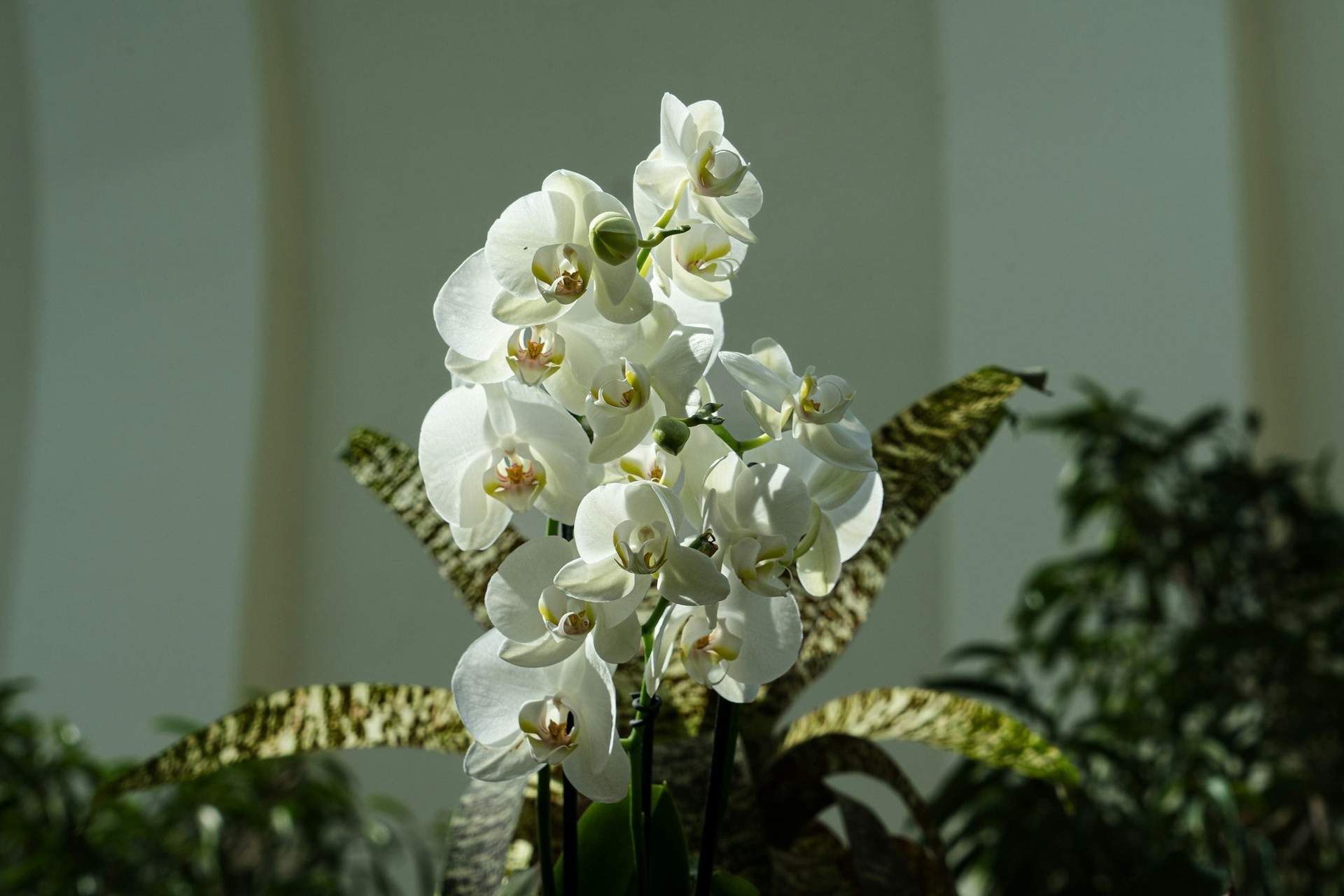
With its deep green leaves and elegant white flowers, the peace lily showed the broadest range of pollutant absorption in NASA testing — effectively binding formaldehyde, benzene, and trichloroethylene. One important caveat: it is toxic to cats and dogs, so in pet-friendly homes it should be placed well out of reach, ideally on a high shelf.
5. Weeping fig and rubber plant (Ficus benjamina and Ficus elastica)
Both ficus varieties have solid formaldehyde-filtering credentials, confirmed first by NASA and later by university studies in Poland and Belgium. They are slower to respond than ivy or spider plants, though, and they're sensitive to drafts and sudden changes in light — both of which can trigger leaf drop.
6. Dragon tree (Dracaena marginata)
With its spiky, narrow leaves, the Dracaena proved effective at binding trichloroethylene and xylene in NASA's tests. It's also one of the most low-maintenance plants on this list — it rarely needs watering, which makes it a practical choice for offices where weekend care simply doesn't happen.
7. Snake plant (Sansevieria trifasciata)
The snake plant earns its place for a different reason. While most plants absorb carbon dioxide during the day and release it at night, the snake plant uses CAM photosynthesis, which means it continues releasing oxygen after dark. It also featured in NASA's formaldehyde results and is almost impossible to kill through neglect or drought — a genuine survivor.
What can you realistically expect?
A 2019 review by the Torpy research group is clear: in a typical, reasonably well-ventilated home, a handful of potted plants won't solve an air pollution problem on their own. The measurable effect kicks in when there are many plants in a small, relatively sealed space with limited airflow. That said, English ivy, spider plants, and peace lilies are the species that have consistently performed well across the most independent studies. If you want to choose wisely, those three are a safe and evidence-backed starting point.
Does one plant really make a difference in air quality?
On its own, a single pot has a very limited effect in a standard-sized room. Research suggests the impact becomes genuinely measurable when many plants are grouped together in a smaller, less ventilated space.
Which houseplant is best for a dark bathroom?
English ivy is the strongest candidate — it tolerates shade and partial shade well, and bathrooms are exactly the kind of poorly ventilated spaces where airborne pollutants and mold spores tend to accumulate.
Are any of these plants dangerous for pets?
Yes — the peace lily is toxic to both cats and dogs. If you have pets, place it high enough that it's completely out of reach, or choose a pet-safe alternative like the spider plant.
Is the snake plant really good for bedrooms?
Unlike most plants, the snake plant releases oxygen at night thanks to its CAM photosynthesis cycle, which is why it's often recommended for bedrooms. It also handles low light and infrequent watering exceptionally well.
Which plant is best for a complete beginner?
The spider plant is widely considered the most forgiving option — it copes with average light, doesn't need constant attention, and has been backed by multiple independent studies for its air-filtering ability.