Some have leaves that look just like coins. Others have become symbols of growth because of how fast they thrive. And a few are simply considered the perfect lucky gift. If you're already thinking about adding more greenery to your home, why not choose a plant that comes with a great story attached?
1. Jade plant (Crassula ovata)
The jade plant is probably the most well-known "money plant" in the world of houseplants. In many cultures it's literally called a money tree — and that name isn't accidental. Its thick, rounded leaves are easy to imagine as small green coins, which is exactly why it became a symbol of prosperity and financial stability in Feng Shui tradition.
The good news is that you don't need to be an experienced gardener to keep one happy. A bright spot, well-draining soil, and restrained watering are really all it needs — making it as low-maintenance as it is meaningful.
2. Chinese money plant (Pilea peperomioides)
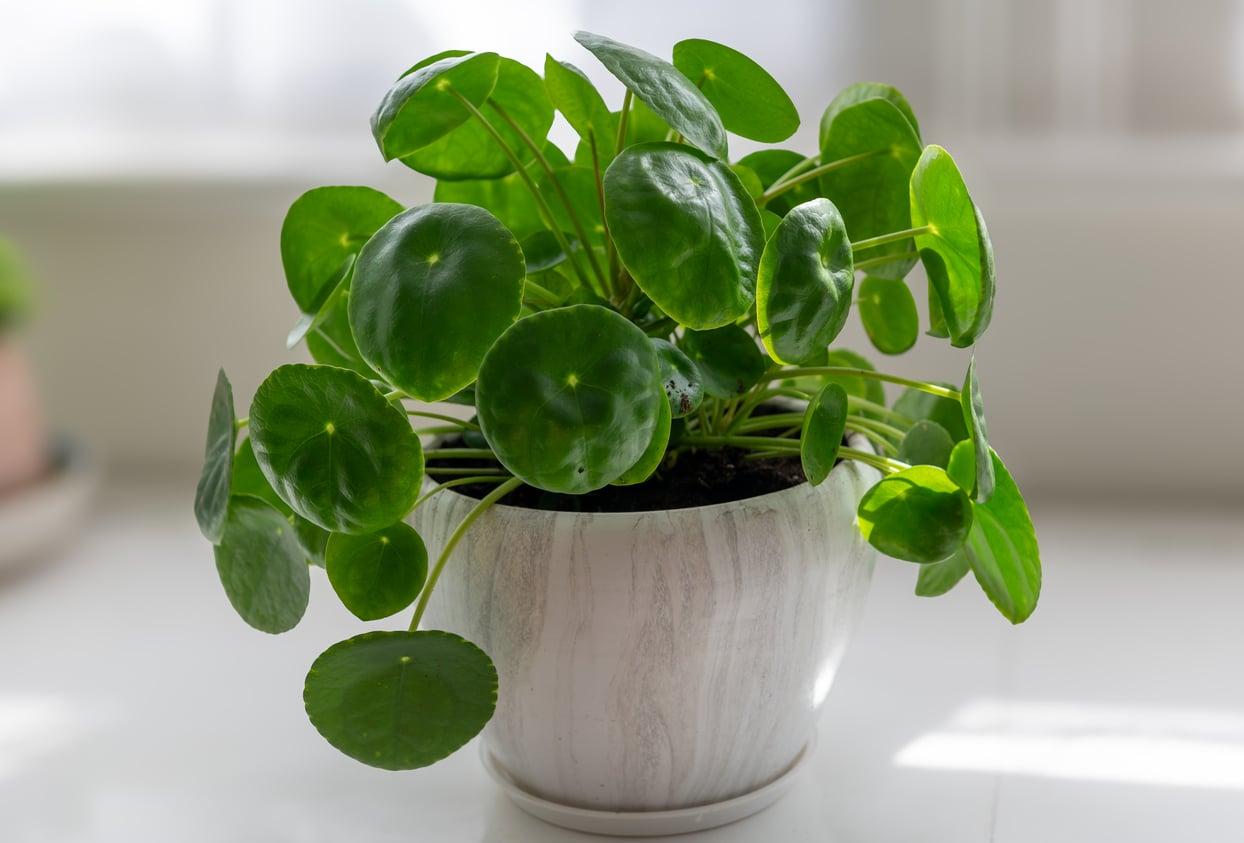
The name says it all. This cheerful little plant — widely known as the Chinese money plant — has flat, circular leaves that genuinely do look like tiny green coins scattered on stems. According to folk belief, those round leaves attract wealth and abundance, which is why it's become such a popular housewarming gift.
It also has a wonderfully practical quality: given the right conditions, it produces small offshoots readily, meaning one plant can eventually become a whole collection. It's the gift that literally keeps on giving.
Looking for more ways to bring positive energy into your living space? These home decorating ideas could also make a difference to your wellbeing.
3. Lucky bamboo (Dracaena sanderiana)
Lucky bamboo isn't actually bamboo — but that hasn't stopped it from becoming one of the most iconic lucky plants around. In Feng Shui, bamboo is associated with growth, vitality, and forward momentum, which is why it's often given as a gift when someone is starting a new chapter in life.
Bamboo also carries deep cultural weight across several Asian traditions. London's Kew Gardens, for example, highlights bamboo as part of Japanese cultural heritage and notes that certain plants have long been given protective and spiritual significance.
Lucky bamboo looks particularly elegant displayed in a glass vase or a simple ceramic pot — ideal if you want a meaningful touch of green without turning your living room into a jungle.
4. Pothos (Epipremnum)
Several varieties of pothos are also known as "money plant," and it's easy to see why they've earned a spot on lucky plant lists. Those lush, cascading vines make it a symbol of abundance and continuous growth in Feng Shui circles — always reaching, always expanding.
Beyond the symbolism, pothos is genuinely one of the most forgiving houseplants you can own. It thrives in bright, indirect light but tolerates lower light conditions too, and it looks stunning trailing from a hanging planter or climbing along a shelf. A great choice for beginners and seasoned plant lovers alike.
5. Holy basil (Ocimum tenuiflorum)
Holy basil — known as tulsi — is in a category of its own. In India, it holds deep religious and cultural significance: according to Kew Gardens, it is considered a sacred plant in Hinduism and has traditionally been grown in temple courtyards and family homes alike.
In the traditions surrounding it, tulsi is seen as a plant that offers protection and brings blessings to a household — far more than just a kitchen herb. If you want a plant with genuine, centuries-old cultural depth rather than just a "lucky plant" label, tulsi is one of the most interesting choices you can make.
6. Money tree (Pachira aquatica)
The Pachira aquatica — often sold with a beautifully braided trunk — is another plant that regularly appears on lists of plants associated with good fortune and prosperity. Its distinctive, hand-shaped leaves make it a striking decorative piece in any room.
According to the stories attached to it, the money tree is linked to financial growth and good luck, making it a particularly popular gift for new business ventures or fresh starts in a new home. Whether or not you believe in the folklore, it's hard to argue with how good it looks on a windowsill.
Do these plants actually bring luck?
That's entirely up to you to decide. What these six plants share is a rich history of symbolism across cultures — and the very real benefit of bringing life, color, and a sense of intention into your home. Sometimes that's more than enough.
Which plant is considered the best lucky houseplant?
The jade plant (Crassula ovata) and the Chinese money plant (Pilea peperomioides) are among the most widely recognized lucky houseplants, both associated with prosperity and abundance in Feng Shui tradition.
Is lucky bamboo a good gift for a new home?
Yes — lucky bamboo is a popular housewarming gift precisely because it symbolizes growth, vitality, and new beginnings in Feng Shui tradition. It's also compact and easy to care for, making it practical as well as meaningful.
Are these plants easy to care for?
Most of them are quite low-maintenance. The jade plant, Chinese money plant, and pothos are all considered beginner-friendly and can thrive with minimal fuss. Holy basil requires a little more attention, especially if you want it to flourish indoors.
Can I give any of these plants as a gift?
Absolutely. The Chinese money plant, lucky bamboo, and Pachira aquatica are all commonly given as gifts for new homes, new businesses, or any occasion that marks a fresh start — the folklore around them makes the gesture feel extra thoughtful.