There's a reason cultures around the world have long associated certain plants with peace, clarity, and balance. It's not superstition — it's something you feel the moment you step into a room that's green, calm, and quietly alive.
No houseplant will magically dissolve your stress, of course. But walking into a tidy corner filled with thriving plants does something to the mood that's hard to explain and easy to feel. These seven plants carry a long tradition of symbolizing calm, harmony, and well-being — and they happen to look stunning in a home too.
1. Peace lily (Spathiphyllum)
The name says it all. Peace lilies have been associated with calm and purity for centuries, largely thanks to their elegant white blooms and glossy, deep-green leaves. The combination is visually clean and understated — never fussy, never loud.
If you're not drawn to overly colorful plants, this is a natural fit. It looks particularly beautiful in a bedroom or in the quieter corner of a living room. Just one care note: don't let the soil dry out completely — it will tell you when it's thirsty by drooping slightly, and it recovers quickly once watered.
2. Lavender (Lavandula)
Lavender hardly needs an introduction. Its scent alone has made it one of the most universally recognized symbols of rest and relaxation — used in everything from sleep sprays to spa treatments. That connection between lavender and a calm state of mind is as old as aromatherapy itself.
It can absolutely be grown indoors, but it needs a genuinely bright spot — a sunny windowsill is ideal. A shadowy shelf won't do it any favors. The good news? You don't need a whole pot garden for it to make an impact. A single pot of lavender is enough to bring a gentle, natural feeling to an entire room.
3. Jasmine (Jasminum)
What makes jasmine special is that it contributes to a home's atmosphere in two ways at once: through its appearance and through its scent. The flowers can be intensely fragrant, meaning even a smaller plant can shift the feeling of a room in a way that purely visual plants simply can't.
Across many cultures, jasmine is linked to purity, love, and peace. Its fragrance has also played a central role in perfumery for centuries — there's a reason it's one of the most iconic floral notes in fine fragrance.
It does need bright light and consistent care, so it's not the easiest starting point for a first-time plant parent. But if it thrives in your home, it becomes one of the most rewarding plants you can have.
4. Bonsai
Bonsai isn't a single plant species — it's an art form. And yet it would feel wrong to leave it off a list about harmony and stillness.
In Japanese culture, bonsai is tied to patience, simplicity, and attentive observation of nature. The practice of caring for one is deliberately slow — this is not a plant that takes over a room overnight. That unhurried quality is part of what makes it meaningful.
A well-placed bonsai can become the natural focal point of a minimal living room or a home office corner — something to rest your eyes on when the screen gets to be too much.
If you're new to bonsai, starting with a beginner-friendly variety makes the experience far more enjoyable than stressful.
5. Boston fern (Nephrolepis exaltata)
Ferns create a completely different kind of atmosphere than thick-leaved tropical plants. Their soft, feathery fronds have a gentle, deeply natural quality — less structured, more like something you'd find in a quiet woodland.
There isn't a single piece of universal symbolism attached to ferns the way there is with a peace lily, but that almost doesn't matter. People choose them because they feel like nature — like a little piece of a forest floor brought indoors.
Care-wise, they prefer bright but indirect light and some humidity. If your home tends to be dry, especially in winter with central heating running, that's worth keeping in mind — a light misting goes a long way.
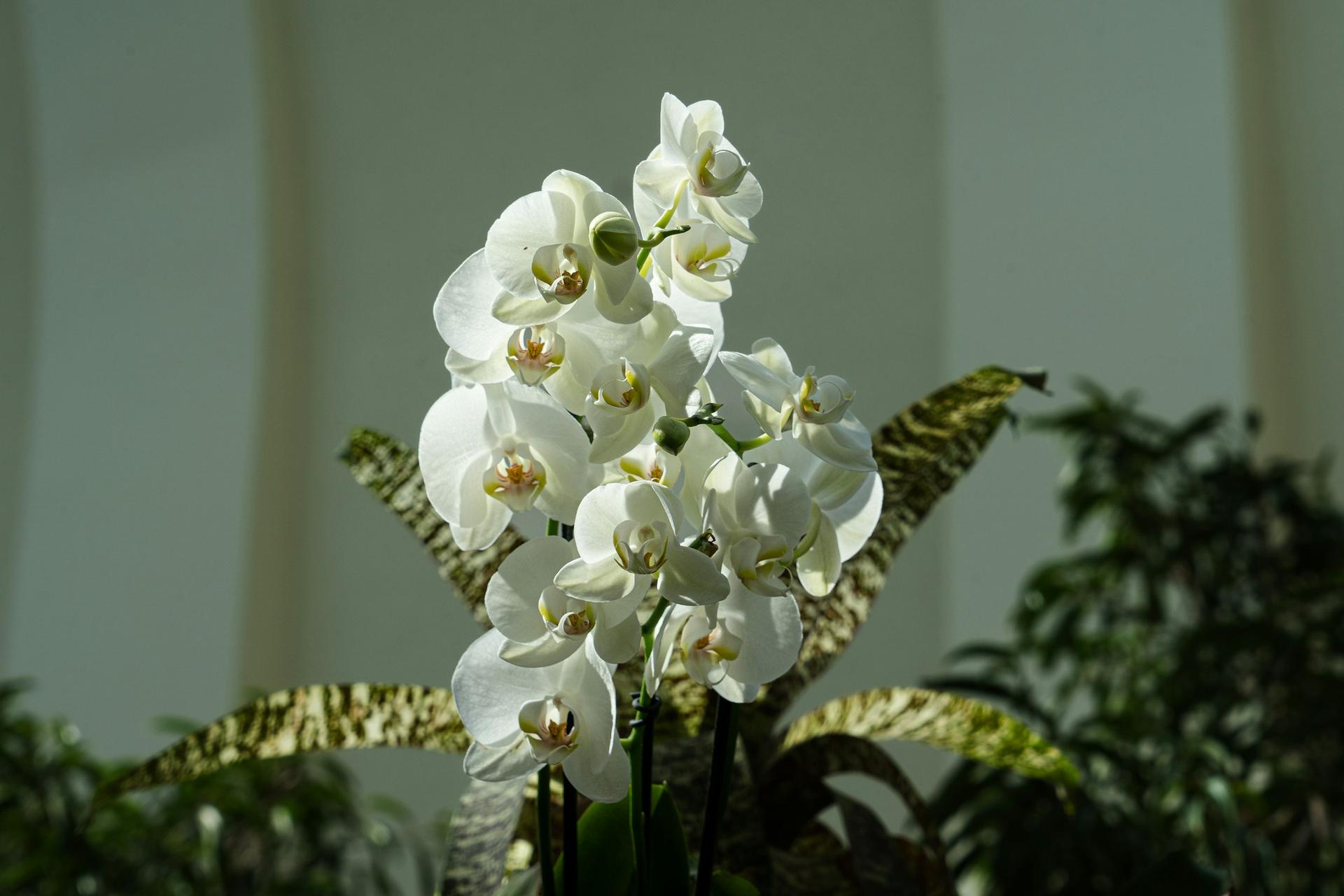
6. Moth orchid (Phalaenopsis)
Orchids are most often associated with elegance and beauty, but in several Asian cultures they also carry deeper meaning — representing refinement, perfection, and harmony.
The moth orchid is the most popular indoor variety for good reason: it's relatively manageable to care for, and a well-chosen example functions almost like a standalone decorative object. You don't need five flowering plants around it. A single orchid in a clean, simple pot is enough — its elegance comes from letting it stand on its own.
Struggling to keep yours blooming? The most common orchid care mistakes are easier to fix than most people think.
7. Parlor palm (Chamaedorea elegans)
The parlor palm is a classic indoor plant, and its appeal is in its lightness. Those graceful, arching fronds create a soft, airy feeling that heavier tropical plants simply don't — it never overwhelms a space.
Bamboo — which the parlor palm visually echoes — carries strong symbolism in many Asian cultures: resilience, strength, and longevity. That calm, grounded energy translates naturally into how the plant feels in a home setting.
Practically speaking, the parlor palm doesn't need direct sunlight, which makes it a great choice for apartments that don't get blazing sunshine all day. It's adaptable, low-maintenance, and quietly beautiful — which is really everything you want from a plant meant to bring a little more peace into your home.
Which of these plants is easiest to care for?
The peace lily and the parlor palm are generally considered the most forgiving for beginners. Both tolerate lower light conditions and are fairly communicative when they need water.
Can I keep lavender indoors year-round?
Yes, but it needs the brightest spot you can offer — ideally a south- or west-facing windowsill with several hours of direct sun. Without enough light, it tends to get leggy and stops flowering.
Is a bonsai really that difficult to look after?
It depends on the species. Some bonsai varieties are well suited to beginners and only require patience and consistent attention, rather than expert-level skill. Starting with a beginner-friendly type makes a big difference.
Do these plants actually affect mood, or is it just symbolism?
It's a bit of both. The symbolism adds a layer of meaning that many people find genuinely grounding. But even setting that aside, research consistently shows that having plants in a living space tends to reduce stress and improve how a room feels to spend time in.