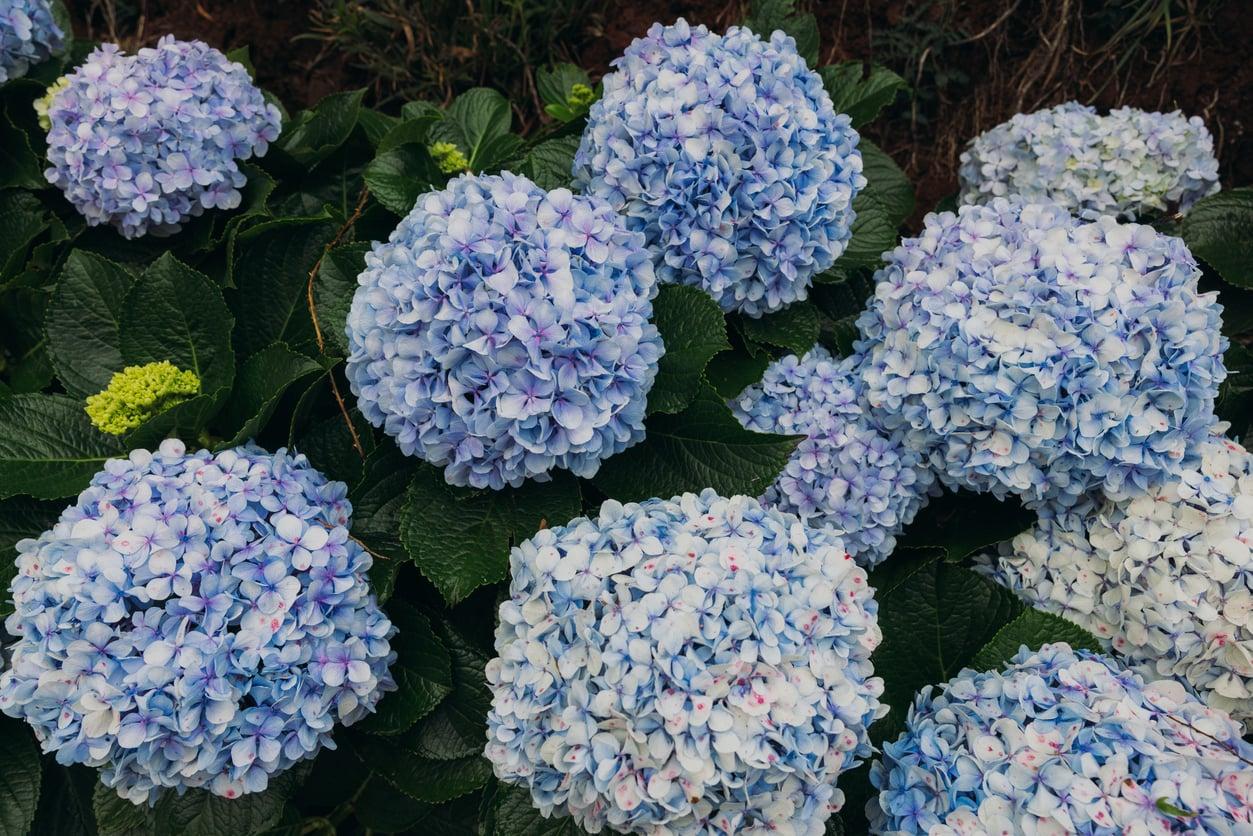
You step out onto the terrace on one of those first cold autumn mornings, and the sight stops you: the hydrangea's leaves are drooping, the flower heads are browning at the edges, and the whole pot looks like it's given up. Before you write it off, there's something you should know — and it only takes a tablespoon to fix it.
The secret isn't an expensive plant product or a complicated treatment. It's something you very likely already have in your kitchen cabinet: Epsom salt, also known as magnesium sulfate. Gardeners have sworn by it for years, because hydrangeas are exceptionally sensitive to magnesium deficiency — and in autumn, as the soil cools down, roots struggle to absorb minerals efficiently from the cold ground, making that deficiency worse fast.
Why does your hydrangea struggle in autumn?
Potted hydrangeas on terraces and balconies are far more vulnerable than those planted in garden beds. The soil in a pot chills rapidly, the root zone is shallow, and the plant has nowhere to retreat from the cold. When nights dip close to freezing while the afternoon sun still warms the pot, those temperature swings put the plant under serious stress.
The drooping leaves look like a sign of thirst — but that's not what's happening. The real culprit is the roots slowing down, unable to function properly in cold soil. The plant isn't dying; it's sending a distress signal.
The one-tablespoon trick that brings it back to life
Dissolve one tablespoon of Epsom salt in one quart (about 1 liter) of lukewarm water and water the base of your hydrangea thoroughly with the solution. Magnesium supports chlorophyll production, which means greener, stronger leaves and a plant that's far better equipped to handle the cold. A few important rules to keep it effective:
- One tablespoon of Epsom salt dissolved in 1 quart of water
- Pour it around the base of the plant, not over the leaves
- Make sure the soil is already slightly moist before applying — never bone dry
- Once a month is enough — don't overdo it
Only apply this when the soil isn't frozen. Two to three times across the autumn season is plenty.
What else helps alongside the Epsom salt
Epsom salt alone isn't a miracle cure — your hydrangea needs a little extra attention as the cold sets in. Cut off any dead or browning flower heads, as they drain energy the plant needs elsewhere. Lift the pot onto a small wooden board or an insulating mat so that cold doesn't creep up through the base directly into the root zone — this simple step makes a real difference on frosty nights.
When it's time to bring it indoors for winter
If temperatures are consistently hovering around freezing, it's time to move your potted hydrangea somewhere sheltered but still cool — a covered porch, an unheated garage, or a garden shed all work well. The plant doesn't need warmth; it needs protection from a hard freeze. What it doesn't need is a warm living room, which would trick it into budding out early and depleting its energy reserves.
This is also the point when you gradually stop the Epsom salt watering, as the plant is easing into dormancy and needs less intervention, not more.
What you should never do in autumn
Don't overwater. Cold, stagnant water sitting around the roots is the fastest route to root rot. Don't cut the stems back hard in autumn either — hydrangeas are already forming next year's flower buds on those stems right now. And keep in mind that Epsom salt isn't a substitute for good, nutrient-rich soil; it's a targeted boost during a critical window, nothing more.
A hydrangea doesn't give up easily. It just tells you what it needs — and right now, what it needs is a spoonful of magnesium.
For many gardeners, this is actually one of the most satisfying moments of the year: watching a pot that looked almost lost slowly come back over two weeks, leaves firming up, color returning, the whole plant standing tall on the terrace again as if nothing ever happened. All it takes is one tablespoon of Epsom salt and a little attention while the cold days last.
Does Epsom salt really work for hydrangeas?
Yes — hydrangeas are particularly sensitive to magnesium deficiency, which gets worse in autumn as cool soil slows root absorption. Dissolved Epsom salt delivers magnesium directly to the roots, supporting chlorophyll production and helping the plant cope with cold-weather stress.
How often should I use Epsom salt on a potted hydrangea?
Once a month during autumn is sufficient. Applying it two to three times across the season is plenty — overuse can actually cause problems, so more is not better here.
Should I bring my potted hydrangea inside for winter?
When temperatures consistently approach freezing, move the pot to a cool but frost-free spot like an unheated garage or covered porch. The plant needs protection from a hard freeze, not warmth — a heated room can cause it to bud out prematurely and exhaust its reserves.
Can I cut back my hydrangea in autumn?
Avoid hard pruning in autumn. Hydrangeas develop next year's flower buds on the current season's stems, so cutting them back now means losing next summer's blooms. Remove only dead or heavily browned flower heads.