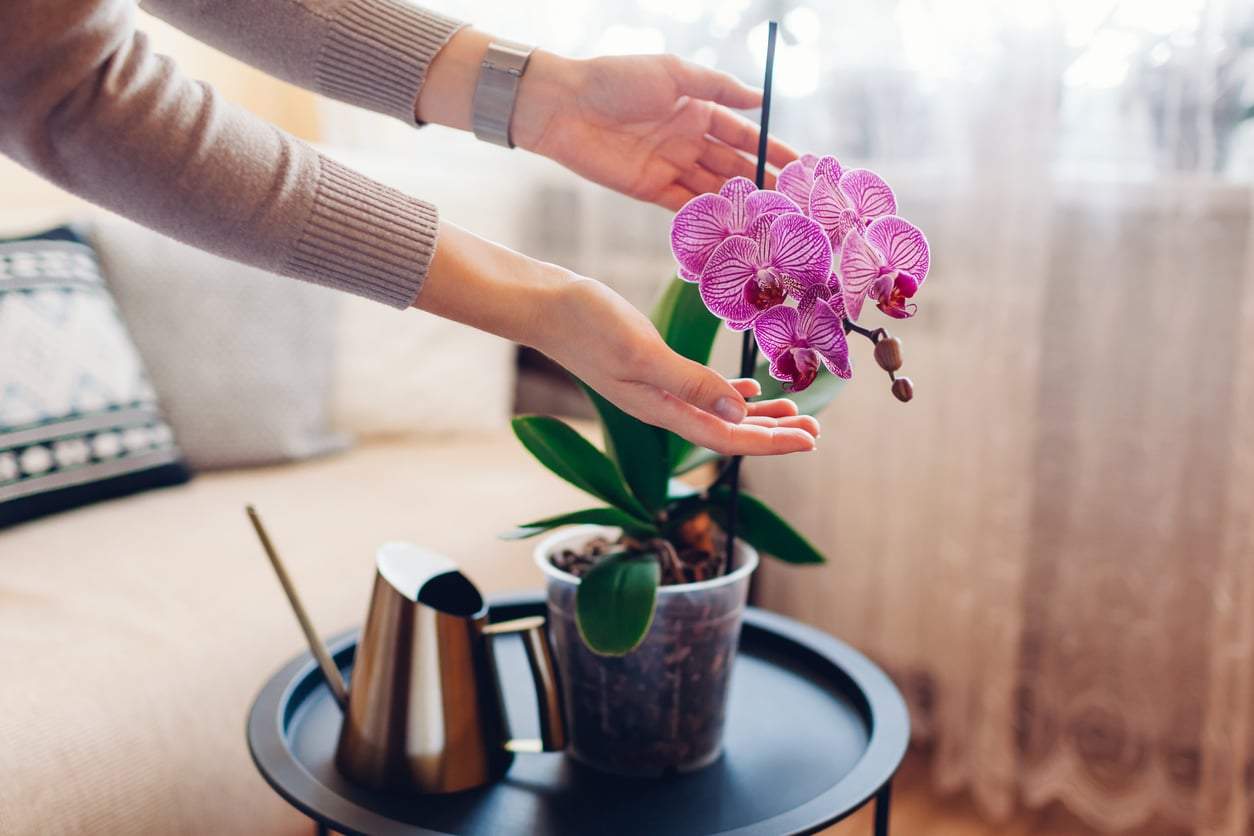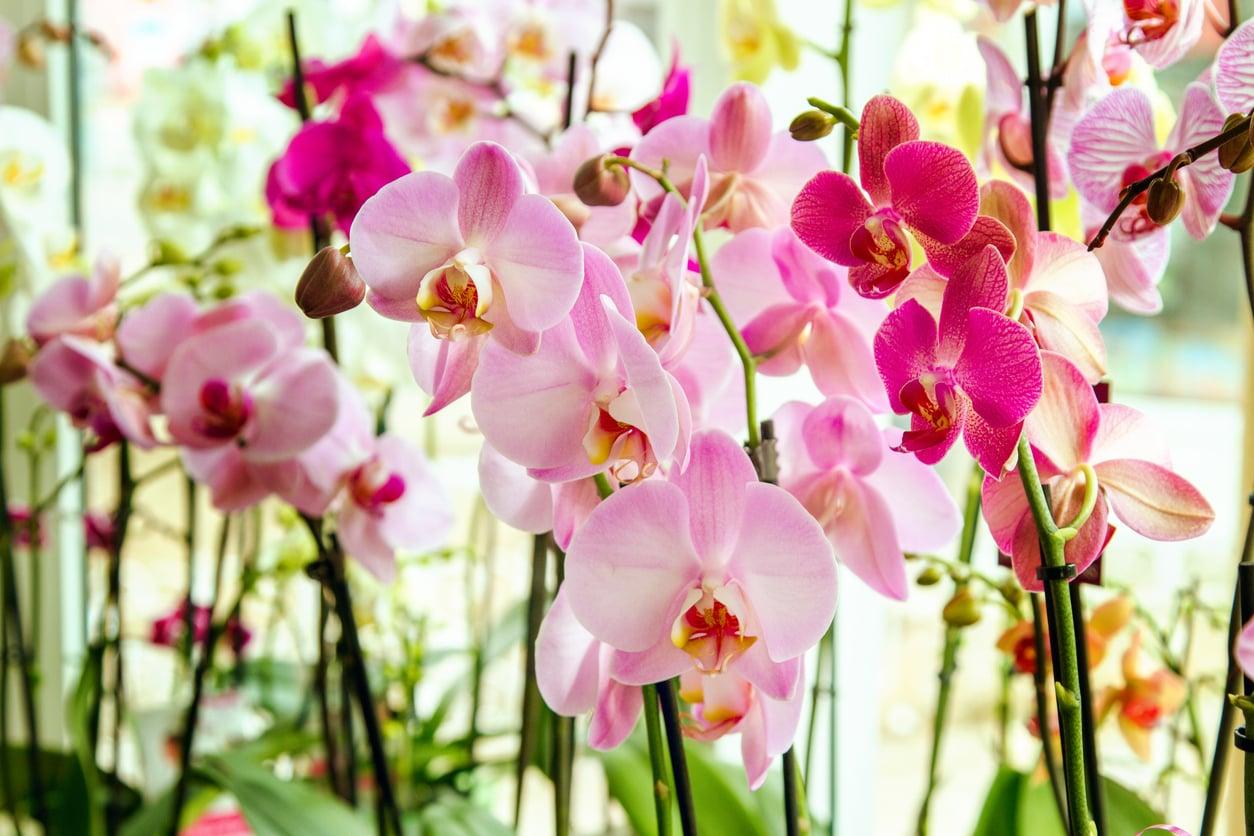
Your orchid looks stunning on the windowsill — until it doesn't bloom anymore. Then it just sits there, green and stubbornly flowerless, for months. Here's the thing: the plant is almost never the problem. The problem is how we care for it. The Phalaenopsis — the butterfly orchid you find in virtually every garden center and grocery store — gets quietly punished in exactly the spots where we try hardest to be good plant parents: watering, light, and post-bloom care. Based on guidance from the American Orchid Society and the hard-won experience of seasoned growers, these three mistakes are the most likely reasons your orchid has stopped flowering — possibly for years.
1. Overwatering (and not letting it dry out)
Most orchids don't die of thirst. They suffocate. In the wild, Phalaenopsis orchids grow clinging to tree bark in rainforest canopies, where their roots are exposed to open air and go through clear wet-and-dry cycles between rainfalls. When you keep water sitting at the bottom of a pot — or give it a little splash every day the way you might with a regular houseplant — the roots rot, and the plant channels every bit of its energy into survival rather than flowering.
The right watering schedule isn't measured in days — it's read in the roots. Healthy roots are silvery-white when dry and turn a vivid green right after watering. If you water on a fixed schedule without checking the roots first, you'll eventually overdo it. The easiest fix? Use a transparent pot. Being able to see the roots at a glance means you never have to guess.
An orchid is far more likely to die from too much water than too little. The real skill is knowing when not to water.
2. Too little light — or light from the wrong direction
The second mistake is putting the orchid somewhere it looks great but can barely see the sun. It's tempting to tuck it onto a bookshelf or a desk where it adds a touch of elegance — but flowering takes energy, and that energy comes entirely from light. Decorative LED bulbs and ambient room lighting simply don't cut it. A dedicated grow light positioned 12 to 24 inches (30–60 cm) above the plant can effectively substitute for natural light if it's powerful enough, but most ordinary lamps won't do the job.
The ideal spot for a Phalaenopsis is near an east- or west-facing window, where it gets plenty of bright, indirect light without the harsh midday sun scorching its leaves. Here's a useful tell: if your orchid's leaves are very dark green and glossy, it's probably not getting enough light. A healthy, flowering orchid has leaves that are a lighter, matte shade of green. It's also worth rotating the pot occasionally — orchids lean toward the light, and if one side always faces the window, the flower spike can develop unevenly.
3. Ignoring post-bloom care
This is probably the least known mistake — and it happens at the exact moment most people stop paying attention: right after the flowers drop. The instinct for many people is to cut the whole spike down to the base and wait. Then they wonder why nothing happens for months.
With many Phalaenopsis varieties, the old flower spike still has dormant nodes (small buds along the stem) that can rebloom. The trick is to cut the stem just above an unused node, but below any section that's already browning or drying out. If there are no healthy nodes left, then yes — cut it at the base, because a prolonged secondary bloom typically produces smaller flowers anyway and puts unnecessary stress on the plant.
After blooming, your orchid also needs a genuine rest period. During this time, it needs less water and less fertilizer while the roots and leaves recover. Push it just as hard as you did during flowering and you risk exhausting it completely — potentially delaying the next bloom cycle by a full year.
One more thing experienced growers swear by: a temperature difference of around 9–14°F (5–8°C) between day and night actively encourages new flower spikes to form, mimicking the natural temperature swings orchids experience in the wild. Just make sure nighttime temperatures don't drop below 59°F (15°C) — so don't leave the pot outside overnight. Moving it to a cooler room or closer to a window for a few nights is usually enough.
Get these three things right — water by the roots, not by the calendar; give it real light; let it rest after blooming — and there's a very good chance your orchid will reward you with flowers again and again, sometimes for years from the very same plant.
How often should I water my orchid?
There's no fixed schedule — it depends on the roots. Check the color of the roots through a transparent pot: water only when they've turned silvery-white, indicating they've dried out. In most home conditions, this works out to roughly once every one to two weeks.
Why are my orchid's leaves so dark green?
Very dark, glossy leaves are usually a sign that the plant isn't getting enough light. A healthy, blooming Phalaenopsis typically has lighter, matte green leaves. Try moving it closer to a bright east- or west-facing window.
Should I cut the flower spike after blooming?
It depends on the spike's condition. If there are still healthy, unused nodes (small bumps along the stem), cut just above one of those to encourage a secondary bloom. If the stem is browning all the way down, cut it at the base and let the plant rest.
What temperature helps an orchid rebloom?
A day-to-night temperature difference of around 9–14°F (5–8°C) signals to the plant that it's time to produce a new flower spike. Just keep nighttime temperatures above 59°F (15°C) to avoid stressing the roots.
Can an orchid bloom again from the same plant?
Absolutely — this is one of the most rewarding things about Phalaenopsis orchids. With the right light, careful watering, and proper post-bloom rest, the same plant can rebloom reliably for many years.