Most of us have no idea that a few ordinary objects in our bedroom are quietly sabotaging our sleep every single night. Interior designers and sleep hygiene specialists have been saying it for years — and yet these items remain stubbornly present in almost every home.
The problem runs deeper than aesthetics. Your brain is remarkably good at associating spaces with activities. When your bedroom doubles as a home office, a gym, or an entertainment room, your nervous system struggles to shift into rest mode when you actually need it to. Sleep hygiene experts have emphasized this for decades: the bedroom should serve one purpose above all else — sleep.
1. The TV and every other screen
A bedroom television is one of the hardest habits to break — and one of the most damaging to sleep quality. Screens emit blue light, which suppresses melatonin production, the hormone that tells your body it's time to sleep. But the problem doesn't stop at light exposure.
The content itself is just as disruptive. A gripping series or the evening news triggers alertness and emotional arousal at exactly the moment your body is trying to wind down. And even when the screen is off, simply having a TV in the room keeps the brain in a subtly stimulated state.
Interior designers recommend keeping no screens in the bedroom at all — and placing your phone across the room at night, well out of arm's reach.
Even small changes here can make a noticeable difference. Try charging your phone outside the bedroom for just one week and pay attention to how you feel in the morning.
2. Exercise equipment and work items
A treadmill squeezed into the corner, a set of dumbbells by the wall, or a foldable desk — these are common fixtures in smaller homes where space is tight. But bringing work and exercise into the bedroom is one of the most common interior design mistakes that directly undermines sleep quality.
Your brain's associative memory is powerful. If you work out or answer emails in the same room where you sleep, that environment becomes mentally linked to effort, performance, and stress. Come bedtime, the same surroundings that triggered activity earlier in the day make it harder to truly relax.
If moving these items simply isn't an option, use a room divider, curtain, or large plant to visually separate them from the sleeping area. Out of sight really does help out of mind when it comes to sleep.
3. A large mirror facing the bed
This one surprises most people — but both interior designers and feng shui practitioners consistently flag a large mirror directly opposite the bed as a sleep disruptor.
There are two reasons. First, at night, even in low light, a mirror reflects movement and shadows — subtle visual input that your brain processes unconsciously, even if you never fully wake up. Second, catching an unexpected glimpse of yourself in the dark while half-asleep can trigger a mild but real stress response.
Restless, fragmented sleep is sometimes traced back to this overlooked source of visual stimulation. The fix is simple: reposition the mirror so it doesn't face the bed, or drape a light piece of fabric over it at night.
What should stay in the bedroom
None of this means your bedroom needs to be bare or impersonal. Interior designers aren't asking for minimalist emptiness — they're asking for intentionality. Every object in the room should earn its place by supporting rest.
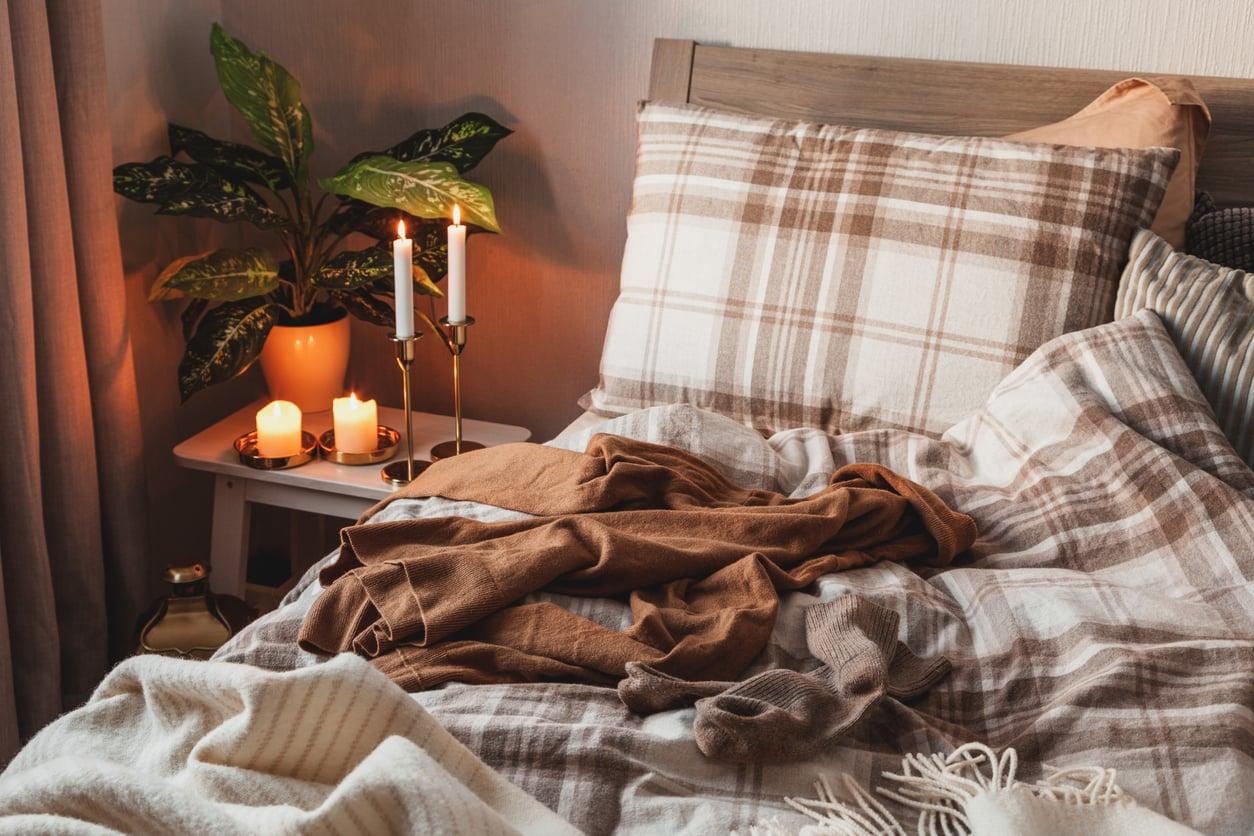
A good book, a warm low-wattage reading lamp, a favorite blanket — these quietly reinforce the winding-down ritual your body needs. The bedroom becomes genuinely restorative when everything in it points toward the same goal: a deep, uninterrupted night's sleep.
Frequently asked questions
Why does a TV in the bedroom affect sleep so much?
Screens emit blue light that suppresses melatonin, the hormone responsible for making you feel sleepy. On top of that, stimulating content — like news or an exciting series — keeps your brain alert at exactly the wrong time.
What if I have no space to move my exercise equipment out of the bedroom?
If relocating isn't possible, use a room divider, curtain, or large plant to visually separate the equipment from your sleeping area. Reducing visual exposure to activating objects can still meaningfully improve how easily you fall asleep.
Does it really matter which direction a mirror faces in a bedroom?
According to interior designers and sleep specialists, a mirror that directly faces the bed can reflect movement and shadows at night, creating subtle unconscious stimulation. It can also cause a startled response if you catch an unexpected glimpse of yourself while half-asleep. Repositioning or covering the mirror at night is an easy fix worth trying.
What kinds of objects are actually good to have in the bedroom?
Anything that supports winding down — a physical book, a soft-glow reading lamp, a cozy blanket. The guiding principle is that every item in the room should serve rest, not work, exercise, or entertainment.