The geometry of a corner that doesn't spread
Give the station an edge. A tray, a slim shelf, a marble board, even a placemat — anything that says where coffee ends. Objects respect borders in a way they never respect open counter, and if something is on the tray that isn't coffee, you can see it instantly and move it.
Then go vertical, because counters are precious. A narrow wall shelf above the kettle holds cups and a small jar; a couple of mug hooks under a cupboard frees the space two mugs were occupying. Keep only what you touch every day at counter level; the second grinder, the guest cafetière and the tin of decaf you bought for your mother-in-law live in the cupboard.
How to make it look considered for very little
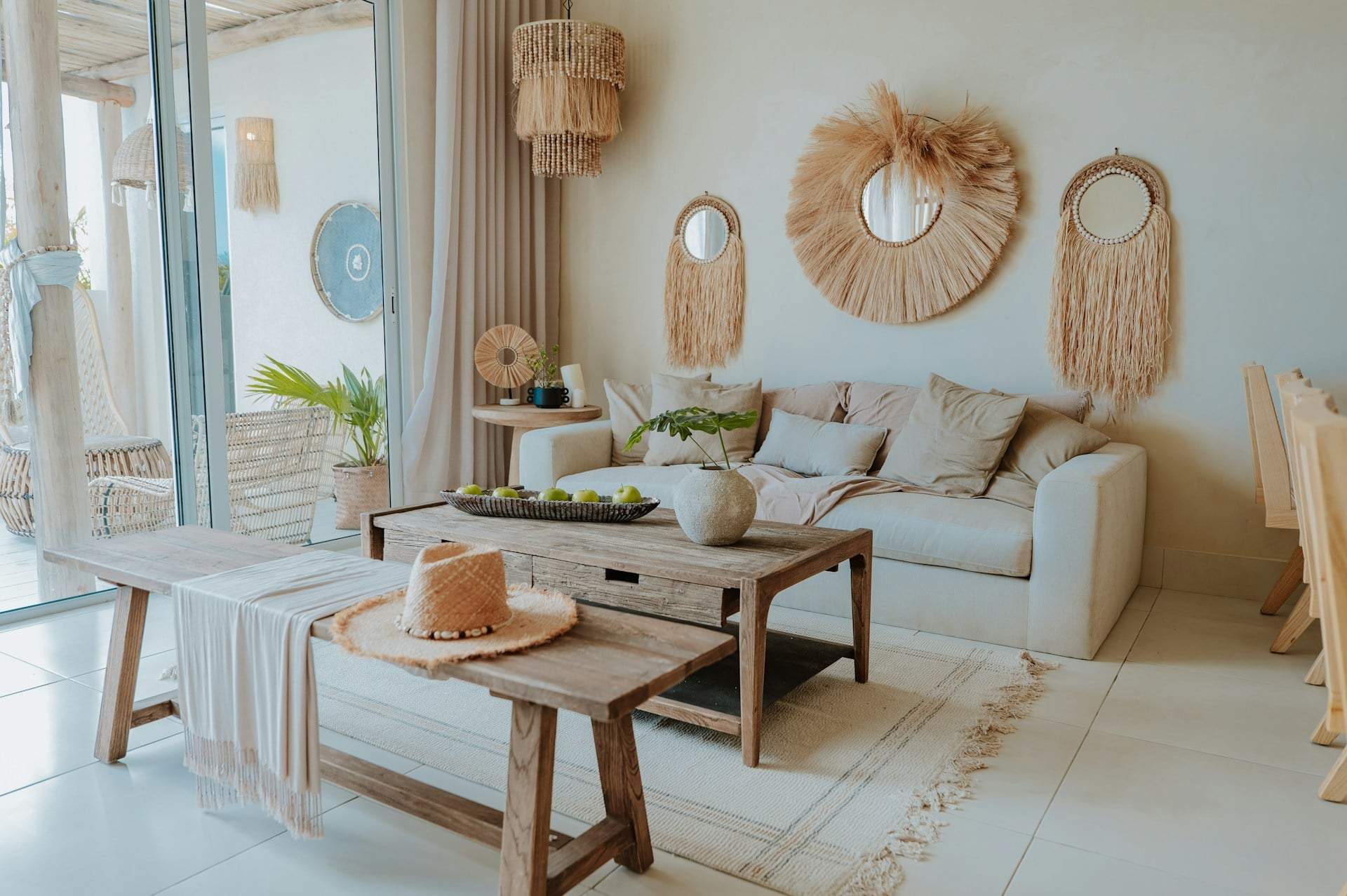
What reads as expensive in those photographs is repetition and restraint: one material, one colour family, one shape repeated. Six mismatched mugs in charity-shop cream look far more intentional than three good mugs in three unrelated colours. Decant if you like decanting, but only into containers that are genuinely airtight and easy to open one-handed — coffee hates light and air, and you will hate a lid that needs two hands at dawn.
Add one thing that isn't functional. A small plant that tolerates steam, a jug of whatever is on the market stall, a photograph in a cheap frame propped at the back. That single non-useful object is what turns a set of appliances into a corner you like standing in. Wooden spoons, linen napkins folded small, a stack of saucers used as spoon rests — texture does more than expense.