For the sticky corners, two home methods
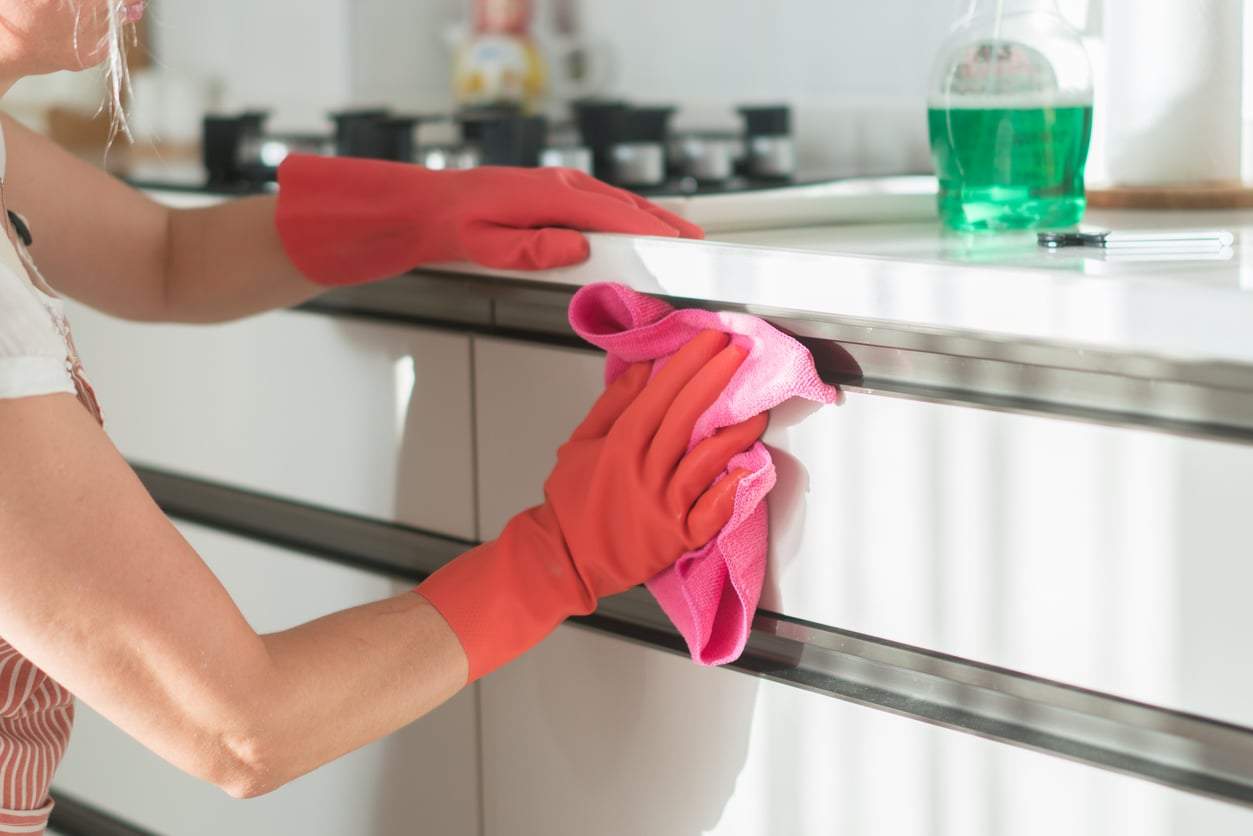
Where the film has gone truly gummy — handles, the edge nearest the hob, the underside of a wall unit — make a loose paste of bicarbonate of soda and a little warm water, apply it with a soft cloth, let it sit for a few minutes and then wipe away. Bicarb is mildly abrasive and mildly alkaline, which is exactly what old fat dislikes. Use a cloth or a soft sponge, never a scouring pad, and test on a hidden corner first, because on high-gloss and painted doors anything gritty can leave fine scratches.
The second method sounds wrong and works beautifully: a few drops of neutral cooking oil on kitchen paper, rubbed over the sticky area. Like dissolves like, and oil lifts the polymerised residue in a way water struggles to. Then you must degrease the oil itself with hot soapy water, or you've simply applied a fresh coat. I use this on greasy handles and the extractor's metal frame.
Know what your doors are made of
Most modern kitchen doors are a wood composite with a foil or laminate wrap, and their weak point is the edges, where water can creep in and lift the covering. So: damp cloths, not wet ones, and dry immediately. Real wood and oiled wood don't want prolonged moisture either, and painted doors can be dulled by strong solvents.
Vinegar gets recommended for everything, and it does cut light grease, but it's acidic — keep it off natural stone worktops, unsealed wood and anything brass or marble-effect, and don't leave it sitting on painted finishes. Likewise, resist the heavy-duty degreasers sold for ovens on cupboard fronts; they're formulated for enamel, not for a painted MDF door, and they can leave a permanent dull patch.