Then make it stick less next time
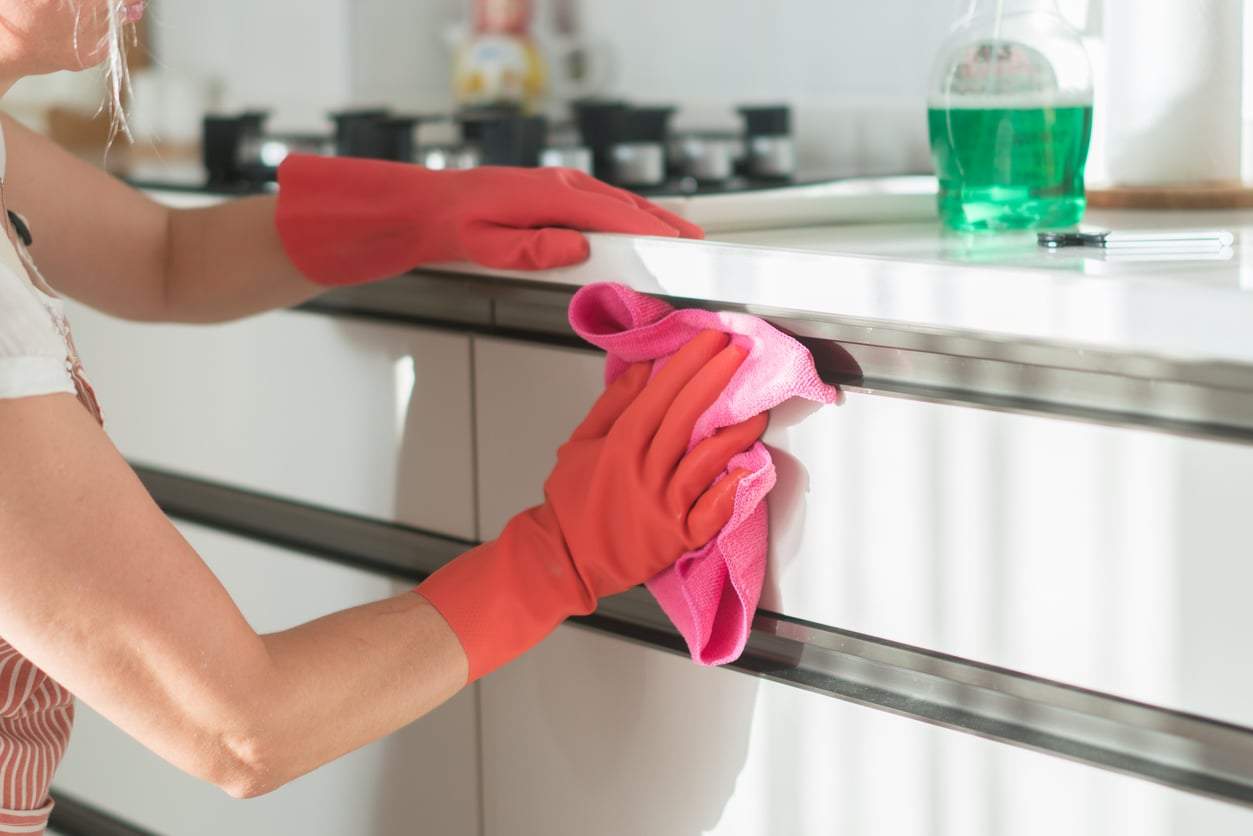
Three habits keep the film from rebuilding. Turn the extractor on before you start cooking, not halfway through, and leave it running for several minutes after, since the airborne fat lingers. Use a splatter guard for anything frying hard. And wipe the doors immediately either side of the hob once a week while the kitchen is still warm, when the residue is soft and comes away with almost nothing.
Wash the extractor's metal mesh filter regularly too — in hot soapy water, or on a hot cycle in the dishwasher if the manufacturer allows it. A clogged filter stops pulling air, and everything it fails to catch lands on your cupboards instead.
Can I use bicarbonate of soda on painted cupboard doors?
Usually yes, as a soft paste rather than a dry scrub, and always tested on an out-of-sight corner first. Apply it with a cloth or soft sponge, never a scourer, keep the contact brief and rinse and dry afterwards, because leaving it to dry on a painted surface can leave a chalky bloom.
Why does the grease come back so quickly?
Because the source is still there: every pan of hot oil throws a fine mist that settles across a surprisingly wide area, and any detergent residue left on the doors gives the new layer something to cling to. Running the extractor longer, rinsing properly after cleaning and doing a quick weekly wipe near the hob will stretch the gap between deep cleans considerably.