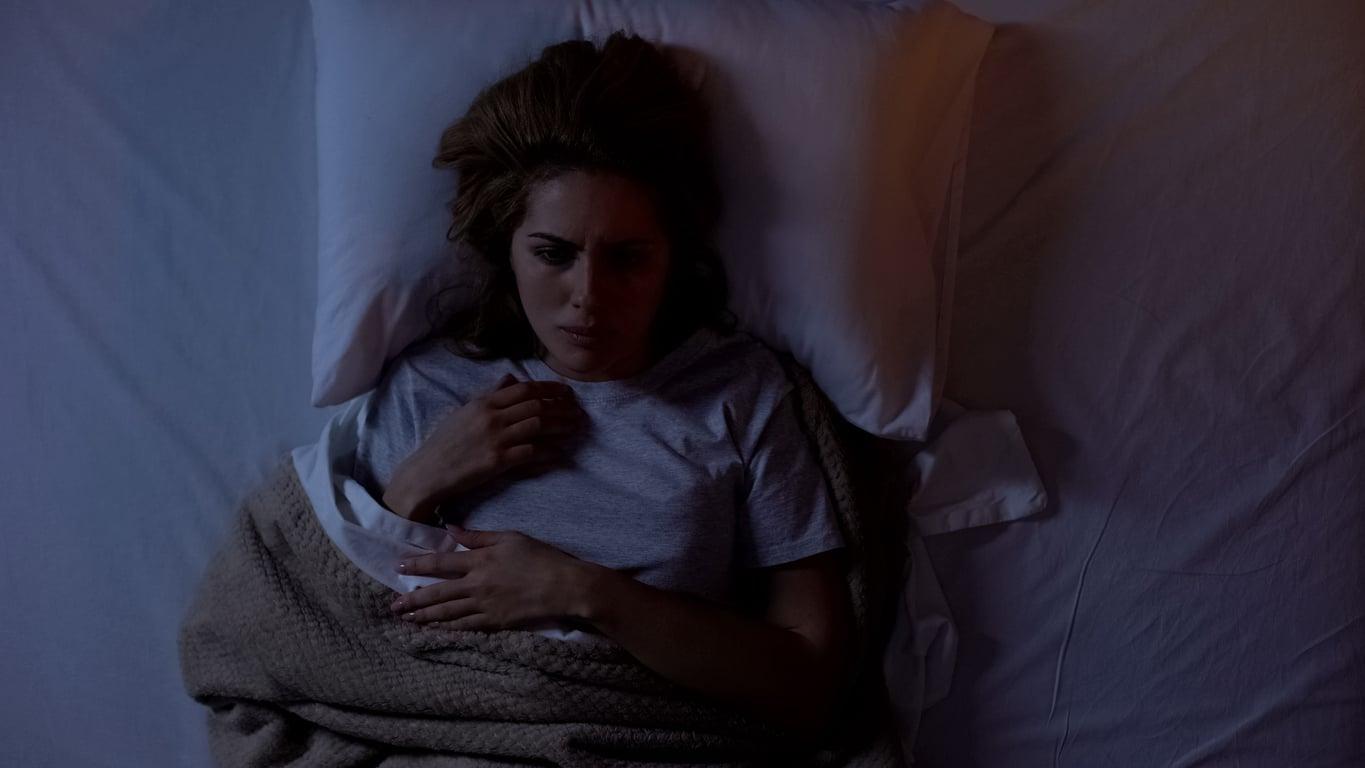
I spent months searching for the perfect apartment. When I finally found it — a small, renovated studio in the heart of the city, high ceilings, original moldings, old parquet floors and vintage window handles — I was absolutely certain I'd made the right call. The real estate agent told me the building dated back to the early 1900s, and that most of its original details had been carefully preserved through the renovation. It felt exactly like the kind of place I'd always dreamed of living in. But on that very first night, lying on just a mattress on the floor with boxes still unpacked around me, I had the unsettling feeling that someone was watching me.
The first signs
I told myself it was just the strangeness of a new space. It's normal to feel more alert in an unfamiliar environment — every creak sounds louder, every shadow feels a little wrong. But the feeling didn't fade.
During the first week, I kept waking up at exactly the same time every night — around 3 a.m. — without any obvious reason. No sound, no bad dream. Just a sudden, wide-awake alertness in the dark.
Once, I had the distinct physical sensation that someone had sat down on the edge of my bed. I switched on the lamp immediately. Nothing. Another time, I heard a faint knocking from the kitchen — like someone gently tapping the tiles — but when I went to check, there was nothing there to explain it.
My neighbor's strange reaction
A few days later, I ran into my neighbor in the stairwell. I mentioned I'd just moved in. She gave me an odd look — something between concern and hesitation — and said only that she hoped I'd be comfortable here. The way she said it made me press further. After a moment, she told me that an elderly man had lived in my apartment for years, completely alone, before he passed away there.
When I tried to ask more, she deflected quickly, steering the conversation somewhere else as if she'd already said too much. That evasiveness stuck with me. If there was truly nothing unusual about the place, why would the subject make her so visibly uncomfortable?
What I've found out since
I eventually spoke to the building manager, who confirmed what my neighbor had hinted at: the previous tenant had died alone inside the apartment, and it was several days before anyone found him.
That fact alone doesn't prove anything. Deaths happen in apartments all the time, and most of those places never feel strange afterward.
But something in the way the building manager said it — a slight pause, a careful choice of words — made me feel like even he sensed that something in that apartment wasn't quite right. He added that the man had been a loner in his final years, rarely seen by the neighbors, as if he'd deliberately withdrawn from the world around him.
I don't consider myself a superstitious person. Rationally, I know there are explanations: old buildings make noise, heating pipes expand and contract, parquet floors settle. I know my mind is probably weaving a story out of everything I've heard, reshaping my perception in the evenings. Waking at 3 a.m. has its own well-documented psychological explanations.
And yet — every time I wake in the early hours, I find myself silently saying "good night" in my head, as if there's someone it's meant for.
Sometimes that thought is oddly comforting. Sometimes it gives me chills. But either way, it doesn't feel frightening exactly — more like a strange, familiar presence I've quietly gotten used to.
I don't know whether I'll ever understand what's behind any of this, or whether there's anything to understand at all. What I do know is that every evening when I come home, I walk through the door a little differently now — as if I'm greeting not just an empty apartment, but someone who's already there waiting.
Maybe one day I'll reach out to someone who knows how to handle this kind of thing. For now, I'm still holding onto the hope that it will simply pass on its own — and that eventually, I'll feel like I'm truly home alone again.
Is waking up at 3 a.m. really a sign of something paranormal?
Not necessarily. Sleep experts point out that waking between 3 and 4 a.m. often has physical causes — a natural dip in body temperature, light sleep cycles, or underlying anxiety. That said, many people in unfamiliar spaces report heightened nighttime alertness, which can make ordinary sounds feel significant.
Can a building's history actually affect how you feel inside it?
Psychologically, yes. Once you know a space has a difficult history, your brain tends to interpret ambiguous sensory input — a creak, a shadow, a draft — in line with what you already believe about the place. This is a well-documented cognitive bias, not evidence of the supernatural.
What should you do if your new home feels unsettling?
Start by ruling out practical causes: old buildings make a surprising amount of noise, and poor insulation or drafts can create strange sensations. If the feeling persists and affects your sleep or daily life, speaking to a therapist can help — especially if anxiety or stress from the move itself may be playing a role.
Is it normal to feel emotionally connected to a space where someone has died?
Many people report a heightened emotional sensitivity in such spaces, and that's entirely human. Whether you interpret it as a lingering presence or simply as empathy for a life lived there, the feeling itself is a normal psychological response to a powerful piece of information.