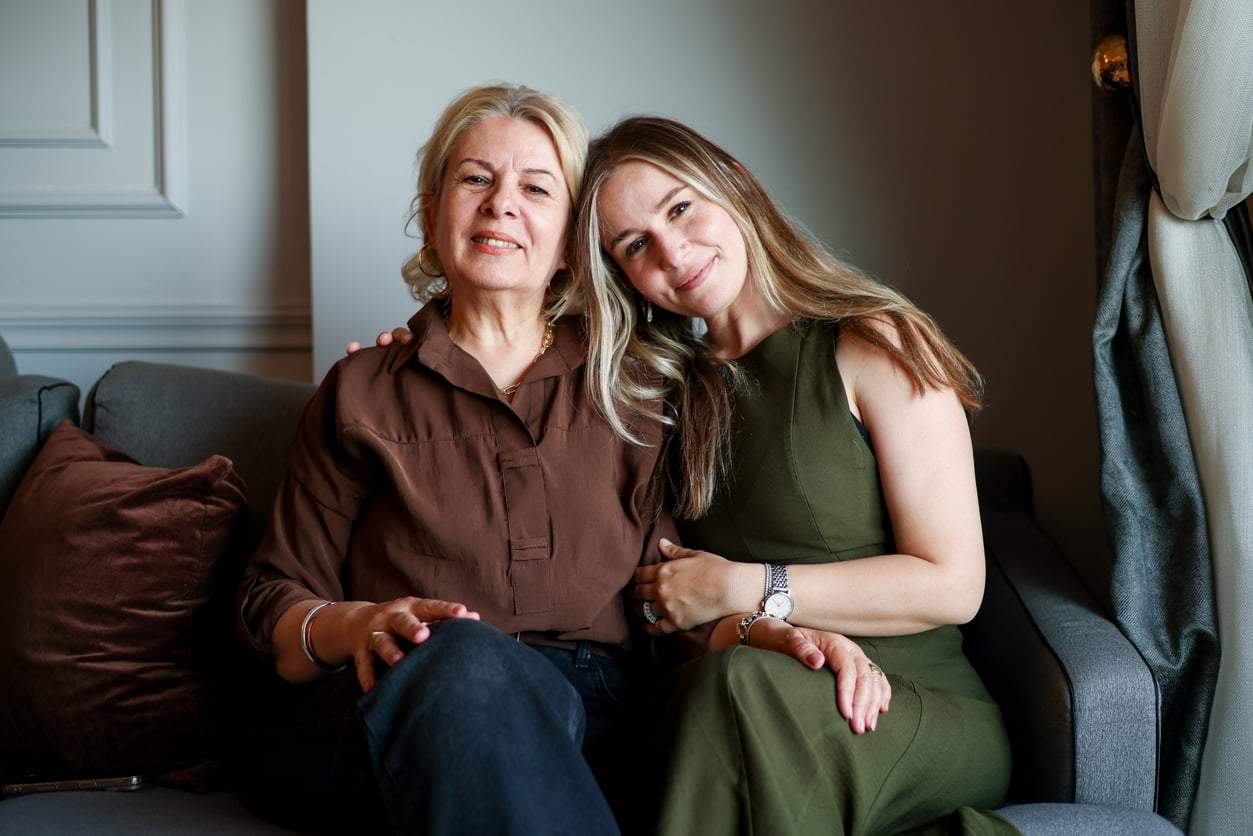
I was 62 years old when my mother sat down across from me at the kitchen table, spread out a stack of old family documents, and told me it was time I knew the truth. I had lived my entire life as Edit. My kindergarten teachers called me Edit. My coworkers called me Edit. My husband had called me Edit for forty years. Then I found out that in the eyes of the church, that was never my name at all.
The truth was hiding in a wooden box
In the months before she died, my mother began sorting through her papers. She said she didn't want me to have to face everything alone after she was gone — she'd rather tell me herself, while she still could. She kept the important documents in a small wooden box: birth certificates, old letters, things that had gathered dust for decades. Among them was my baptismal record from the parish church in the small town where I grew up.
The name on that paper was not Edit. It was something else entirely — an old-fashioned name from my grandmother's generation, the kind nobody uses anymore. A name I had never once heard spoken as my own.
It turned out my grandmother, a deeply religious woman, had insisted that I be named after her late aunt, who had died young in a house fire. My parents, however, had something else in mind — a fresher, more modern name that suited the late 1960s. At the christening, when the priest asked what the child was to be called, my father panicked. He didn't want to upset his mother in the middle of the ceremony, so he said the name she wanted. But the moment the family got home, my parents simply went back to their original choice. They registered me as Edit at the civil registry office, and that was that.
The church record and the civil record never matched. Nobody said a word about it. Over the years, the whole thing was quietly forgotten — or buried.
Sixty-two years spent in someone else's shadow
For sixty-two years I carried a name I loved. Then I discovered that somewhere in a parish ledger, another version of me had been waiting — someone with the same face and the same life, but a name I'd never known.
When my mother told me, I didn't cry. A strange, cold calm came over me instead. I asked why she hadn't said anything sooner. She said that when my grandmother was still alive, they were afraid of stirring things up. Then the years passed, and the longer they waited, the harder it became to bring up something so old and so heavy. There was a moment when I felt angry — not really about the name itself, but about the fact that I had been living inside a half-truth for fifty years without ever knowing it.
But then I looked at the handwritten entry in that old record, at the faded ink, and something shifted. I understood. This wasn't a deliberate lie. It was a decision made by a young, flustered couple on a Sunday afternoon — a decision they never found the courage to revisit.
I found my other name in an old parish book
I went back to the church where I was baptized to see if the original entry still existed. It did. A leather-bound ledger, handwritten in slightly angular letters, sitting on a shelf in the sacristy. I stood there and stared at that other name — the one that was never really mine, yet somehow had always been there, living a parallel life on my behalf.
The priest, an older man who had no connection to my family, mentioned almost in passing that he used to come across small discrepancies like this all the time. Apparently many people never knew which of their names was the "real" one.
My husband said it changed nothing
That evening, after the children had gone to bed, I told my husband everything. He laughed — gently, not unkindly. He said it made no difference to him whether I was called Edit or something else entirely. He'd always call me what he'd always called me. That helped more than I expected.
But the question stayed with me: would my life have been different with that other name? Would I have been different? What version of myself never got to exist because a flustered father said the wrong name to a priest — and then never corrected it?
Two names, one life
The wooden box lives with me now. It sits on top of the wardrobe. Sometimes, when the house is quiet and I'm alone, I take out both papers and read that other name again. I try to imagine what it would have felt like to grow up with it. It doesn't hurt the way it did in those first few weeks. It doesn't feel like a loss anymore.
It feels more like a photograph of a relative I never met — someone who belongs to me anyway, in some quiet, unspoken way.
Have you ever discovered a family secret like this?
Stories like mine are more common than you might think. Old church records, civil registry documents, and the paperwork tucked away in family boxes sometimes reveal details that were quietly set aside decades ago — not always out of malice, but out of fear, habit, or simply the exhaustion of everyday life.
If you've ever uncovered something unexpected about your own name, your family history, or your identity, you're not alone. These discoveries have a way of reshaping who we think we are — not by taking something away, but by adding a layer we never knew was there.
Does a baptismal name have legal significance?
In most countries, only the name registered with civil authorities has legal standing. A baptismal name is a religious record and carries no official weight unless it matches the civil registration.
What happens when a church record and a civil record don't match?
Discrepancies between religious and civil records were surprisingly common in earlier decades, especially in smaller communities. Today, if discovered, they are typically treated as a historical curiosity rather than a legal problem — unless someone actively needs to reconcile them for official purposes.
Can finding out a family secret like this affect your sense of identity?
It can, and often does — even when the secret seems small on the surface. As the author describes, the emotional impact comes less from the name itself and more from the realization that part of your story was unknown to you. Many people find that with time, the discovery adds depth rather than disruption.
Is it common for families to keep name discrepancies secret?
According to the article, the family didn't intend to keep it a secret forever — the topic simply became harder to raise as the years went on. This kind of gradual silence is a pattern many families recognize, where a decision is postponed until it becomes almost impossible to revisit.
What should you do if you find an old family document that surprises you?
Start by talking to the oldest living relatives who might have context. Original parish records are often still held at local churches and can be viewed on request. Civil registry archives are also accessible in most countries and can help clarify the official record.