Walking home from the courthouse, I actually thought the worst was behind me. I sat in the hallway outside the courtroom, the papers tucked into my bag, and felt something strangely close to relief. We'd dragged the decision out for two years, and then it was finally done. I was sure that would be the hardest day of my life.
I was wrong.
Telling your child that mom and dad are splitting up
Sophie was eleven at the time. My ex-husband and I had planned it all out in advance — what words to use, when to sit her down, how to say it. We gathered at the kitchen table, him on my side, our daughter across from us, and we told her that mom and dad were going to live apart, but that we both loved her exactly as much as we always had.
Sophie went quiet. She didn't cry, she didn't shout. She just nodded, and then asked whether this meant she wouldn't have to lie awake anymore listening to us argue at night. That one hurt — but somewhere deep down, I understood.
The sentence I never saw coming
What truly floored me happened a few weeks later. It was a Saturday afternoon, and I was reorganizing the wardrobe, because half of it had sat empty since the divorce and I couldn't stand looking at the gap. Sophie came into the room, sat down on the edge of the bed, and just watched me. Then she said it:
"Mom, you're happier now than you were when you lived with dad."
It wasn't a question. It was a statement.
My first instinct was to laugh, because it clashed so badly with the moment. There I stood with red-rimmed eyes, boxes of shoes at my feet — and my child was telling me I looked happier. But then I sat down next to her on the bed, and I realized she was right.
Not in the last few weeks, and not when I signed the divorce papers — but long before that, months, maybe years earlier, I had started to lose myself. Sophie had seen it all. She'd been there the whole time. I just never noticed that she, too, could sense me growing quieter and quieter in my own home.
I had no idea my child had spent months watching me slowly disappear from myself.
What even an eleven-year-old could see
We talked for a long time after that. She sat beside me, swinging her legs over the edge of the bed, and said things I never expected to hear from an eleven-year-old. That she remembered when I used to laugh in the kitchen while cooking. That lately I mostly just spoke in low tones on the phone, behind a closed door. That she'd felt relieved when she found out we'd be living apart — because she thought maybe then I'd go back to being the way I used to be.
That was the moment I understood the divorce wasn't the rupture I'd imagined it to be. The rupture had happened much earlier — I just hadn't let myself see it. The date on those papers only marked the day something became official, something that had already lived inside our walls for a very long time.
A year later, I see the divorce differently
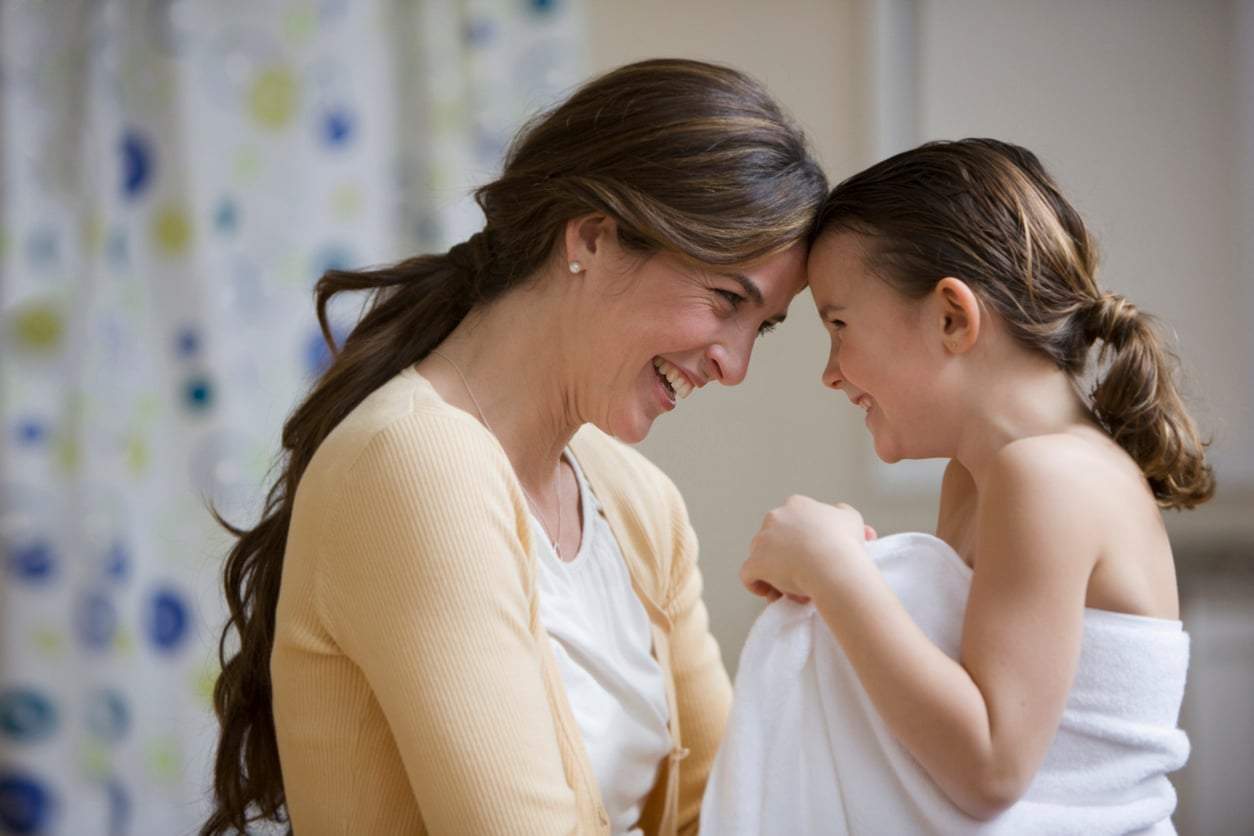
A year has passed since then. Sophie and I still come back to that conversation now and then — sometimes she brings it up, sometimes I do. Every so often she'll just say how nice it is on Sunday mornings, when the two of us make pancakes and nobody has to stay quiet. And I stand there by the stove, still trying to understand how my own child saw me more clearly than I saw myself.
I still don't quite know what to do with the fact that the most painful sentence of it all wasn't spoken in a courtroom — it was said at home, as I stood in front of a half-empty wardrobe, by an eleven-year-old. All I know is that I look at myself differently in the mirror now. And sometimes I still hear Sophie's voice saying the words I'd never have had the courage to admit to myself.
Why is it so hard to notice we've lost ourselves in a relationship?
Because the change is usually slow and quiet. As this mother's story shows, growing quieter and pulling back can happen so gradually that the person living it barely registers it — even when a child sees it clearly from the outside.
Why did the daughter feel relieved about the divorce?
She had been listening to her parents argue at night and had watched her mother grow withdrawn. She hoped that living apart would bring back the happier, more open version of her mom she remembered.
Is the day of the divorce really the hardest part?
Not necessarily. In this account, the emotional break had happened long before the paperwork. The official date simply marked something that had already been true inside the home for a long time.