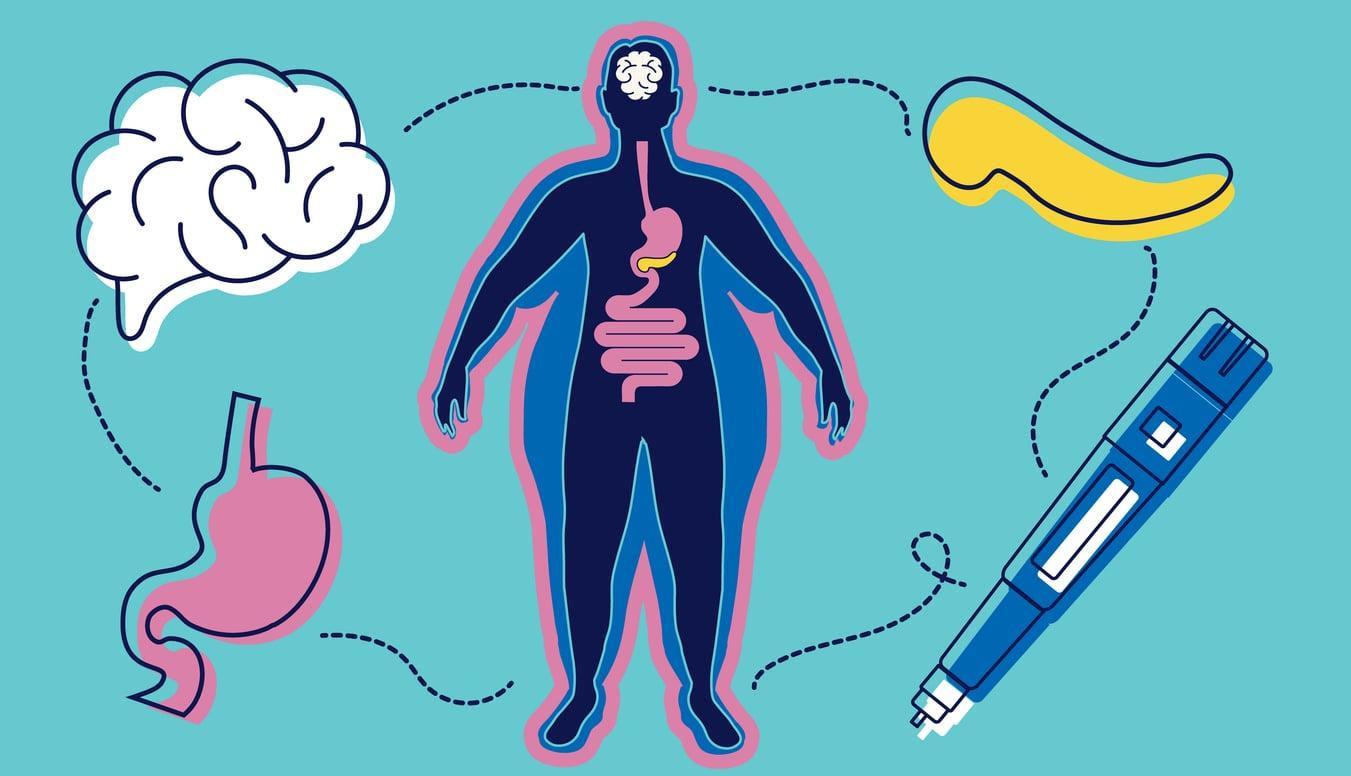
GLP-1 drugs have become one of the most talked-about topics in health and medicine — and for good reason. Millions of people are using them to control appetite and shed significant weight. But what happens to your body after months or years on these medications? The long-term picture is more nuanced than the headlines suggest.
What GLP-1 actually does in your body
GLP-1 (glucagon-like peptide-1) is a hormone your body produces naturally. It plays two key roles: it boosts insulin production after meals, helping to lower blood sugar, and it suppresses glucagon — a hormone that, when elevated, drives hunger and raises blood glucose levels.
The result? You feel fuller faster, and your appetite becomes easier to manage.
GLP-1 medications work by mimicking this natural hormone, amplifying the body's own appetite-regulating signals — particularly helpful for people who have struggled to control hunger through diet alone.
Research backed by the National Institutes of Health (NIH) has confirmed that GLP-1-based treatments can be genuinely effective for obesity management — not just as a temporary fix, but as a meaningful medical intervention.
The long-term effects: what we know and what we don't
Short-term, the results can be impressive. People using GLP-1 drugs often see significant weight loss and improved blood sugar control. They may also reduce their risk of serious complications linked to obesity, including type 2 diabetes and cardiovascular disease.
But the long-term picture is still being written.
A 2021 study published in the Journal of Clinical Endocrinology & Metabolism found that while weight loss can be sustained over time, some patients experienced a gradual reduction in the appetite-suppressing effect — meaning the medication's impact may shift as the body adapts. This makes ongoing monitoring and occasional treatment adjustments essential, not optional.
Side effects are also part of the equation. The most commonly reported include nausea, digestive discomfort, and diarrhea — especially in the early weeks of treatment. For most people these ease over time, but they can meaningfully affect daily life while they last.
Why lifestyle changes still matter — even on medication
Here's the part that often gets lost in the excitement around GLP-1 drugs: they are not a standalone solution. Without genuine lifestyle changes alongside them, their effectiveness is significantly reduced.
Healthy eating habits and regular physical activity remain the foundation of lasting weight management. GLP-1 medications work best when they support a broader shift in how you live — not when they replace it.
Studies consistently show that patients who combine GLP-1 treatment with a healthier diet and exercise see far better outcomes than those who rely on the medication alone. The drug can quiet the noise of constant hunger, but what you do with that quieter appetite still matters enormously.
Who benefits most — and what to watch for
GLP-1 drugs can be a genuine turning point for people who have tried conventional diets repeatedly without lasting success. They offer a medically supported path forward where willpower alone has fallen short.
That said, this is not a one-size-fits-all treatment. Appetite management should always be personalized — ideally developed in close collaboration with a qualified healthcare provider who can monitor your progress, adjust dosing, and catch any side effects early.
The promise of GLP-1 medications is real. But so is the responsibility that comes with using them wisely — and the evidence is clear that the best results come to those who treat the medication as one part of a bigger, healthier picture.