Most of us say "I do" expecting to feel more secure, more loved, more at home. And yet, for so many couples, something quietly shifts after the wedding. The warmth doesn't disappear overnight — it just slowly, almost imperceptibly, cools. Call it the post-marriage chill. Call it emotional climate change. Whatever the name, it's real, and it's worth talking about honestly.
The conversation that got me thinking
At a recent dinner with friends, I noticed something telling about how the room had split. On one side: couples like us, who have been together — married or otherwise — for ten, fifteen, twenty years. On the other: people who've spent the last decade happily avoiding any serious commitment.
What brought both sides together was a single topic. The men in the group began, with surprising unanimity, to talk about how much women change after marriage. Not physically — they were quick to clarify that. They meant emotionally. More tension. More distance. Less warmth.
My first instinct was mild irritation at the generalization. But then I caught myself. Is it really that women change? Or is it that their reactions change — because the situation around them has changed? And isn't it worth asking whether men change too?
According to psychology, the moment we become husband and wife, old patterns inherited from our parents often switch on unconsciously. The charming pursuer becomes the "functional provider." The attentive partner becomes the "household manager." And somewhere in that role shift, the playfulness quietly disappears.
Does that piece of paper actually mean something?
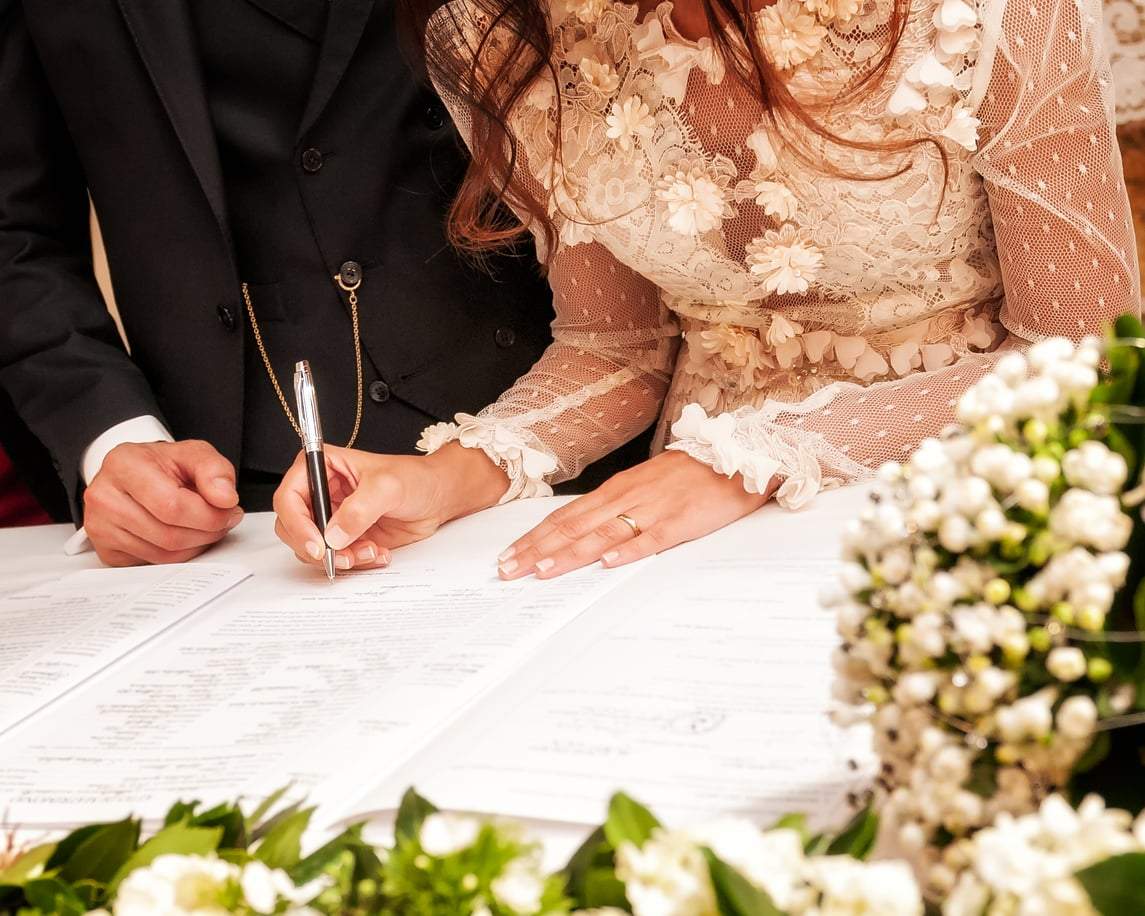
We've all heard the line: marriage is just a piece of paper. Especially when a couple already shares a home, a mortgage, maybe even investments. And yet, that signature seems capable of pressing an invisible button somewhere deep in the psyche.
For many people, making it official feels like a psychological finish line. Once the trophy is on the wall, the pursuit stops. If a man stops courting his partner because he considers the chase over, her withdrawal — the tension, the distance — isn't a personality change. It's a response. And of course, the same dynamic can run in the other direction just as easily.
What I find harder to explain are the couples who lived together for fifteen or twenty years before finally marrying. They already shared everything — the apartment, the finances, the daily routines. So what exactly does one signature change for them? Loneliness inside a marriage is more common than most people admit — and it often starts long before anyone notices.
Security isn't the same as stagnation
Nobody's personality does a complete 180 in a single night. But something does shift. My best guess? The sense of safety we gain from commitment can quietly transform into comfort — and comfort, paradoxically, is where effort goes to die.
That's not an argument against security. Security is good. But security was never supposed to be a reason to stop showing up for each other.
What struck me most in that conversation was how quickly the men assigned responsibility to the women. The "she changed" narrative is an old one, and it's rarely the full story. Real change after marriage is almost never one-sided.
Maybe the paper doesn't transform us. Maybe it just gives us permission to stop performing — to take off the masks we wore while we were still trying to win each other over. If we treat marriage as the destination rather than the beginning of something, the emotional cooling isn't a surprise. It's inevitable.
The post-marriage chill isn't fate. It's a mirror. It reflects how willing — or unwilling — we are to keep choosing each other once the ceremony is over and the real work begins. If you've ever wondered how easily we become someone we never wanted to be inside a relationship, the answer usually starts here.