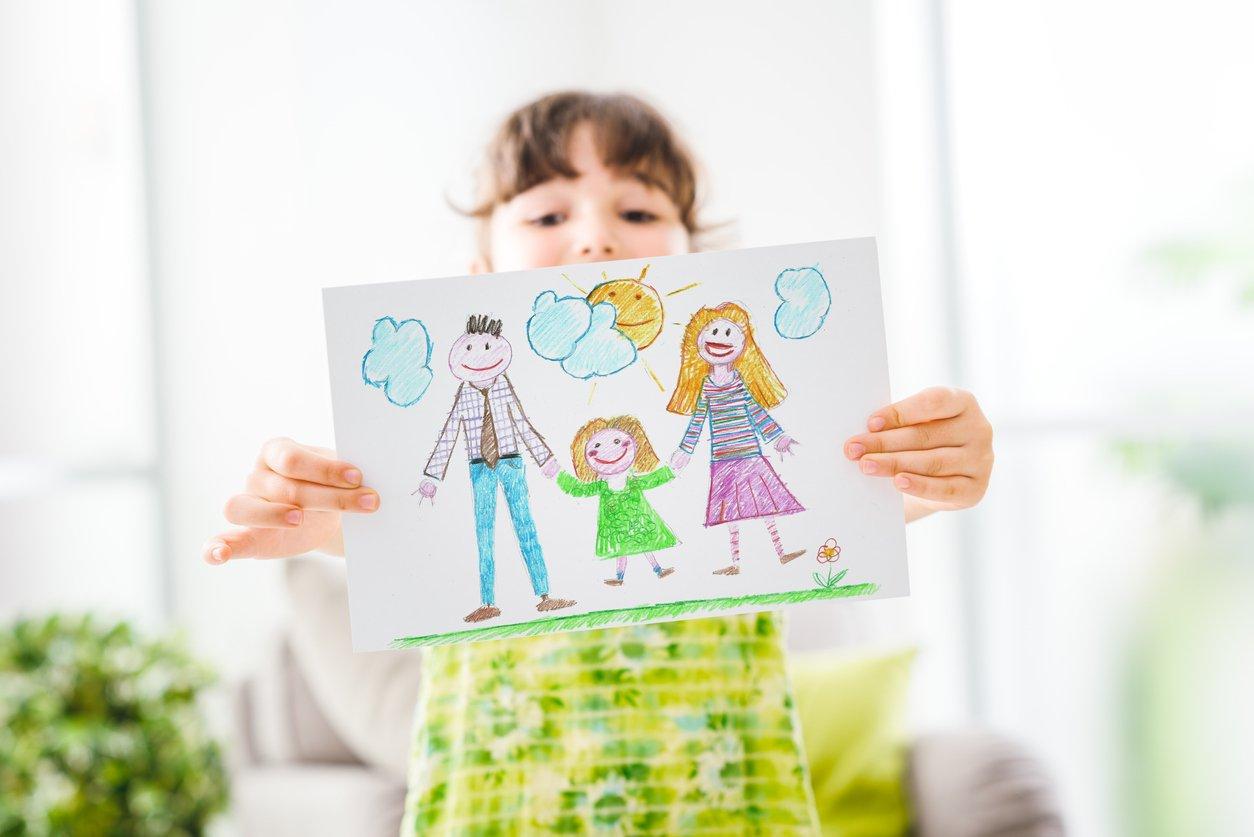
The world of children’s drawings is packed with mysterious symbols and meanings that don’t always show themselves right away. These drawings aren’t just creative pastimes—they’re mirrors of a child’s inner world. Shapes, colors, layouts, and even what’s missing can reveal emotions, desires, fears, and relationship experiences. Let’s dive into how to read these small but meaningful details!
1. The Meaning of Colors – Emotions in Code
Colors are one of the first things to notice because we unconsciously link emotions to them. Kids instinctively pick shades that reflect how they feel inside.
- Red: energetic and lively, but can also signal frustration, anger, or impulsiveness. Too much red might hint at inner tension.
- Blue: the color of security, calm, and focus. Often seen with more introverted, withdrawn kids.
- Green: balance, a love of nature, and peace, though mixed with yellow it might suggest envy.
- Yellow: the color of happiness and optimism. When dominant, it points to an active, social personality.
- Black/gray: fear, anxiety, inner conflict, especially if the child usually uses bright colors.
- Pink/purple: sensitivity, imagination, longing, but too much might mean escaping reality.
- Orange: openness and playfulness, though very intense orange can be overcompensation.
Watch for these:
- A colorful sky and green grass usually mean a happy, balanced mood.
- A completely black sun might raise concerns—worth asking why.
2. Placement of Figures – A Relationship Map in the Drawing
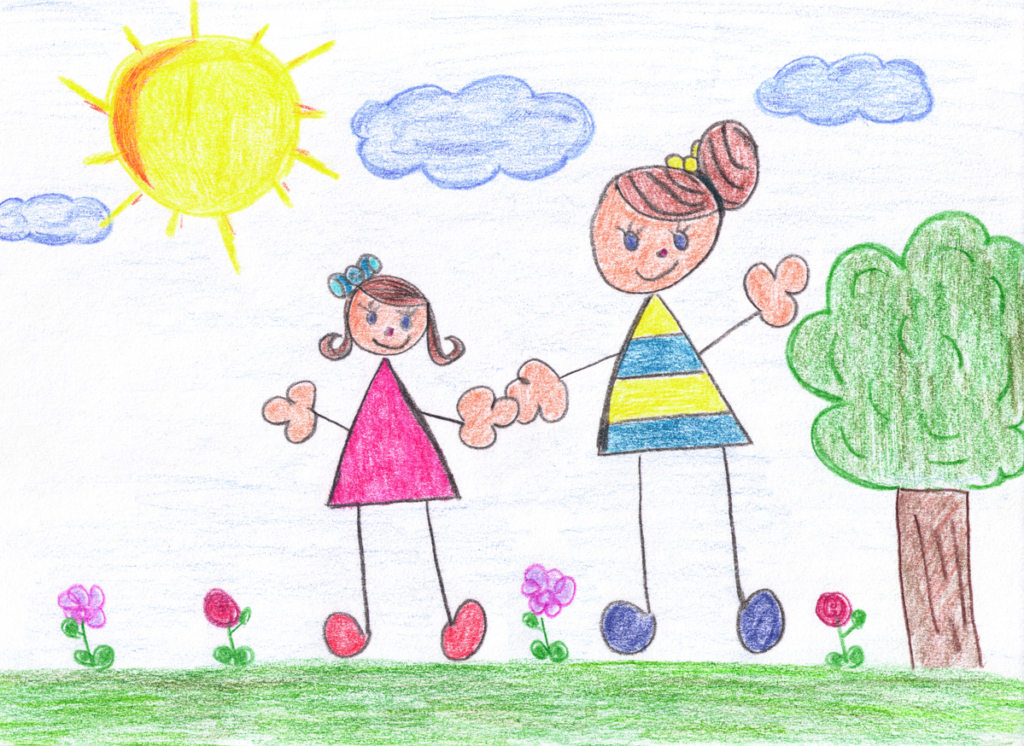
A child’s drawing acts like an emotional map—the position, distance, and direction of each figure matters.
- The figure in the center often represents the child themselves. If the parent is always in the center, the child might feel subordinate.
- Family members holding hands: feelings of safety and togetherness.
- Distant or small figures: possible emotional distance or a minor role in the child’s life.
- Figures turned away: often a sign of anger, exclusion, or loneliness.
- Blurred edges, no outlines: emotional boundary issues or uncertain relationships.
Examples:
- If a child always draws dad on the right, far away, they might be missing him.
- If a sibling is regularly left out, there might be conflict or rivalry.
3. Proportions of Figures – Important or Insignificant?
Children draw bigger what’s important, powerful, or scary to them—and smaller what’s distant or insignificant.
- Themselves as the largest: strong self-confidence or overcompensation.
- Parents drawn too large: fear or feeling subordinate.
- Sibling too small: rivalry or feeling superior.
- Big head, small body: intellectual dominance or creative overcompensation.
- Figures without hands: feeling powerless.
Keep an eye on these:
- If a young child always draws themselves in the center with a big head and a smile, that’s a great sign.
- If a child regularly omits their own legs, they might feel insecure or ungrounded.
4. Recurring Motifs – Inner Messages Repeat
Motifs that appear regularly carry unconscious messages. They may express desires, fears, strengths, or coping strategies.
- Sun, rainbow: optimism and safety.
- Clouds, rain, lightning: anxiety, conflict, or suppressed emotions.
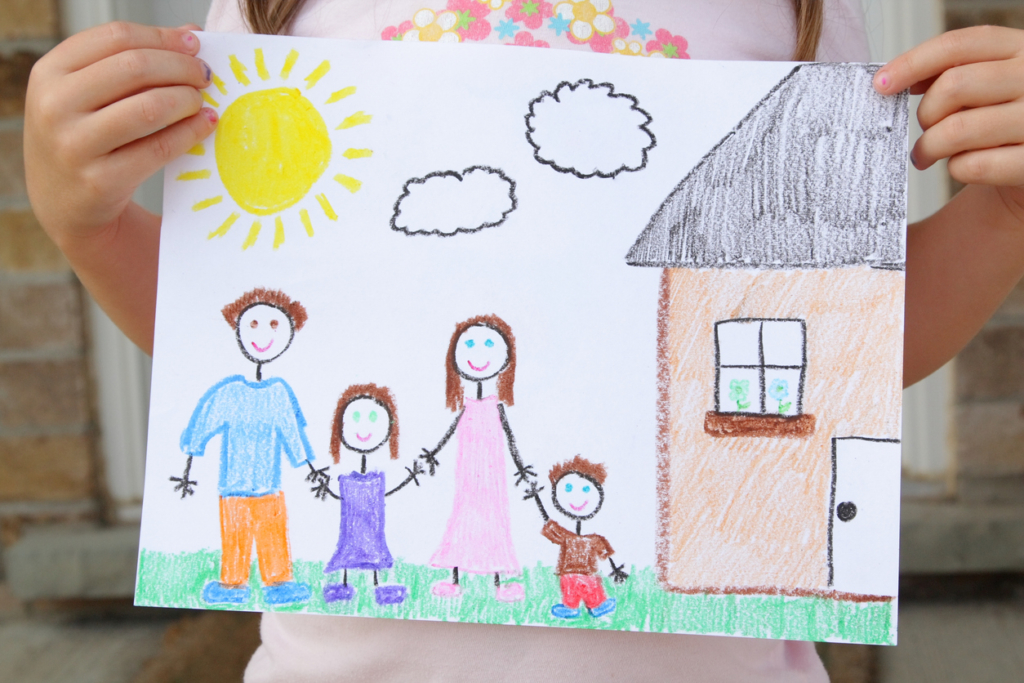
- House, tree, fence: the need for “home” and “protection.”
- Dragon, monster: inner fears, but also symbols of strength.
- Figures with crowns: leadership desires or feelings of lack (if there’s no “throne” at home).
- Flying, balloons: desire to escape or avoid reality.
Tip:
Ask your child, “Who is this figure?” or “What’s happening here?”—often, they’ll tell you the key part themselves!
5. Depicting People – Emotions on Faces and Bodies
How figures show emotions is crucial: it reveals how the child sees themselves and others.
- Smiling faces: positive relationships and happiness.
- Angry or sad faces: conflict or disappointment.
- No face: alienation or emotional suppression.
- Head only, no body: mental overload or too many thoughts.
- Claws, teeth, nails: symbols of aggression or defense.
- Transparent bodies, drawn internal organs: anxiety, bodily focus, or trauma aftereffects.
6. Structure of the Drawing – Chaos or Order?
The overall layout and detail level say a lot about a child’s mental organization.
- Scenes moving left to right: sense of time and logical order.
- Messy, overcrowded drawings: inner chaos or overwhelm.
- Very detailed: can indicate perfectionism or anxiety.
- Too much symmetry: need for control, tension.
- Empty spaces, few details: withdrawal, emotional numbness, or fatigue.
Tip:
A drawing isn’t “good” or “bad,” but if several drawings within a month are too chaotic or too sterile, it’s worth observing the child in other situations.
7. Missing Elements – What’s Not There Speaks Too
What’s missing can be just as telling as what’s present.
- No dad or mom: they might really be absent or emotionally distant.
- Child doesn’t draw themselves: feelings of neglect or low self-esteem.
- No shadow, ground, or sky: insecurity or feeling ungrounded.
- Missing body parts: could signal anxiety, trauma, or repression.
Important:
No need to panic right away—it might just be imagination—but if the same person or body part is regularly missing, it’s worth exploring more deeply.
8. The Drawing Process – It’s Not Just About the Result
It’s not only what the child draws but how they do it:
- Confident lines and energetic strokes: self-assurance and motivation.
- Lots of erasing and corrections: uncertainty or pressure to please.
- Dark outlines and overlapping: suppressed tensions.
- Heavy pencil pressure: anger, tension, or need for control.
- Light, barely visible lines: restraint or low confidence.
Tip:
Try watching your child while they draw. Some kids almost battle with the paper, while others handle it too gently—both can reveal emotional undercurrents.
Children’s drawings aren’t “just drawings.” They’re emotional maps drawn with pencil strokes, not words. They’re not diagnostic tools but can guide us: if certain patterns repeat or feel troubling, it’s worth considering that the child might be trying to communicate something this way.
The most important thing:
Don’t judge—ask questions. Often, the best approach is a simple sentence:
“Would you tell me about this drawing?”