You already know you should wear sunscreen every day. Dermatologists say it, magazines repeat it, and your social media feed reminds you of it constantly. But here's what most people don't realize: the formula in that bottle has been quietly evolving — and newer sunscreens now protect against things older ones never even considered. Do you actually know what's in your SPF? Here's what the latest generation of sun protection is doing differently, and why it might be time to take a closer look at what you're using.
The threat your sunscreen might be missing
Traditional sunscreens focus on blocking UVA and UVB radiation — and that's still the baseline requirement. But research over the past few years has revealed something that was long overlooked: blue light ages your skin too.
It works through a similar mechanism to UV radiation — generating free radicals, breaking down collagen, and deepening pigmentation. The difference? The source isn't just the sun. It's your phone, your laptop, and the artificial lighting in your home or office. If you spend most of your day in front of a screen, this is no longer a minor detail.
Older SPF formulas offer no protection against blue light. Newer-generation products, however, are specifically formulated to address this — and if the packaging says HEV protection or blue light protection, that's your signal it's working on this front too. If neither appears on the box, the product most likely only covers UVA and UVB.
What Korean sunscreens got right first
Korean skincare culture has long understood that sun protection can mean so much more than the basics. Korean sunscreens have stood out for years thanks to their lighter textures, invisible finishes, and broader-spectrum coverage — and it's no coincidence that they've become the gold standard for skincare enthusiasts worldwide.
That approach is now making its way into mainstream markets globally. More products are becoming available that genuinely go beyond basic protection. The key is knowing what to look for on the label.
What to look for when you buy your next SPF
Next-generation sunscreens can feel overwhelming to navigate, but a few label markers make things much clearer:
- Broad spectrum — means the product protects against both UVA and UVB. This is the minimum standard today.
- HEV protection / blue light protection — indicates coverage against high-energy visible light from screens and indoor lighting. This is the newer category to look for.
- PA rating — most commonly found on Korean and Japanese products, this measures the strength of UVA protection. The more plus signs, the stronger the shield. PA++++ is currently the highest level available.
If your current sunscreen only lists an SPF number with no other information, it may be time to explore what else is out there.
The formula doesn't matter if you're not using it properly
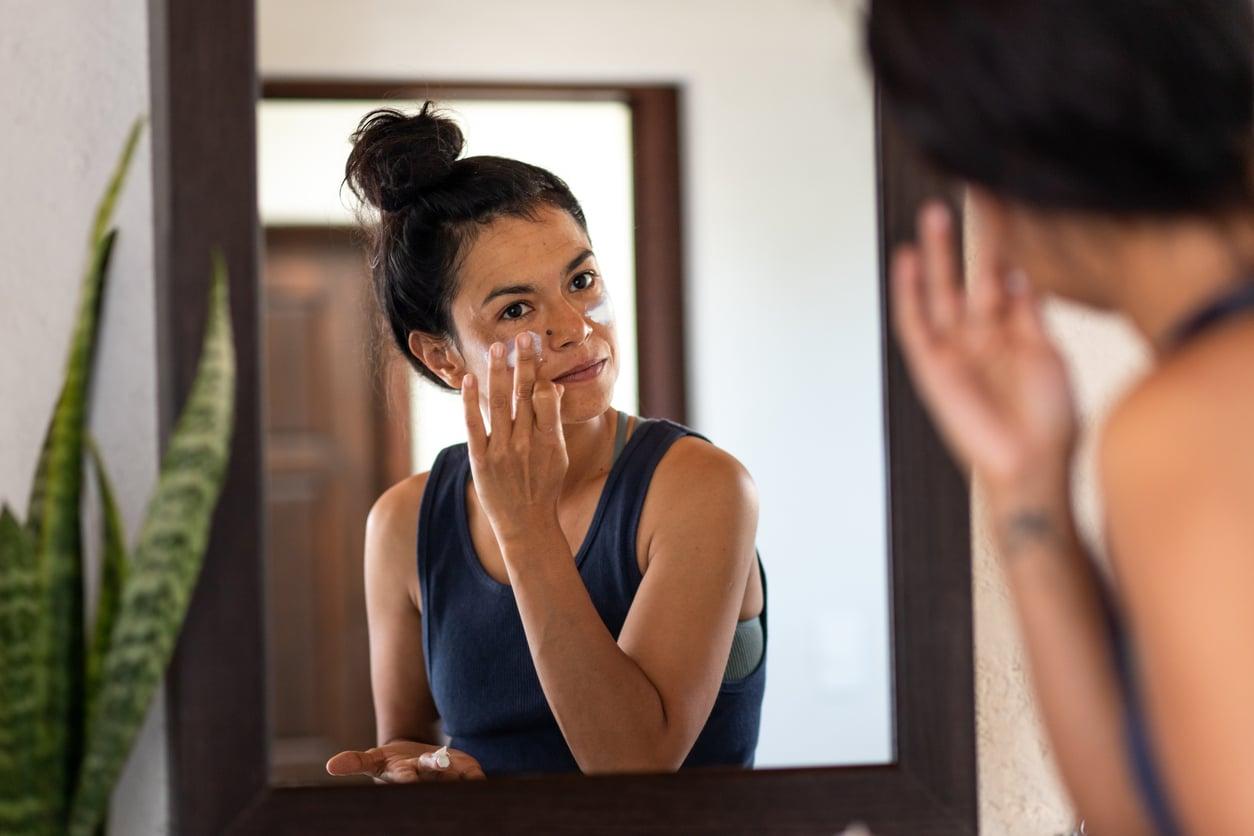
Sunscreen only works if you actually apply it. The most advanced formula in the world is useless sitting in a drawer. This is exactly why next-generation products have evolved toward lighter, more wearable textures — because the best sunscreen isn't the one with the most impressive claims on the packaging. It's the one you'll actually reach for every morning.
Most people apply far less than they need, which means they're only getting a fraction of the promised SPF protection. A fingertip-sized amount isn't enough — you need roughly half a teaspoon just for your face to get the coverage the label promises.
And if you're swimming, sweating heavily, or spending extended time outdoors, reapply every two hours — sunscreen wears off. Keep these two things in mind, and even a budget-friendly SPF will outperform an expensive one you're too cautious to use generously.