
About 15 years ago, when I started managing my own household, I had little idea how to smoothly handle everyday life. Everything was new back then: cooking, cleaning, and managing my time efficiently…
One thing I knew for sure: I didn’t want housework to take over my life. From the start, I aimed to find the most practical solutions that make daily routines shorter yet more effective.
Over the years, as I gained more experience, a system gradually took shape that works perfectly for us. We learned to balance work, study, and home tasks, and together with my daughter’s dad, we created a rhythm where everyone feels good. It wasn’t always perfect, but we learned from every situation. Maybe it’s these small lessons that help make the holidays a true joy instead of a source of stress.
Hosting Can Be Calm Too
Years ago, I never imagined hosting the family at our place for Christmas. The thought alone felt stressful: cleaning, cooking, baking, decorating, all while staying cheerful since I was the host… We usually went somewhere else to avoid the prep stress. But year by year, I grew braver, and now it’s natural for our whole family to gather here during the holidays.
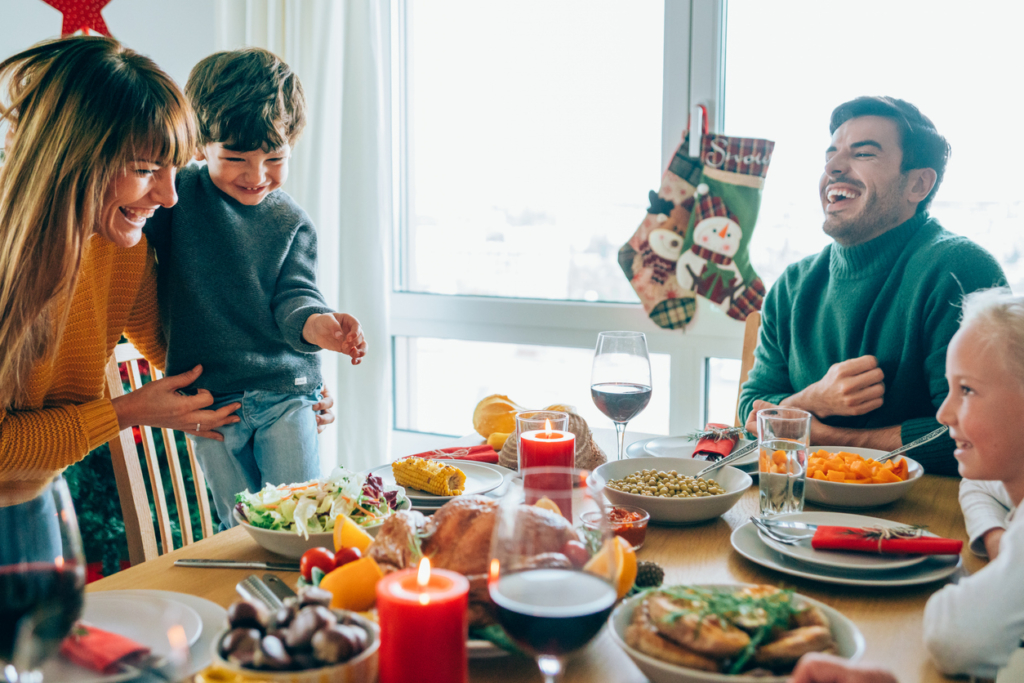
My secret? It’s incredibly simple: I don’t overextend myself. I make only as much as I can enjoy preparing. On one side of the family, we keep it casual with a snack afternoon (mostly tasty, pre-packaged, and market-bought treats), and on the other, a three- or four-course dinner. Both occasions are calm and full of love (not just for guests) because I plan ahead and give myself time to really settle into the holiday.
Small Steps, Big Relief
Over time, I realized Christmas prep isn’t about a perfect house or sparkling decorations. It’s about everyone—including me—feeling good. We’ve used an artificial tree for years, saving loads of time before and after. No chopping or cleaning up—just unpack, and together as a family, we decorate it like a little ritual.
Practicality guides our decorations too. I choose ornaments I can reuse year after year: cushion covers, ceramic figures that I freshen up with pine branches or flowers, and I only replace the candles on the Advent wreath. It’s wallet-friendly, eco-conscious, and everything still feels fresh and new.

Planning Ahead Makes Everything Easier
I try to start gift shopping in the fall. By October at the latest, I’m already thinking about what would bring joy to each person, and if I spot a good deal, I grab it. That way, by December, all that’s left is wrapping, and I avoid the holiday crowds that stress so many.
It’s probably no surprise that practicality guides my holiday menu too. I pick dishes that can be partly or fully prepared in advance. My daughter and I bake cookies like layered walnut cake, linzer, and isler days ahead—they taste better after resting. I also enjoy making layered desserts and puddings; most just need decorating before serving. Cream soups are my favorite: simple, delicious, and a pinch of nutmeg instantly adds festive vibes. I keep starters simple but loved: I shape rosemary into a wreath and decorate it with colorful olives, sun-dried tomatoes, and tofu cubes—small bites that look impressive.
For main dishes, I often prepare varied, generous cold platters and salads, which can and should be assembled the day before. Everyone loves them, and a fresh batch of meatballs or falafel on the side is perfect. Speaking of falafel, the biggest change and calmness came when I dared to break tradition. I realized Christmas isn’t about having fish soup, fried fish, and stuffed cabbage steaming on the table. Since then, my family often says we eat dishes at our holiday that we never have at home—but definitely should.
The Holiday Is for Me Too
For a long time, I thought Christmas was about having everything for everyone and that a full table meant success. Now I see it differently. The holiday belongs not only to the family but to me as well. I want to sit down, chat, laugh—not be washing windows at the last minute.
I realized no one will notice if the couch isn’t freshly vacuumed, but everyone will remember the mood around the table. It sounds cliché, but the lovely scents, shared laughter, and funny stories leave a much bigger mark—and we can recall them years later, unlike the details of a three-course meal.
A calm Christmas isn’t luck; it’s the result of conscious choices. Choices about where we spend our energy. I don’t focus on meticulous cleaning or complicated menus but on enjoying myself—and luckily, my family supports that. Maybe that’s why our holidays get calmer, more loving, and somehow more genuine every year.