When the warmer weather finally arrives, most of us start looking at our gardens with fresh eyes — and a little restlessness. Suddenly, the overgrown corner bothers you, the patio feels uninviting, and you find yourself wondering what it would take to make it all feel intentional.
The good news? You don't need to hire a landscape architect or spend a fortune. A few smart, well-considered decisions can completely transform how your outdoor space looks and feels. Here are seven tips — inspired by interior and garden design expertise — to help you get there.
Start by simply observing your space
Before you buy a single plant or move a single stone, go outside and just pay attention. Walk around at different times of day. Notice where the morning light falls, where the afternoon shade creeps in, and which corners feel naturally inviting.
When you stop rushing and actually spend time in the space, you'll start noticing small details — a sheltered nook, a sunny patch, an awkward transition — that will completely shape what you do next.
The most successful gardens aren't copied from catalogues. They grow out of what's already there.
Get the ground right first
The surface beneath your feet matters far more than most people realize. Whether you choose gravel, natural stone, lawn, or low ground-cover plants, that decision sets the entire mood of your garden.
A garden that feels good to walk through barefoot — one with a surface that's soft, warm, or simply pleasant underfoot — naturally draws people in. Think about which option suits your lifestyle, not just your aesthetic preferences. A lush lawn is beautiful, but it needs regular mowing. Gravel is low-maintenance, but it shifts underfoot. There's no universally right answer — only the right answer for how you actually live.
Think in layers, not just flat surfaces
One of the most common mistakes in garden design is thinking in two dimensions. A truly beautiful garden has depth — and that depth comes from layering plants at different heights.
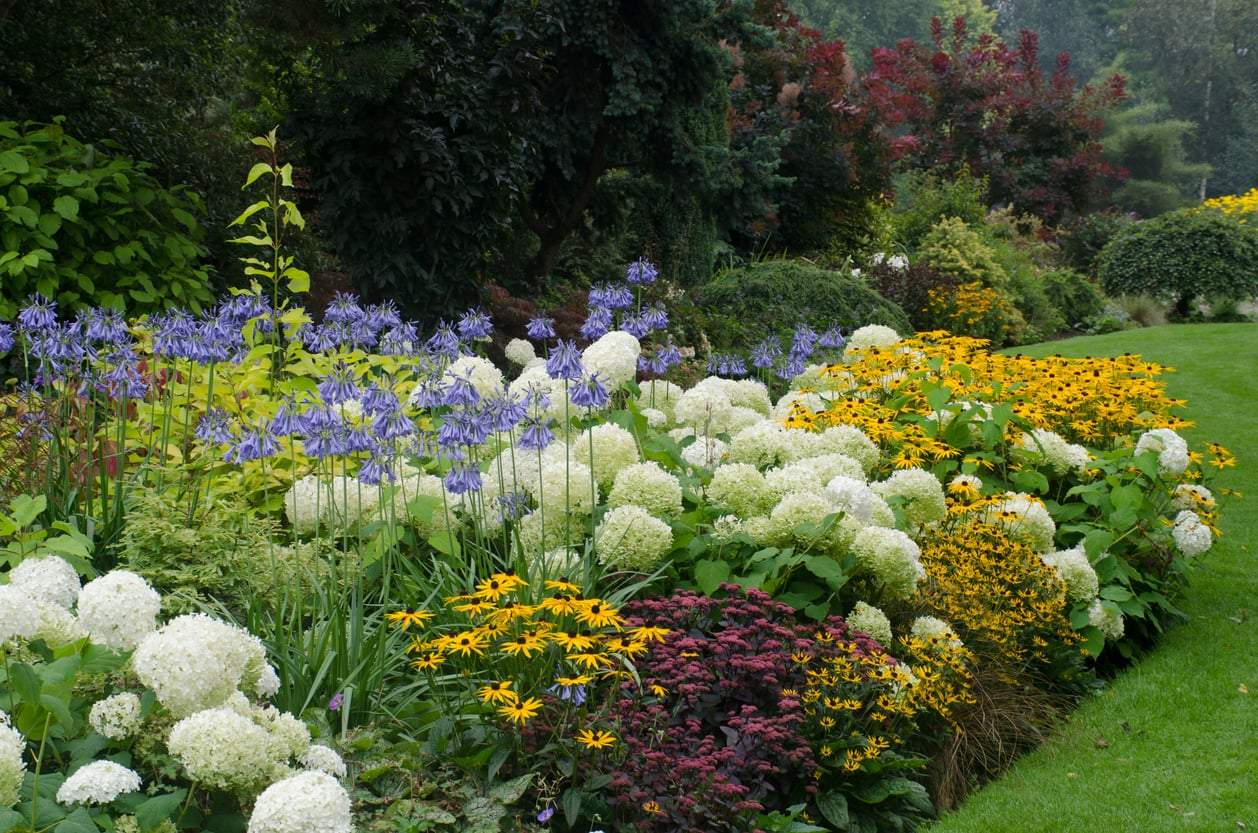
Low ground covers anchor the base. Mid-height perennials and ornamental grasses fill the middle. Taller shrubs or small trees frame the background. When these layers work together, the garden feels rich and immersive rather than flat and forgettable.
When everything sits at the same height, a garden feels one-dimensional. Layering is what makes you want to explore it.
Even the most beautiful individual plants can look underwhelming without this kind of structure. It's the arrangement — not just the selection — that makes the difference.
Plan for colour and interest across every season
A garden is never static. It changes by the hour, by the month, and by the year. That's why thinking about bloom times is so important when choosing your plants.
The goal isn't one spectacular moment in June and then nothing. Aim for a living system that always has something happening: early spring bulbs, late-spring perennials, summer flowers in full swing, and warm autumn tones. And don't forget winter — the texture of bare bark, the structure of dried seed heads, and the quiet presence of evergreens can carry a garden beautifully through the cold months.
Always follow the light when planting
This one sounds simple, but it's where many gardeners go wrong. Don't plant something where you want to see it — plant it where it will thrive.
Map out which areas are sunny, partially shaded, and fully shaded, then choose your plants accordingly. A plant in the wrong light will always struggle, no matter how much you care for it.
It's also worth being honest with yourself about how much time and energy you want to invest in maintenance. Some gardens reward daily attention; others are designed to mostly look after themselves. Neither approach is wrong — the key is matching your garden's demands to your actual life, not the life you imagine you might have.
Choose plant combinations that feel natural together
The plant pairings that work best are the ones that look like they could have grown that way on their own. Here are some combinations that consistently deliver:
- Panicle hydrangeas and ornamental grasses — the hydrangea provides structure and presence, while the grasses add movement and lightness.
- Evergreens like boxwood paired with seasonal plants — the evergreen anchors the composition year-round without making it feel rigid or formal.
- Lavender and roses — a classic pairing for good reason. Together they're visually stunning and wonderfully fragrant, making them a genuine sensory experience.
- Ferns planted beneath trees in filtered light create a calm, almost meditative atmosphere. Pair them with hostas to play with leaf size and texture without relying on colour.
- Coneflowers, rudbeckia, and native ornamental grasses — naturally compatible in their growing needs, and together they create a relaxed, wildflower-inspired look that's easy to maintain.
When in doubt, do less — and repeat it
If you're drawn to a cleaner, more minimal aesthetic, restraint is your greatest tool. A single plant species repeated across a larger area creates a sense of calm, intention, and quiet confidence that a busy mix of plants rarely achieves.
Ultimately, the gardens that feel most alive are the ones that connect with their surroundings. When you choose plants not just for how they look individually, but for how they relate to each other and to the space around them, something shifts — and the garden starts to feel whole.
If you're looking for more inspiration on what's shaping outdoor spaces right now, these 8 gardening trends worth knowing this season are a great place to start.