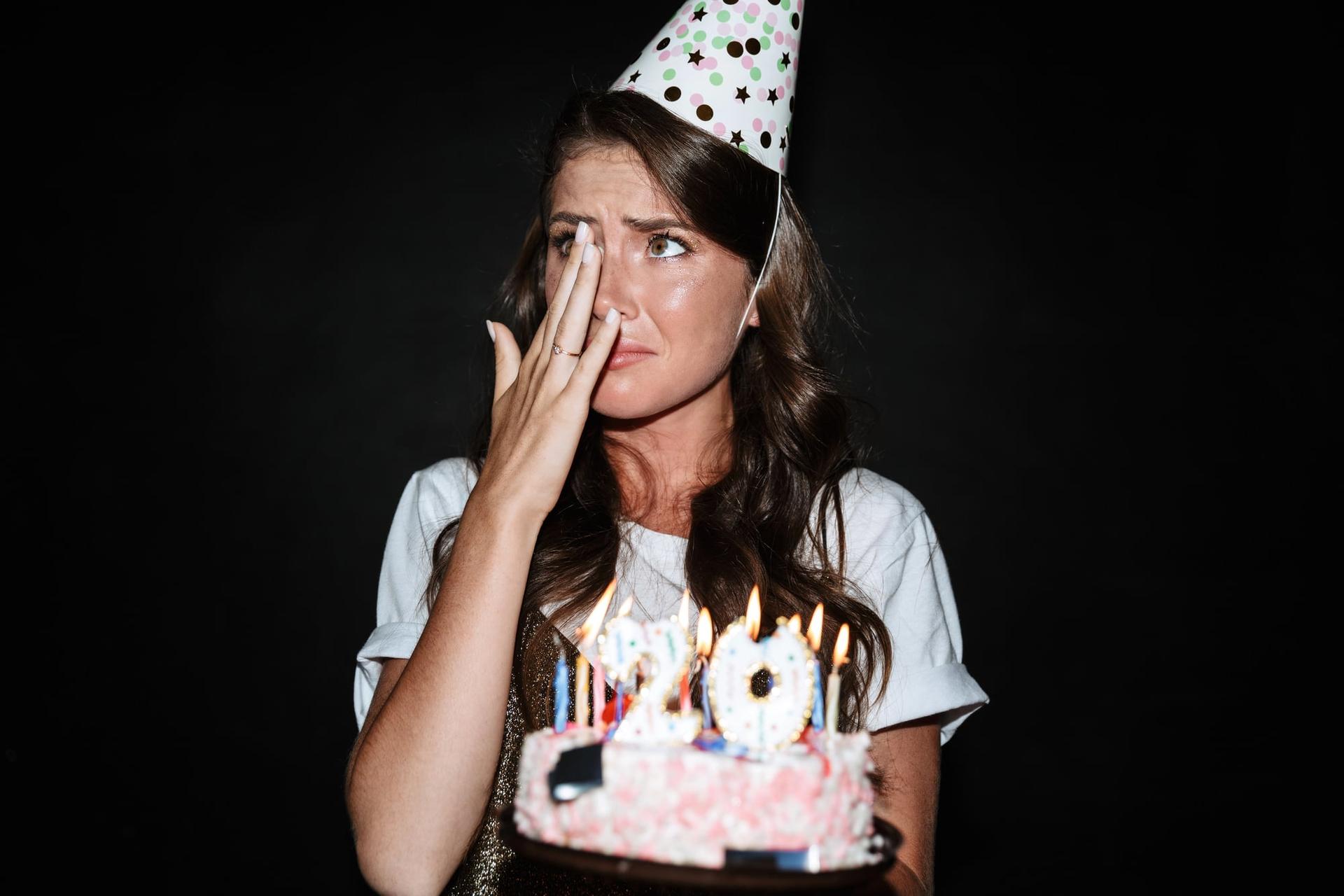
Every year, as my birthday approaches, something shifts. There's a faint anticipation — but underneath it, a quieter, heavier feeling creeps in. Thoughts about everything I haven't done yet, milestones I haven't reached, time that keeps moving whether I'm ready or not. I used to think this was just me. It turns out, it isn't.
Birthday depression is a real experience, and far more people go through it than you'd expect. It doesn't always look like clinical depression — but it can feel just as disorienting. If your birthday tends to bring more dread than joy, this article is for you.
Birthday depression isn't an official clinical diagnosis — but that doesn't make it any less real. Around a birthday, mood can dip noticeably, energy levels drop, and it becomes easy to spiral into thoughts about what you have or haven't achieved. These feelings can start days before the date itself and linger long after.
Is it birthday depression — or something else?
You won't find "birthday depression" listed in any psychiatric manual. But that doesn't mean it lacks significance or deserves to be dismissed.
According to clinical psychologist Ernesto Lira de la Rosa, birthday-related low mood can be closely connected to other mental health conditions — particularly depression and anxiety. People who have a history of either are especially likely to notice a dip around their birthday.
"Birthday sadness can be linked to other mental health conditions like depression or anxiety. For those with a history of depression, it's not at all unusual to feel a wave of sadness returning around their birthday."
What's really behind it?
There's rarely just one reason why birthdays feel hard. The causes are as individual as the people experiencing them.
"For some people, it connects to past negative experiences. Others use the occasion to take stock of their lives — and feel they're not where they thought they'd be. And for some, the birthday simply falls at a difficult time in their life."
If you've experienced trauma in the past, a birthday can act as an unexpected trigger — depending on when and how that experience occurred.
Other contributing factors include underlying depression or anxiety, fear of aging, difficult childhood memories tied to birthdays, or unresolved family tensions.
"All of these — and many other factors — can contribute to someone feeling sad on their birthday. And those feelings are completely valid." — Ernesto Lira de la Rosa, clinical psychologist
Signs you might be experiencing it
Birthday depression can look a lot like general depression. Watch for these signs in the days surrounding your birthday:
- Mood swings lasting several days around the date
- Deeper-than-usual sadness or emotional heaviness
- Crying more than normal
- Ruminating on the past — "I'm not married yet," "I don't have kids," "I haven't done enough"
- Anxiety about getting older or time passing
- Low energy and lack of motivation
- Loss of interest in things you normally enjoy
- Changes in sleep or appetite
- Difficulty concentrating
- Physical complaints like aches or tension
- Wanting to skip or avoid any celebration
- A strong urge to isolate yourself
What you can actually do about it
The good news: there are real, practical ways to ease these feelings — or at least make the period a little more manageable.
Let yourself feel it
"We tend to associate birthdays exclusively with happiness and celebration — but that's not everyone's reality. If you're not feeling joyful right now, give yourself permission to feel sad." — Lira de la Rosa
Trying to suppress what you're feeling rarely works. When you allow emotions to simply be present — without judgment — you create space to understand what's really going on beneath the surface.
Turn inward with kindness
Pay attention to what's happening inside: what emotions are surfacing, what thoughts keep returning, where you feel tension in your body.
"When we become more aware of our feelings, we can relate to ourselves with more compassion. We can remind ourselves that we're human — and that it's completely okay to experience a wide range of emotions."
Avoiding feelings tends to amplify them. They stay with us until we actually process them.
Talk to someone
A friend, a family member, or anyone who will genuinely listen can make a surprising difference. You might be amazed how many people feel exactly the same way around their own birthdays. Simply saying out loud what you're carrying can bring unexpected relief.
If you're curious about how self-reflection and emotional awareness can support your mental wellbeing more broadly, this piece on everyday mental health habits is worth a read.
Celebrate on your own terms
"Many people feel guilty when those around them want to celebrate, but they themselves would rather avoid it altogether. In those moments, it's important to say what you actually need." — Lira de la Rosa
This is your day. You don't owe anyone a performance of happiness. If you want to celebrate, do it. If you'd rather be alone or rest quietly, that's equally valid. There's no wrong way to spend your birthday.
Plan ahead intentionally
If you know from experience that this time of year tends to be difficult, it helps to prepare for it. Build in activities that genuinely restore you — not because you're supposed to enjoy them, but because they actually help.
"Some people benefit from planning ahead — scheduling things that create a sense of connection, whether with others or with themselves."
That could be a walk somewhere you love, a slow morning with no agenda, time with one person who truly gets you — whatever feels nourishing, not performative.
Consider speaking to a therapist
If you want to understand more deeply what's driving these feelings, a therapist can offer real insight — and real relief.
"For anyone ready to explore the underlying causes, therapy is well worth trying. Even just having a safe space to talk about these feelings can be enormously helpful."
If your birthday is coming up and you don't feel that familiar spark of excitement — that's not a flaw. Sometimes this day isn't about cake and candles. Sometimes it's an invitation to come a little closer to yourself. And that, honestly, is just as meaningful.