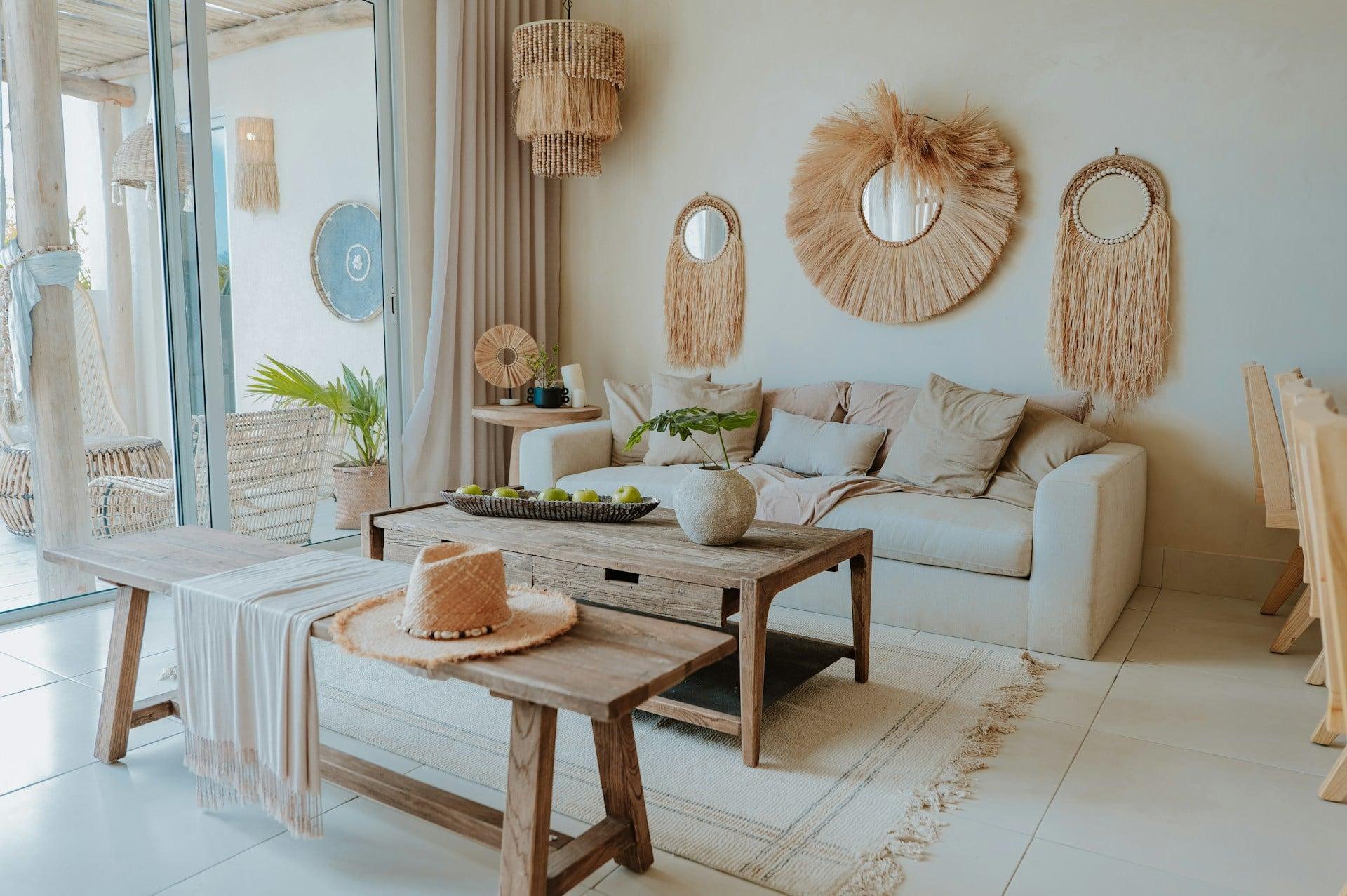
Rotate the Textiles You Already Own
Somewhere in your flat is a box or a wardrobe shelf with the heavier things in it. Bring it down. Wash the summer linens and put them away in the same box, so the swap is genuinely a swap rather than an accumulation — this is the step people skip, and it is why homes feel cluttered by November.
Beds first: heavier duvet cover, an extra blanket folded across the end, and if you have a spare wool throw, put it on the sofa rather than in storage. Then floors. A rug that lived rolled up all summer changes the acoustics of a room as much as the look; a hard floor in autumn sounds cold before it feels cold.
Point the Furniture Somewhere Else
All summer, the seating in most homes faces outward — towards the balcony door, the open window, the garden. Autumn wants the opposite. Turn the chairs inwards, towards each other or towards a lamp, and pull them a little closer together. It sounds absurdly small until you sit down in the reconfigured room and notice people actually talk.
While you are moving things: create one deliberate reading corner. A chair, a light over your shoulder, and a surface for a cup. Not a whole room, not a project — one chair. It is the single most-used thing I set up each year.
Change the Kitchen's Centre of Gravity
Summer kitchens are organised around cold things: the fridge, the salad bowl, the jug. Move a few items forward. The kettle or coffee pot to the front of the counter, the big pot out of the deep cupboard and onto the hob, the mugs to the shelf where the glasses were. If you have a slow cooker or a casserole dish buried behind the picnic gear, dig it out now, because a piece of equipment you can see is a piece of equipment you use.
Scent belongs here too, and it does not need a candle. A pan of water with orange peel, a cinnamon stick and a few cloves, left to steam gently for twenty minutes, does the job and costs whatever the orange cost.