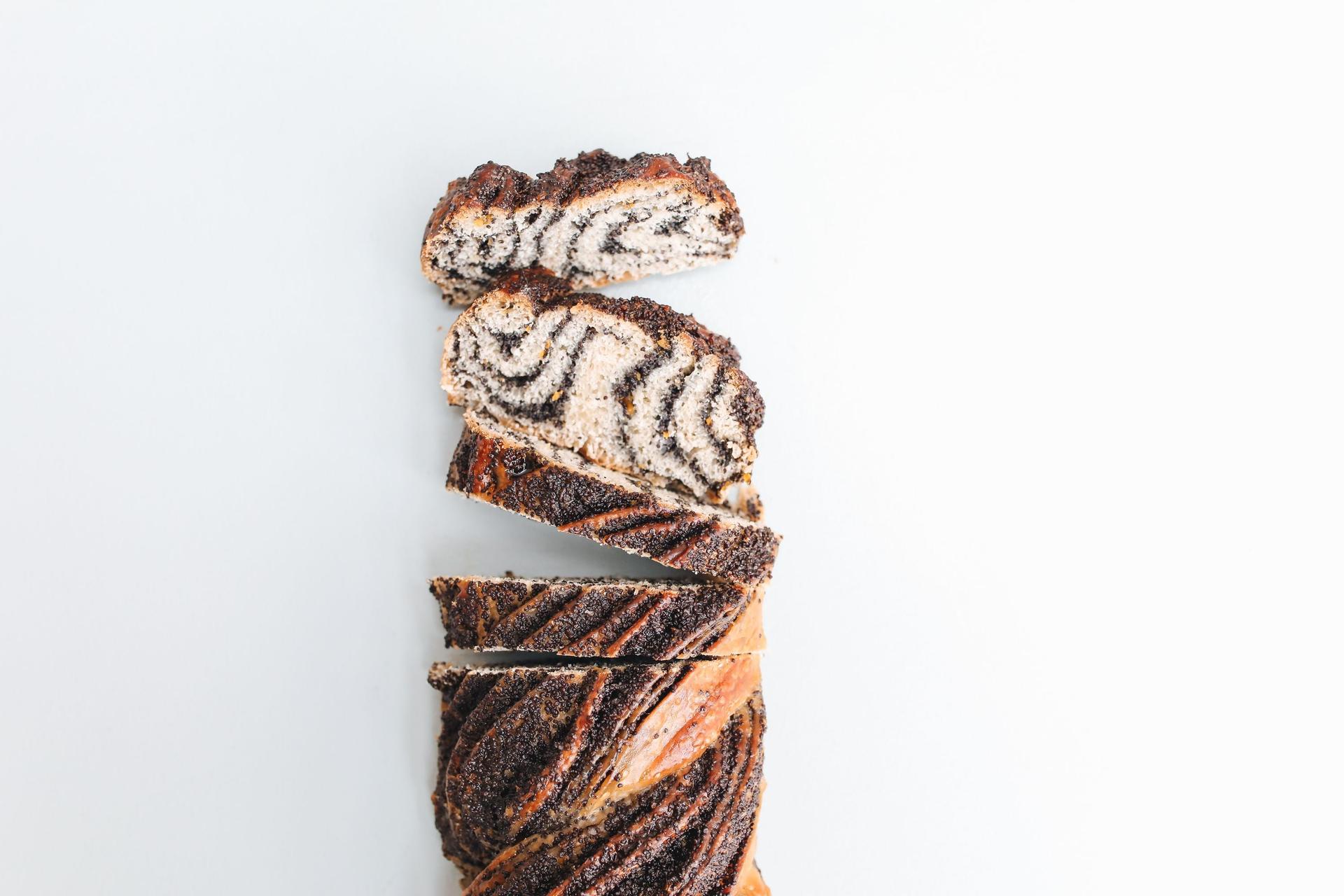
There's something almost hypnotic about slicing into a well-made babka. Layer by layer, the swirl of dark chocolate or cinnamon-spiced butter unfolds across the cut face like a marbled ribbon.
Once you bake one at home, you quickly realize this isn't just another sweet bread. It's a small craft of its own, and the payoff is worth every step.
What makes a babka a babka
At its heart, babka is a soft, buttery enriched dough. You roll it out thin, spread it with filling, roll it into a log, then slice it lengthwise and twist the two halves together before it goes into the tin.
That twist is the whole point. It's what creates the signature layered, marbled pattern that most people fall in love with.
The secret to the dough: time and patience
Good babka dough can't be rushed. Enriched doughs made with butter and eggs rise more slowly than plain bread dough, so a long, cold proof works in your favor.
A trick many bakers swear by is to chill the kneaded dough in the fridge overnight. This deepens the flavor, and because the butter stays cold, rolling it out becomes far easier. Nothing melts and slides all over the counter.
Just don't overwork the dough with too much dry flour, or it loses that silky, almost brioche-like texture. It's better to leave it slightly sticky and let it rest in the fridge until it firms up enough to shape.
The filling that makes or breaks it
The classic chocolate filling is melted dark chocolate, butter, and a little cocoa powder, blended into a thick, spreadable paste. For the cinnamon version, you stir together brown sugar, cinnamon, and plenty of butter.
The key is balance: the filling needs to be thick enough not to leak out during the twist, but soft enough to spread cleanly across the dough.
Many bakers sneak a little instant coffee or orange zest into the chocolate version. It gently lifts the flavor without the coffee taking over. And if you love a bit of crunch, scatter some finely chopped walnuts or hazelnuts over the filling before rolling.
How to master the twist
Once you've rolled the filled dough into a log, you slice it in half lengthwise, revealing two spiral-patterned halves. Lay them over each other and twist them together, keeping the cut, layered sides facing up the whole time. That single move is what creates the famous marbled cross-section.
A few tips for the twist:
- Pop the rolled log into the freezer for a few minutes before slicing. It cuts cleaner and holds its shape better.
- Don't twist the strands too tightly. Leave a little breathing room, because the dough will puff up as it proofs.
- Once it's in the tin, give it a short second proof somewhere warm before it goes in the oven.
Baking and the glossy syrup finish
Babka is usually baked in a loaf tin in a moderately hot oven until the top turns a deep golden brown. Because the sugary filling can scorch quickly, it helps to tent the top loosely with foil for the final stretch if it's browning too fast.
The moment it comes out, while it's still warm, brush it generously with a simple sugar syrup made by boiling together water and sugar. This gives babka that glossy, slightly sticky surface that makes it look irresistible, and it keeps the loaf soft for longer too.
Storing it and knowing you got it right
A successful babka shows a clean separation between the dough and the filling on the cut face. The layers should stay distinct, not blur into one gummy mass. The dough should be soft and slightly stretchy, never dry or crumbly.
Wrapped airtight at room temperature, it keeps for a few days, though it's genuinely at its best on day one. It also freezes beautifully. Freeze it in slices so you can pull out only as much as you actually want to eat.
What's the difference between babka and regular sweet bread?
Babka sits somewhere between bread and dessert. It's made from a rich, buttery enriched dough, but the twisting and filling give it that signature marbled swirl and a texture that's springy rather than cakey.
Why chill the dough overnight?
A long, cold proof deepens the flavor and keeps the butter firm, which makes the dough far easier to roll out. Without it, everything tends to melt and slide around while you work.
Why brush babka with sugar syrup after baking?
Brushing warm babka with a simple sugar-and-water syrup gives it a glossy, slightly sticky finish that looks irresistible. It also helps the loaf stay soft for longer.
Can you freeze babka?
Yes, babka freezes very well. It's best to freeze it in slices, so you can take out just as much as you plan to eat at a time.