Build zones: eye level is prime real estate
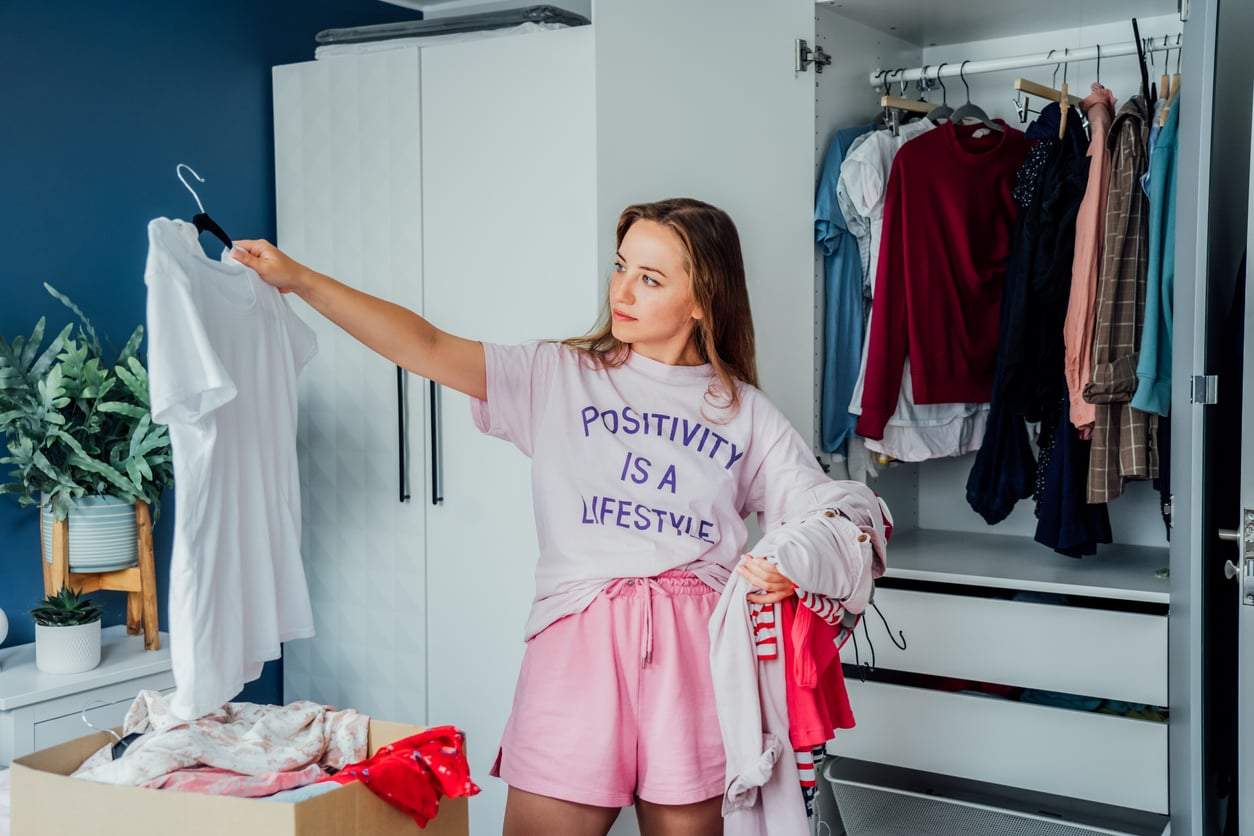
The middle of the wardrobe, from roughly shoulder height to hip height, is the only part your hands and eyes reach without effort. That belongs to the current season's daily rotation, full stop. Higher shelves take out-of-season storage, spare bedding and the occasion pieces. The floor and the lowest shelf take shoes, bags and anything bulky.
Within the daily zone, group by outfit logic rather than by type. Work tops together with the trousers you wear them with; casual knits together with the jeans they live beside. Some people find colour blocking within each group helps — all the neutrals, then the darks, then anything brighter — because it makes gaps obvious and shows you at a glance that you own five near-identical black jumpers.
Hang, fold, or let it go
Hang anything that creases or loses shape when folded: shirts, blazers, dresses, tailored trousers, anything in a fine woven fabric. Fold anything knitted, because hangers stretch shoulders into little peaks that never fully recover. Heavy jumpers are happier folded on a shelf or in a shallow drawer, stacked upright in rows so you can see every one without excavating.
Slim, matched hangers genuinely help, and not for aesthetic reasons — they buy you visible rail space, which is what makes a wardrobe feel calm. Underwear and socks do better in dividers or small boxes inside a drawer than loose, where everything migrates to the back within a fortnight.