There's a comforting story many of us tell ourselves before we become parents: if we read enough books, stay self-aware enough, and pour enough love into every ordinary day, we can spare our children the heavy baggage we've carried ourselves. It's a deeply human wish — and a noble one. But it may also be the first illusion parenthood quietly dismantles.
I'm still in the middle of that process. Learning to be present. Learning patience. And above all, learning to forgive myself when I realize that despite my best efforts, I'm leaving marks — visible or invisible — on my daughter's heart.
When your child becomes your mirror
For a long time, I thought I knew exactly who I was and where I came from. Then my daughter was born, and everything shifted. It was as if someone held up an enormous mirror — and what I saw wasn't just her smile reflected back at me, but also the darker corners of myself I'd spent years pretending weren't there.
I had this quiet, naive belief that the shadows of my past would stop with me. But the small, everyday conflicts of family life quickly showed me the truth: my daughter instinctively finds the exact spots where I still have unfinished work to do on myself.
That's when I understood that parenting isn't only about raising her — it's also an inward journey. One where I have to face my own unresolved wounds and the generational patterns I'd pass on without even noticing, if I weren't paying attention.
The hidden traps in the example we set
There are areas where I genuinely felt proud of what we were building as a family. My daughter's father and I have always made a conscious effort to show her a stable, loving partnership — one where respect isn't just a word. Care flows both ways in our home. We share tasks without defaulting to gender roles: I tackle things traditionally seen as "men's work," and he loads the washing machine and takes his share of the housework without a second thought.
We prioritize quality time together, small gestures, and making everyday support feel like a natural given — not a favor. I'd even quietly congratulate myself sometimes, thinking about the standard we were setting for her future relationships. Look at the bar we're raising for her.
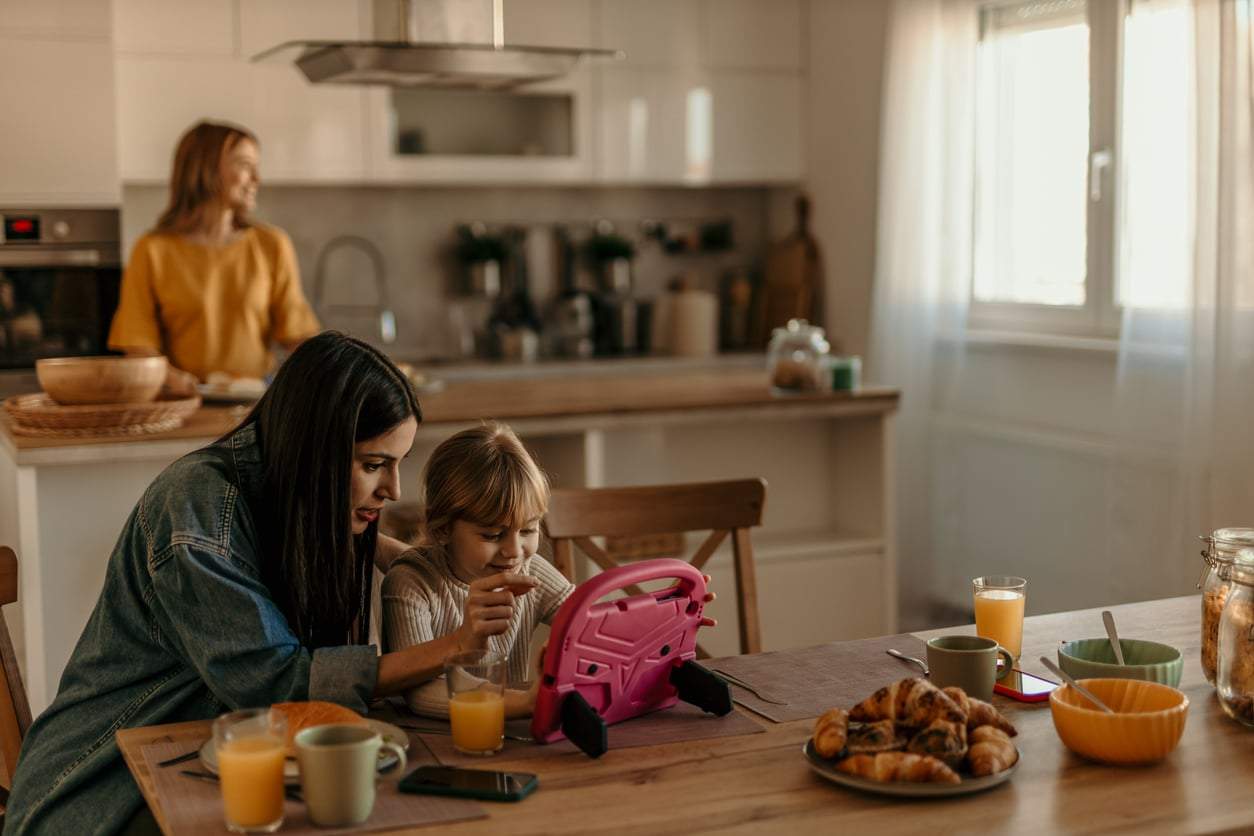
Then one morning, sitting at our favorite breakfast spot — the two of us side by side, her across the table — she said something that stopped me cold. With quiet, genuine pain in her voice, she told us: "I always feel left out."
Rationally, I knew it wasn't true. But in that moment, something cut right through me: her experience is her truth. Even the most beautifully intentioned example we set can still make her feel lonely or excluded — and there's no getting around that.
Accepting what can't be avoided
That morning reminded me of something I keep having to relearn: no matter how much we want to protect them, we cannot raise our children inside a perfectly safe emotional bubble. What feels like closeness and unity to us can, at a given moment, feel like exclusion to them. There's no foolproof recipe against that.
Parenting isn't a flawless march forward. It's a constant process of adjustment — where we sometimes stumble, sometimes repeat old patterns, but where the most important thing is that we're able to notice when we do. When we recognize where we went wrong and find the courage to change, we've already done something meaningful — something that gives the next generation a slightly lighter load to carry, even if that load can never be completely empty.
What I've come to understand is that the goal may never have been to send them into the world without any scars. The real goal is to teach them what to do with their wounds. When they see us make mistakes — and then grow from them, apologize honestly, and try again — we hand them something far more valuable than the illusion of perfection. We give them a real survival kit for life.