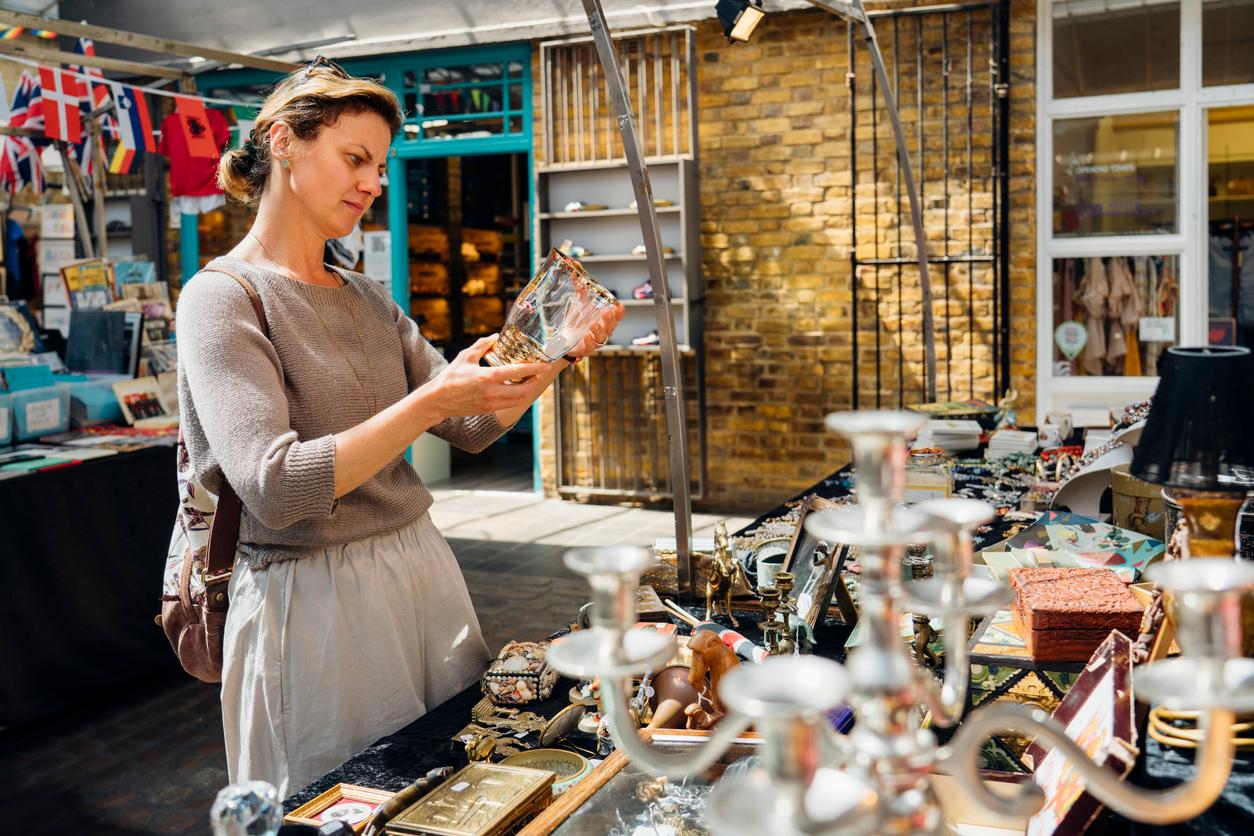
Mid-century modern (MCM) is a design movement that blossomed roughly between the 1940s and 1970s. It’s known for its clean lines, functional forms, and the idea that design should be simple and accessible to everyone. Think unique lamps and sleek furniture that feel heavier than they look. Decades later, they still look amazing in modern homes, which is why they’re so popular today. If you live in a lucky area, original mid-century modern pieces can still pop up at flea markets, often mislabeled and undervalued. We chatted with vintage experts about which MCM treasures are worth hunting for today, which brands and designers to know, and how to spot quality craftsmanship before loading your car.
Signed Designer Furniture
Among MCM finds, the most valuable over time are signed designer pieces.
“In recent years, MCM-style decor and furniture have become incredibly popular, and today’s companies try to imitate this style,” says Sara McDaniel, thrift expert and owner of Purvéy.
“Broyhill is a familiar name because it was a staple in mid-century American middle-class homes, making it one of the easiest brands to find secondhand.” Aletha VanderMaas, mid-century modern specialist and owner of True Home Restorations, also recommends getting to know Drexel and Herman Miller. These pieces usually feel solid, made from solid wood, with smooth drawer slides and simple joinery. Many signed MCM pieces have original labels, stamps, or metal marks, but if these are missing, a quick Google image search by shape (silhouette) can often help identify the maker and value before you buy.
“The wood is beautiful (it might just need a little oiling), and the metal parts can usually be polished to look almost brand new,” says VanderMaas.
She says one of the surest signs of an authentic mid-century modern piece at markets is its clean lines.
“For furniture, simple, decoration-free lines are clear giveaways.”
While several brands are well-known among MCM fans, some pieces have no branding at all. In those cases, look for dovetail joints and solid wood construction to distinguish vintage originals from newer copies.
“Atomic Age” Lamps
Spot a lamp that looks like it came straight from outer space? You might have found an original mid-century modern “atomic” lamp. These sculptural lamps often feature starburst shapes, sputnik-like arms, or playful geometric silhouettes. Watch for sturdy metal construction and heavy parts—these usually point to an original piece rather than a modern copy.
Serving Spoons
Retro kitchen tools like Corningware and Pyrex get a lot of attention, but there’s a quieter thrift treasure: serving spoons.
“A pair of simple serving spoons might have longer handles and sleeker shapes than the ones in grandma’s china cabinet,” says VanderMaas. “They can be made from wood and metal, often marked ‘Japan’ on the back.”
These quality pieces are still usable today and can be worth more than you think. VanderMaas once found a tiny, long-handled MCM spoon in a $1 box that later turned out to be worth $80 on the secondhand market. “It immediately caught my eye, and the back was stamped DENMARK, which was a good sign. It later turned out to be a cocktail spoon designed by Arne Jacobsen.”
“Most MCM pieces I see at markets are excellent quality, probably better than anything you’d get delivered with a click today,” says VanderMaas. “They’ve lasted at least 55 years, and you’ll often find natural fabrics like wool, cotton, and linen.”
Focus on patchwork blankets, curtains, and tablecloths, as mid-century patterns often appeared on these in homes. Bold geometric or abstract patterns can also show up on decorative pillows and wall hangings. Look for pieces that feel “forward-thinking, futuristic, minimalist, even simple and organic,” she adds.
Ceramic Planters
Like most homes, mid-century modern houses often featured houseplants, and retro planters are now reappearing in thrift stores and flea markets. Many are reproductions, but watch for footed, tripod, or finely embossed geometric ceramic and stoneware planters. Beige, olive green, and mustard yellow were common colors, and weight can be a clue—heavier ceramics usually mean older pieces. Turn the planter over and look for makers’ marks like McCoy, Haeger, or Gainey Ceramics.