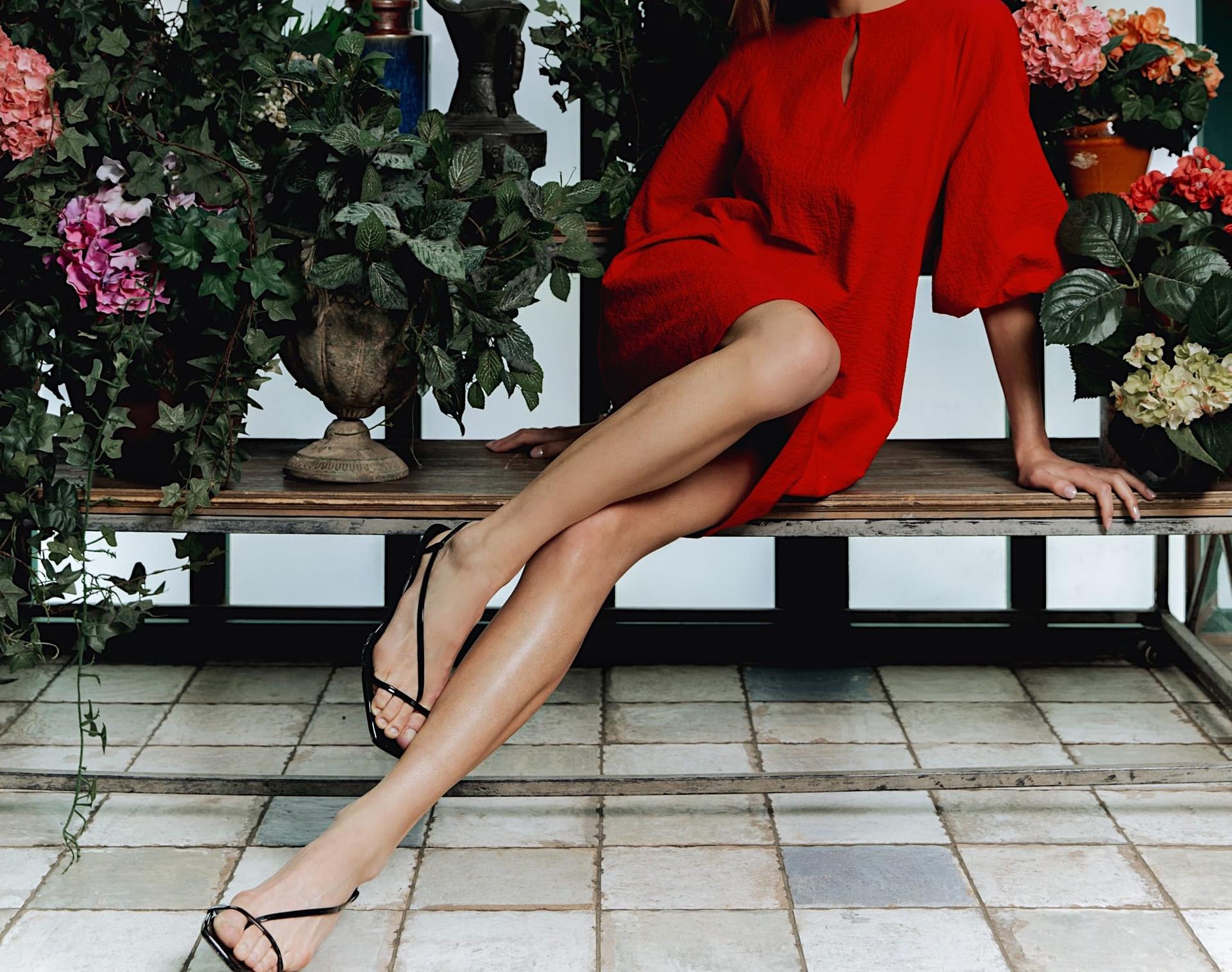
For some reason, we still struggle with the idea that a mom is not just a mom, but also a woman. Every day on social media, you’ll see comments under photos of moms who dress boldly — or honestly, just normally — wearing miniskirts, figure-hugging dresses, or shorts. The comments sound familiar: “A mom shouldn’t dress like that.” “She should think about her kids.” “That’s not appropriate anymore.” It’s as if motherhood equals self-sacrifice. As if after giving birth, we must automatically give up our bodies, desires, and femininity.
But motherhood doesn’t erase the woman. We don’t stop being individuals with our own bodies, feelings, and desires. Our bodies remain the same, just carrying new experiences. Birth, breastfeeding, sleepless nights leave marks, but it’s still ours. Not society’s, not the community’s. Not the neighbor’s, who feels entitled to comment when a mom of three posts a beach photo in a crop top. And not the commenter who says, “Moms shouldn’t wear clothes like that anymore.”

The Root of the Problem Runs Deep: Society Still Uses a Double Standard
A mom “shouldn’t be provocative, sexy, or show off” — but if her partner leaves, the first question is always, “Why?” The answer often hides in a shrug: “She probably let herself go.” “She wasn’t the same as when they met.”
So if a mom continues to act like a woman, we criticize her — yet we also expect her not to deserve attention or love in this desexualized role. This social expectation is a tight cage with no good answers. Only guilt and pressure to conform.
Here’s a truth some might find surprising: it’s completely okay for a mom to remain a sexual being. She doesn’t have to hide herself or stash away her miniskirts and low-cut dresses just because she gave birth. Raising kids doesn’t mean giving up who you are. Femininity isn’t a switch we turn off at the delivery room door. It’s not something to keep secret. It’s as much a part of us as motherhood.
Of course, kids don’t need to know about their parents’ sex lives — moms’ or dads’ — but it’s unhealthy to send the message that moms aren’t women.
If children never see their mom enjoying her body or embracing her own beauty, they learn that femininity has an expiration date. That when they become parents, they have to hide. That being a mom means putting yourself last.
That’s why it’s so important to rethink what we communicate to moms — whether publicly or through casual comments among friends and family. Motherhood isn’t a role that erases identity; it’s another layer. You can be a loving, caring, devoted parent while staying sexy, confident, and attractive. And that’s not just acceptable — it’s freeing. Motherhood isn’t measured by a miniskirt — nor is it society’s call. It’s measured by how we love and how we stay true to ourselves.