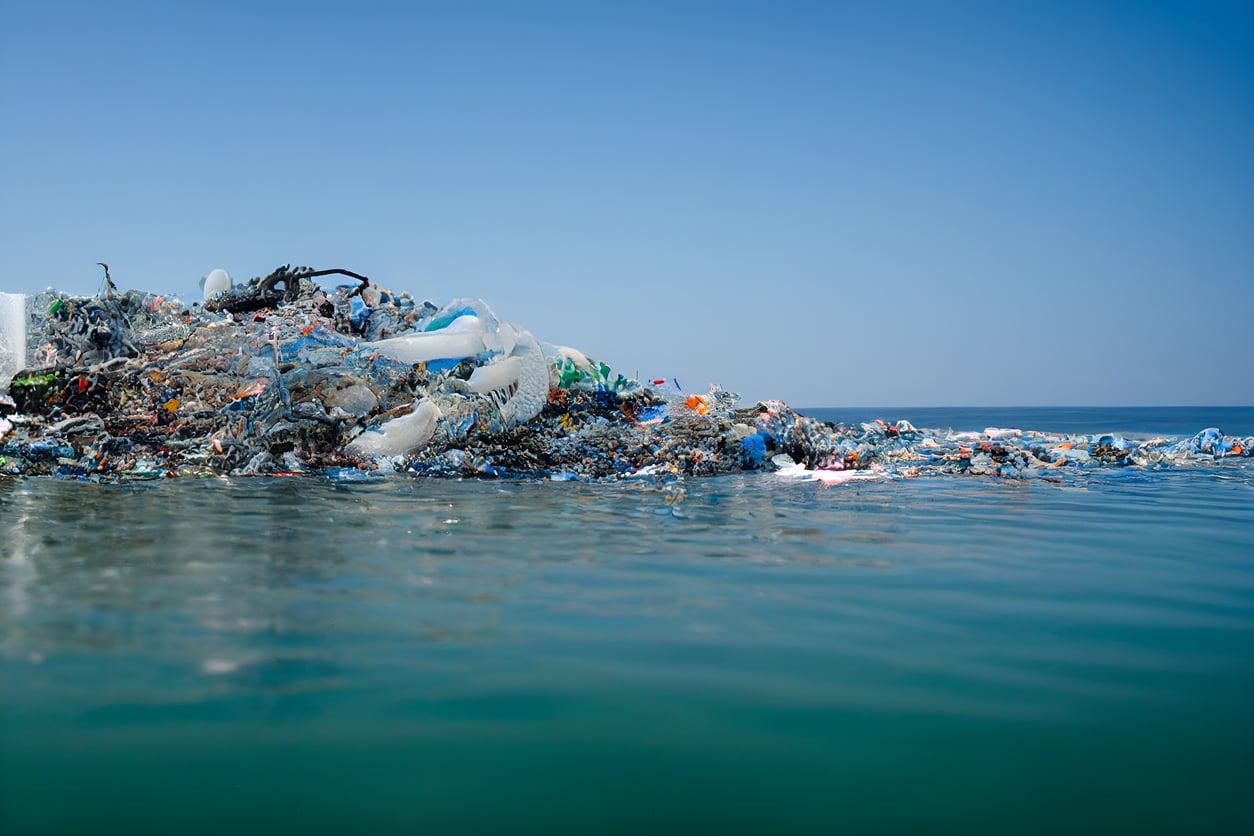
Somewhere in the middle of the Pacific Ocean, far from any coastline, floats one of the most alarming environmental disasters on Earth. You can't see it clearly from a satellite. You can't walk across it. But it's there — and it's bigger than Germany.
How the garbage patch formed
The Great Pacific Garbage Patch didn't appear overnight. It built up gradually as ocean currents pulled floating debris from coastlines, rivers, and streams across the world into a single, slowly rotating system known as a gyre.
The vast majority of the waste is plastic. Bottles, bags, packaging, fishing gear — all of it makes its way into the ocean and gets swept into this enormous swirling accumulation zone. Over time, sunlight and wave action break the plastic into smaller and smaller fragments. But here's the problem: plastic never fully disappears. It just becomes microplastics — tiny particles that are nearly impossible to remove and easy for marine animals to swallow.
Just how big is it?
Estimates put the Great Pacific Garbage Patch at over 1.6 million square kilometres — roughly three times the size of France, and larger than Germany by a significant margin.
The exact size fluctuates constantly as currents shift and new debris arrives. But the trend is clear: it's not shrinking. This mass of millions of tonnes of waste affects not just the immediate area, but ocean ecosystems and climate patterns across the entire planet.
What it's doing to marine life
The environmental consequences are severe. Marine animals regularly mistake plastic fragments for food, ingesting them and suffering serious internal damage — or dying. Sea turtles, seabirds, fish, and whales have all been found with stomachs full of plastic debris.
Beyond direct ingestion, the sheer density of floating waste blocks sunlight from reaching the ocean surface, disrupting the microscopic organisms — phytoplankton — that form the base of the entire marine food chain. Damage at that level ripples upward through every species that depends on the sea.
Who's responsible?
The uncomfortable truth is that human consumption habits created this crisis. Modern consumer societies generate staggering amounts of plastic waste, and a significant portion of it is never properly managed. It ends up in waterways, blown off landfills, or simply discarded — and eventually, much of it finds its way to the ocean.
Reducing plastic use, improving waste management infrastructure, and building genuine environmental awareness from an early age are all part of the solution. But individual choices alone won't be enough — systemic change at a policy level is essential.
Can it be cleaned up?
Several international organisations and engineering projects are actively working to reduce the patch. The Ocean Cleanup project, for example, has deployed large-scale systems designed to collect plastic from the gyre. Progress is being made — but most experts agree that cleanup efforts must go hand in hand with dramatically reducing the amount of plastic entering the ocean in the first place.
On an individual level, the steps are straightforward: cut single-use plastic, recycle properly, and make more conscious purchasing decisions. It might feel small against a problem this vast — but every piece of plastic that never reaches the ocean is a piece that won't end up in the patch. The future of the ocean, and of the planet, depends on all of us making that choice.