Talking about death is never easy, even when we know as parents that breaking the silence is always better. Around Day of the Dead, many families revisit feelings of loss and remembrance. While kids often approach the topic with natural curiosity, adults can feel unsure or awkward.
But there’s a magical way to explore together what it means to remember and love forever — and that’s a movie night featuring Coco. This Pixar gem has become a favorite among parents, child psychologists, and educators worldwide because it opens up the conversation about death with a gentle, heartfelt touch unlike any other story.
The story centers on Miguel, a young boy from Mexico who dreams of becoming a famous musician — even though his family has shunned music for generations. Due to an old hurt, music is almost forbidden, and everyone is expected to honor this unspoken tradition.
But Miguel can’t suppress his passion. A surprising turn takes him to the Land of the Dead, where he meets ancestors, uncovers long-held secrets, and discovers what family legacy truly means. As the story unfolds, we realize it’s not just about death — it’s about how patterns, pain, and silence pass down through generations.
One of Coco’s greatest strengths lies in this transgenerational theme. The film beautifully shows how family history, unspoken stories, and old wounds live on inside us — and how healing often begins when we finally bring what’s been hidden into the light.
Miguel’s family carried the pain tied to music for centuries until his courage revealed the truth and broke the cycle. This is a powerful starting point for talking with kids: every family holds stories worth sharing, even if they’re painful, and remembering can build a special bridge not only to those who have passed but also to those still with us.
The story also wonderfully connects the theme of death with Mexico’s rich cultural traditions, which can open up a broader perspective. Talking about diverse customs worldwide helps kids see how varied and vibrant our ways of honoring life and loss can be.
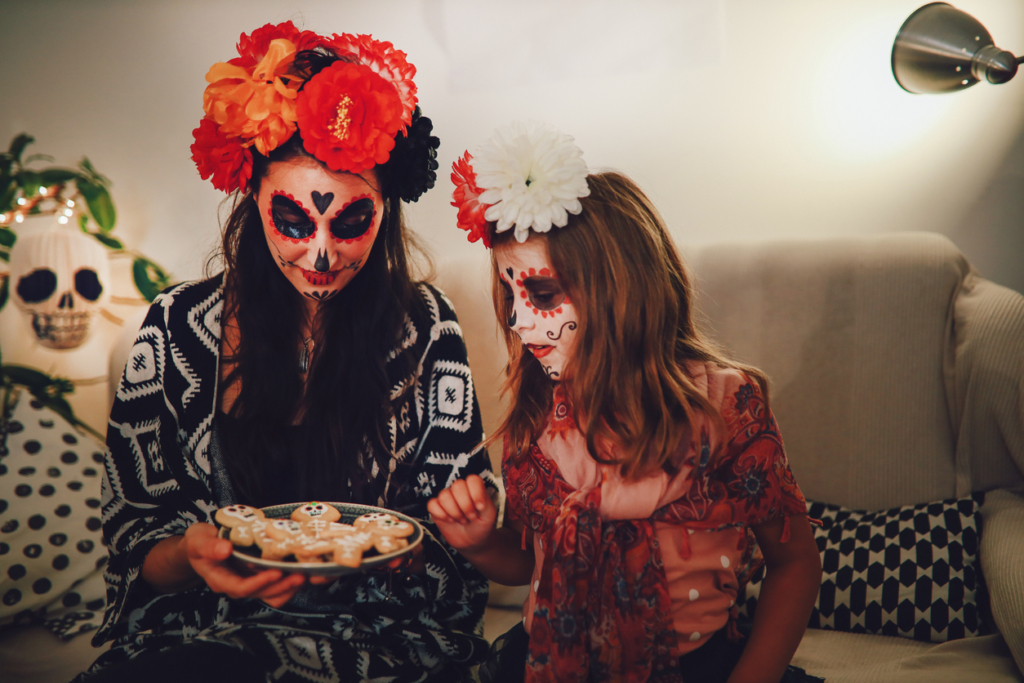
Día de los Muertos in Mexico isn’t about mourning — it’s a celebration of life. It honors how our loved ones live on in our memories, stories, favorite foods, and music. The ofrendas — colorful altars adorned with photos, cherished items, and favorite treats — help children understand that death doesn’t end relationships; it transforms them.
Coco teaches acceptance, respect, and that remembering is a language of love. Death isn’t scary here — it’s part of life, just as it is. The film shows us that the greatest fear isn’t dying, but being forgotten.
This message is especially important for kids, who often struggle to express their fears about death. Coco eases tension with gentle humor, kind stories, inspiring qualities, and music — creating a deep emotional experience that naturally invites conversation.
After watching, if your child is interested, take time to explore questions the story raises. You might ask, “What do you think happens to someone we can’t see anymore?” or “Why do you think it’s important to remember those who aren’t here?”
These talks don’t just help kids understand death — they nurture emotional intelligence. Encourage them to share if they’re scared, sad, or simply curious! The images in Coco — altars, lights, colors, music — make these ideas tangible and accessible.
As parents, it’s important to be aware of our own feelings too. Kids’ questions often bring our own hidden emotions to the surface, and that’s okay. Coco helps adults as well, showing that remembering isn’t just a painful duty but can be a loving gesture.
It highlights that we can talk about death not just in whispers but with color, music, and joy — without losing respect. Coco is more than a story; it’s a bridge between past and present, life and death, ancestors and descendants.
A reminder that love doesn’t disappear just because we can’t see someone anymore — those who mattered stay with us, whether in a song, a scent, or a story we tell again and again.