Have you ever stopped to think how many invisible crossroads you've passed through — moments where a single "yes" or "no" could have led you into a completely different life? I have. More times than I can count.
Freedom was my only compass
When I look back at my early twenties, I see a version of myself standing at the edge of everything. Fresh out of school, on the threshold of university, I found myself in a rare and disorienting kind of freedom — one where no serious obligations tied me down, no one was counting on me, and the phrase "blank slate" wasn't a cliché. It was just Tuesday.
That freedom was equal parts thrilling and terrifying. There was almost no financial security to speak of, but there was something intoxicating about knowing that I could, if I gathered enough courage, board any train or plane and let it take me somewhere entirely new.
In that stripped-back kind of freedom, the whole world felt genuinely possible — and that feeling alone was worth something.
I spent a few weeks in Budapest, convinced that the noise and energy of the city would help me figure out what came next. While scrolling through job listings and going to interviews, I kept getting pulled toward something else entirely — volunteer programs on distant continents, conservation work in remote rainforests, community projects in places I'd only ever dreamed about.
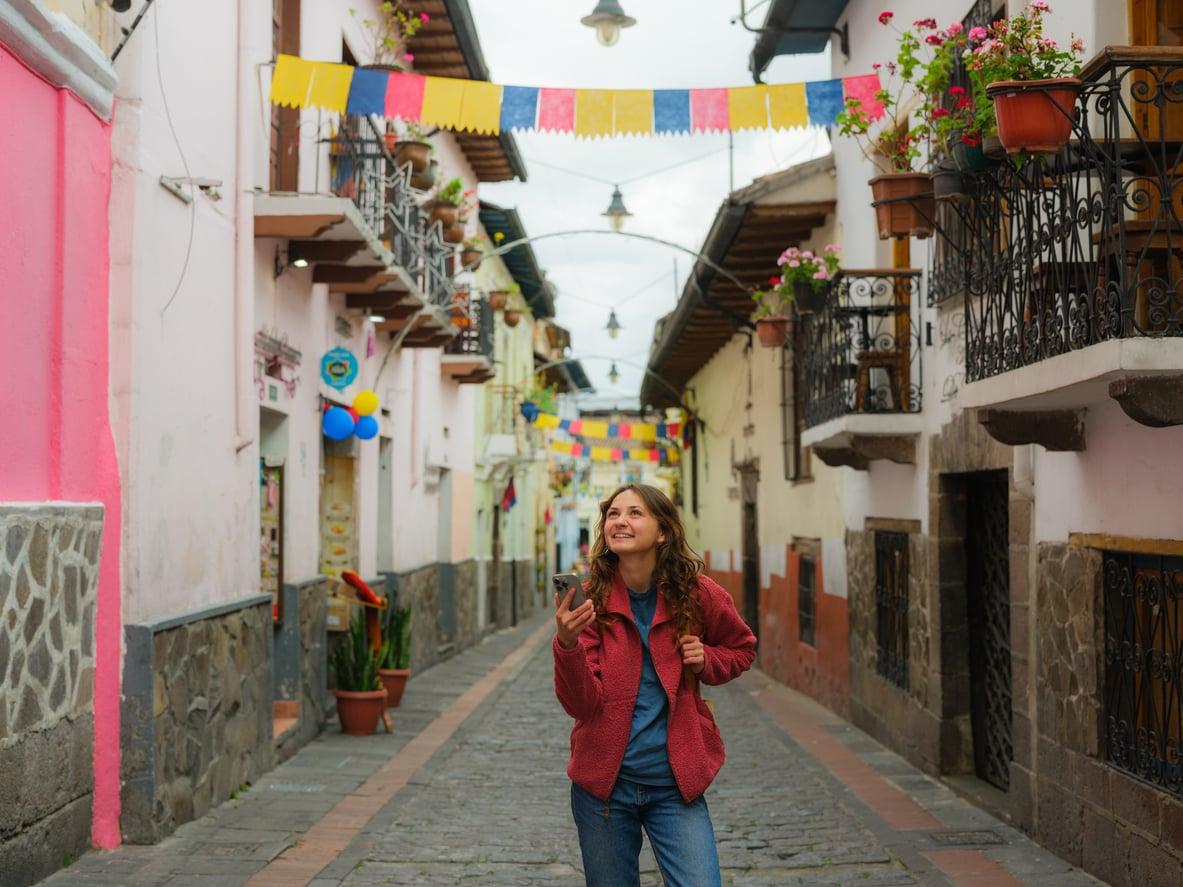
Ecuador kept coming up. I'd imagine myself there, hands in the soil, planting trees in the middle of a jungle, far from everything familiar. I actually sent off a few applications. With each email I hit send on, I felt myself drift a little further from the safety of home — and a little closer to the version of myself I was most curious about.
Then life, as it tends to do, had other plans
While I was mapping out adventures abroad, something quieter and more powerful was happening closer to home. A relationship that had been finding its footing began to matter — really matter. Suddenly, presence felt more important than distance. Emotional closeness started to outweigh the pull of the unknown.
I told myself it was a wise pause, not a surrender.
"This is just a short delay — a smart decision. The Ecuadorian forests will still be there in a few years, and I'll go with more experience behind me."
And then six years passed. Not in a blur exactly — more like a current that carries you forward before you've noticed how far you've come. My career grew in ways I hadn't planned but genuinely loved. I found work that gave me intellectual challenge, new friendships, and a kind of freedom I hadn't expected to find in an office.
The relationship became a family. By the time I properly looked up, my partner and I had built a home together, and I was a mother. The image of planting trees in Ecuador faded quietly — not because I forgot it, but because something else had taken root in its place. A happiness that was tangible, layered, and deeper than anything I could have imagined at twenty-two.
The nappy changes, the work deadlines, the endless "what should I cook tomorrow" negotiations — none of it was glamorous. But all of it was mine, and it was real in a way that mattered.
What the roads not taken actually teach us
I still think about her sometimes — the woman I might have become if I'd chosen the plane ticket over the enrollment form. She'd probably be more independent, more widely traveled, fluent in a different kind of resilience. But she wouldn't know the particular strength that comes from building something lasting with someone else. She wouldn't know my daughter's laugh.
There's genuine comfort in that thought. I never made it to Ecuador to plant trees — but I've learned that you can put down roots in your own garden too, and that they grow just as deep.
Our lives aren't defined by the chances we didn't take. They're shaped by the choices we did — and by who those choices quietly turned us into.