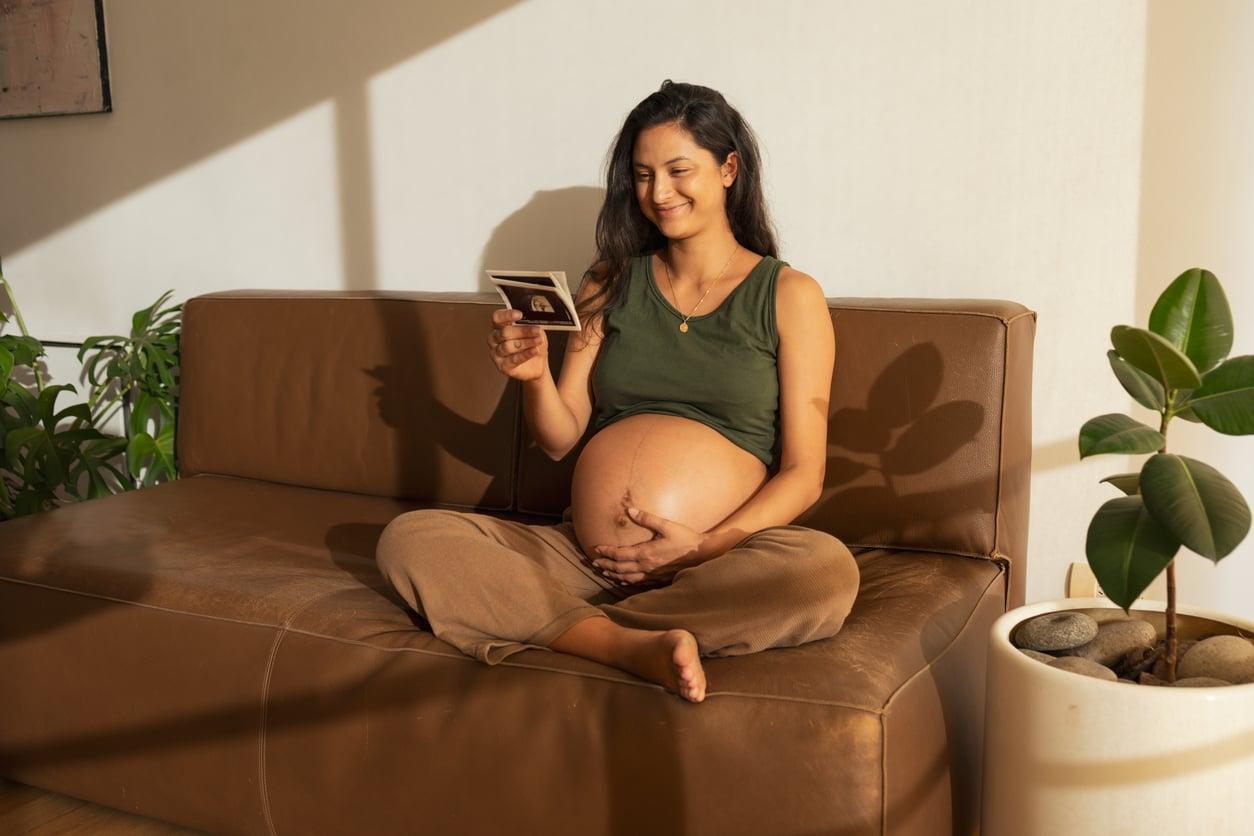
There is a moment in every woman's life — or at least in the life of every woman who considers becoming a mother — when the question stops being abstract. When it stops being something you read about and starts being something you feel. For me, that moment came when I realized that in Hungary, since 2021, women giving birth in public hospitals no longer have the right to choose their own doctor.
That shift changed something for me. Not just politically or philosophically — personally.
When a policy question becomes your own
I'm approaching thirty. Like many women my age, the idea of having children has moved from a distant thought to something that feels increasingly real. Decisions that once seemed theoretical are starting to take shape.
And when you begin to think seriously about becoming a mother, you also begin to think seriously about what that experience will actually look like. Who will be in the room. Whether you will feel safe. Whether you will feel heard.
The experiences I've witnessed over the past few years — stories from friends, from women I've read about, from my own encounters with the healthcare system — have made one thing very clear to me: trust is not a given. It has to be built.
Trust is not automatic
Even for a routine gynaecological appointment, many women today put real thought into who they see. Not because they assume the worst, but because they've learned — from their own experiences or from others — that it matters.
It's not about doubting a doctor's qualifications. It's about something quieter and more human than that: the feeling of being seen, respected, and genuinely cared for.
In that context, childbirth — one of the most physically and emotionally intense experiences a human being can go through — carries even more weight.
I've heard too many stories from women who were not spoken to with kindness. Who had their questions left unanswered. Who came away from the delivery room carrying not just a newborn, but a wound — emotional, sometimes physical — that no one acknowledged.
Whether a woman feels she has any real say in who she entrusts herself to at that moment is not simply an administrative question. It is a question of safety. And safety doesn't only mean receiving technically competent care. It means feeling safe as a human being — not just as a patient.
The kind of psychological trauma that can follow a birth experience where a woman felt powerless or dismissed doesn't disappear in a few days. For some women, it lasts a lifetime.
The tension between the system and the person inside it
I understand the reasoning behind the 2021 reform. A more transparent system. Standardised care. The elimination of informal payments — the so-called "gratitude money" that had long been an uncomfortable, unspoken part of Hungarian obstetric care.
These are legitimate goals. But I think something important got lost in the process.
For the on-call doctor or midwife, any given birth may be one of dozens that week. That is not a criticism — it is simply the reality of working in a high-volume system. But for the mother in that room, this is the one birth. The one that will stay with her forever.
A system can be well-organised and still fail to account for what it feels like to be the person at the centre of it.
Why it matters who is standing there
During labour, women are at their most physically and emotionally vulnerable. That vulnerability is real, and it deserves to be taken seriously.
For many women, the question of whether a familiar, chosen doctor is present — or a stranger on rotation — is not about status or privilege. It is about trust that has been built over time, through appointments, through conversations, through feeling that someone actually knows them.
That kind of trust cannot be assigned by a rota. It grows slowly, and it matters enormously in the moments when everything feels out of your control.
If you're curious about what postpartum health challenges can look like when women don't feel supported during birth, the picture is often more serious than people expect.
Public or private? A choice that isn't really free
For women who want more predictability — who want to know in advance who will be with them when the moment comes — the private healthcare route has become the default answer.
But private obstetric care is expensive. For many families, it is simply not an option. And so a quiet inequality has emerged: the freedom to choose has become something you can buy, rather than something every woman is entitled to.
That doesn't sit right with me.
Safety first — but what about everything else?
I want to be clear: the safety of mother and baby is non-negotiable. That is not the question. No one is arguing otherwise.
The question is what happens beyond that baseline. How much personal agency can exist within a system that aims to treat everyone equally? And is "equal" the same as "good enough" when we're talking about one of the most defining moments of a woman's life?
I don't think a system is inherently good or bad. But I do think that in a moment this significant, as many women as possible should feel that they had some real say in how it unfolded.
From certainty to doubt
Before 2021, I was certain I wanted children. More than one, even. I could picture it clearly.
Today, that picture is blurrier. What's happening around childbirth in Hungary right now — the narrowing of options, the stories I keep hearing, the feeling that the system wasn't designed with individual women's experiences in mind — makes me hesitate in a way I never expected.
I don't think I'm alone in that. And I think that matters, for reasons that go far beyond my personal situation.
Where rules end and real lives begin
Can a system be both fair and human? Can you standardise care without erasing the weight of personal choice?
I don't have a perfect answer. But one conviction has stayed with me through all of it: we should not take away the possibility of choice where choice can still be safely given.
I'm not asking for unlimited freedom in every aspect of childbirth. I'm asking that up to the point where safety is genuinely at risk, the decision should remain in the hands of the woman it affects most.
Because when choice disappears entirely, it's not just an option that's lost. It's part of what allows a woman to feel safe — truly safe — in one of the most profound moments of her life. And that loss can echo for a very long time.
If you're thinking about whether having children is the right choice for you, you're not alone — and it's worth taking that question seriously.