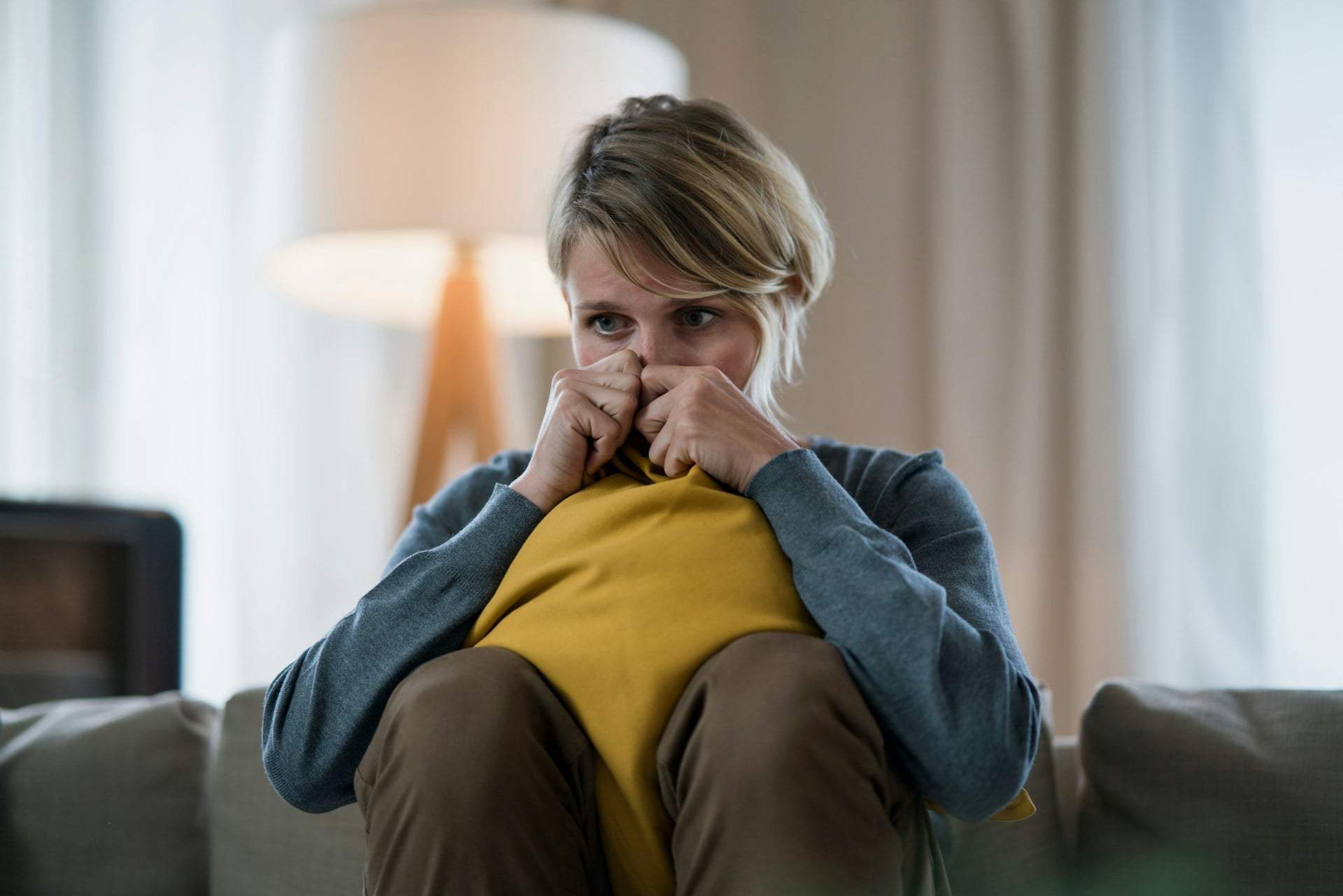
Nobody asks to be the oldest sister. But once you are, the weight of that role can follow you for the rest of your life.
"I never chose this role. It was just handed to me."
During a first pregnancy, mothers tend to be more anxious and uncertain — they're learning as they go. And that uncertainty shapes the firstborn child in ways that last decades. Without a roadmap, the oldest daughter learns to figure things out on her own, often stepping into responsibilities that should never have been hers to carry.
She helps with the cleaning. She organizes family gatherings. She watches over her younger siblings — not because she volunteered, but because it was simply expected. No one asks if she minds. No one checks if it's too much.
"Nobody ever asked what I wanted. I just had tasks."
She puts everyone else first — even as an adult
The firstborn daughter grows up with an overdeveloped sense of responsibility. Because she spent her childhood looking after others, she carries that same instinct into adulthood. She prioritizes her family's happiness over her own, often without even realizing it.
She's the one who remembers her parents' anniversary. She organizes every birthday. She keeps track of gifts for nieces and nephews. And this doesn't stop at home — she brings the same energy to her partner's family, to her friendships, and to her workplace, where she quietly makes sure everything gets done.
"It's just assumed that I'm the one who remembers everything and organizes everyone."
This invisible mental load is exhausting — and largely unacknowledged. She carries it not because she loves logistics, but because she was trained from childhood to believe it was her job.
She never learned to just let go and have fun
"It's hard to be carefree when you've always felt responsible for everyone around you."
Because she was pushed into a parental role so early — especially if she has many younger siblings or a significant age gap — she never fully learned how to be lighthearted. While her siblings got to be silly and spontaneous, she was the one maintaining order, enforcing rules, and keeping the peace.
This is even more pronounced when the father is absent or plays a limited role in family life. In those cases, the oldest daughter and the mother essentially co-parent together — and the girl absorbs a weight that no child should have to bear.
"It was important that at least I wasn't a problem for anyone."
Perfectionism that goes too far
Firstborn daughters are among the most driven, high-achieving people you'll meet. But psychologists note that their perfectionism often crosses into territory that becomes genuinely harmful. They are their own harshest critics. Every mistake is examined under a microscope. Every failure feels personal.
Research consistently shows that firstborns mature faster and take responsibility more seriously than their younger siblings. But that early maturity comes at a cost — one that often isn't visible until much later in life.
"It wasn't fair to put that much weight on a child."
Society already expects more from girls than from boys — to be polite, composed, reliable, well-behaved. For firstborn daughters, those expectations are amplified. She's the oldest. She should know better. She should set the example. Even when she's still just a child herself.
The unofficial leader of every group she's in
"I had to lead by example, so I was never allowed to mess up — I got in trouble even when it wasn't my fault."
The firstborn daughter is the one everyone looks up to. She's expected to have answers, to model good behavior, and to hold things together. She often gets blamed when a younger sibling misbehaves — because she should have known better, should have stopped it, should have done something.
This dynamic doesn't disappear in adulthood. She becomes the unofficial leader of her friend group too. She organizes the get-togethers, smooths over conflicts, and becomes the person everyone calls when they need to talk. She's always available for others — but rarely does anyone check in on her.
"Everything they loaded onto me as a child caught up with me as an adult."
The emotional toll: anxiety, burnout, and depression
When you are always the one others rely on — but no one is truly looking after you — the emotional cost accumulates. Anxiety and depression are significantly more common in firstborn daughters who never had the chance to set limits on their role. Burnout follows. And even then, she blames herself for not being strong enough.
The constant internal pressure — the feeling that she must hold everything together or it will all fall apart — doesn't switch off just because she's grown up. It was wired in too early and too deep.
The first step: recognizing the role you've been playing
"I finally reached a point where I drew a line."
The path forward starts with awareness. Understanding how this pattern developed — and honestly asking which parts of it you actually want to keep — is the beginning of real change.
If you're exhausted by always being the one who reminds everyone about every occasion, you are allowed to stop. You can say, clearly and without guilt: this is no longer my responsibility.
One of my patients told me that during a family day at the pool, she told her brother she wasn't going to watch his daughter in the water — because as a child, she had always been the one keeping an eye on everyone. I was proud of her. It's not easy to step out of a role you've been playing your whole life. But as an adult, you finally can.
If you recognize yourself in this, you might also find it worth exploring how family dynamics shape the way we relate to others — and what it takes to start putting yourself first.