Recently, it caused quite a stir when a Zara ad campaign was banned because decision-makers felt the models looked “unhealthily thin.” The visible collarbone was taken as proof, outweighing medical opinions Zara presented showing the models were healthy during the shoot.
This case clearly shows how tricky it is to talk about bodies and their representation. I wholeheartedly support the body positivity movement: it’s a huge step forward that fashion magazines and fast fashion ads no longer feature only thin models. Even more important, society now agrees that ads promoting harmful diets, extreme weight loss methods, or unhealthy body images are simply not acceptable.
Still, this recent ban feels like an overreach to me. Declaring someone “unhealthy” just by their appearance is just as harmful whether it’s aimed at a thin person or someone with a larger body. On one hand, we fight against judging people by their weight; on the other, we do exactly that—just now targeting thin bodies.
Honestly, who decides that a prominent collarbone automatically means someone is unhealthy? And who would dare say the same about thicker thighs? Both judgments are equally unfounded—basically, not at all.
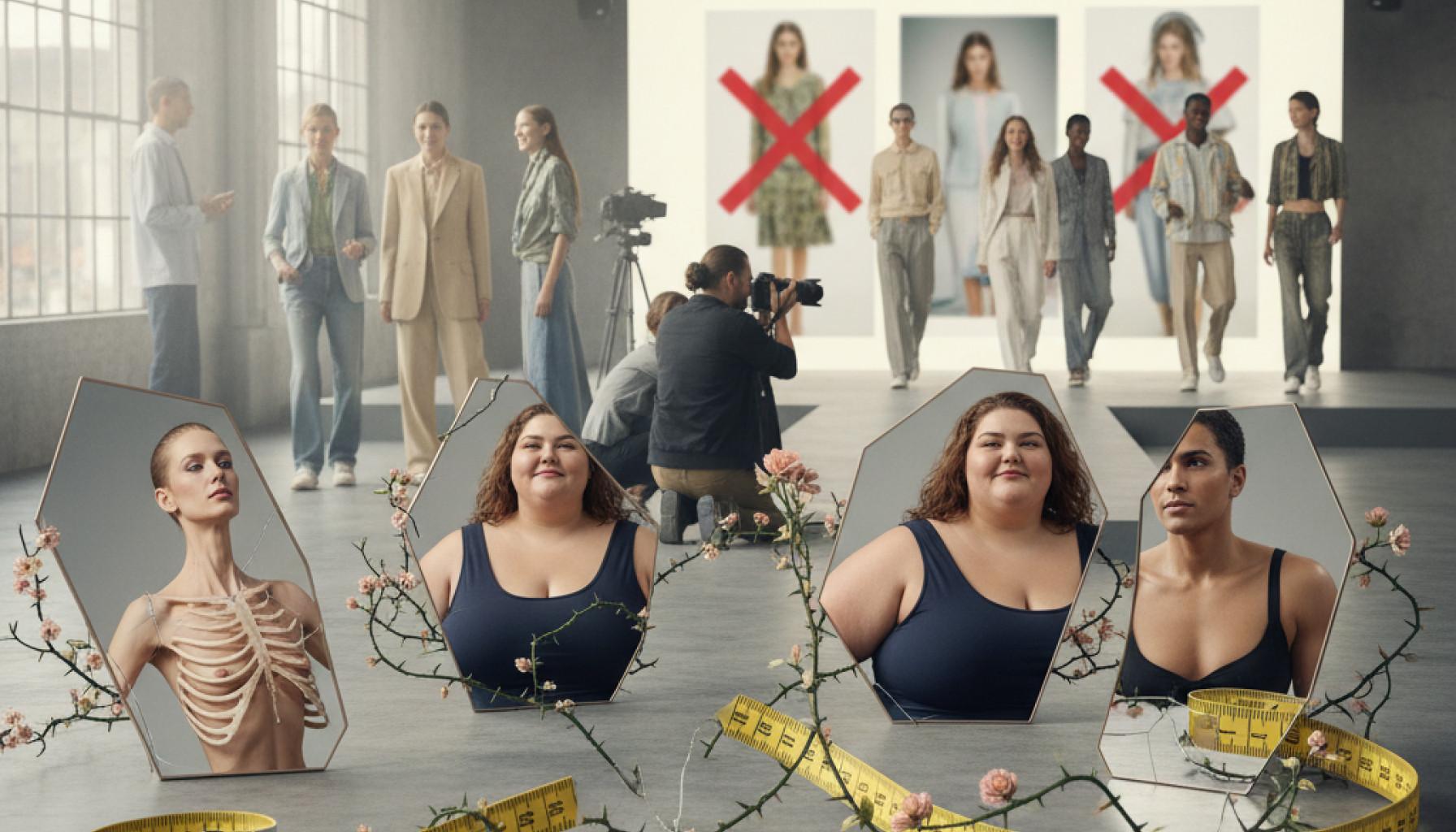
The truth is bodies are diverse. Some people are naturally thinner with firmer skin, so a visible collarbone or ribs is perfectly normal—even if they eat well and have healthy lab results. Banning every model with this body type repeats the same mistake made when plus-size models were excluded from fashion.
It’s also hypocritical. It’s like saying “unhealthily thin” bodies are dangerous because many try to imitate them, while “unhealthy” overweight bodies are harmless because no one really aspires to them. This logic offends both sides: thin women hear they’re a risk to others, while fuller-figured women feel tolerated but never truly celebrated.
The result? We’re still judging bodies, creating categories, drawing lines. But body positivity should be about ending this measuring game. You don’t have to love every body, but you must respect that female (and male) bodies come in countless shapes, sizes, and forms. Every body deserves to be seen without instant diagnoses or judgments.
I’m thrilled to see plus-size models in campaigns today because it’s freeing for many women to realize you don’t have to be a size zero to be beautiful, stylish, or successful. But I also want women who are naturally thin and won’t gain weight to be free from stigma—they have just as much right to feel good in their skin.
If we focus all our energy on banning “unhealthy” bodies, we only fuel another cycle of bodyshaming. And that backfires on what we want most: instead of freeing people, we deepen their anxiety about their bodies.
The real question isn’t how thin or curvy someone is. It’s whether we can finally let go of judging others’ health based on external signs. Until then, someone will always be left out, excluded, or shamed—and the whole body positivity movement loses its credibility.