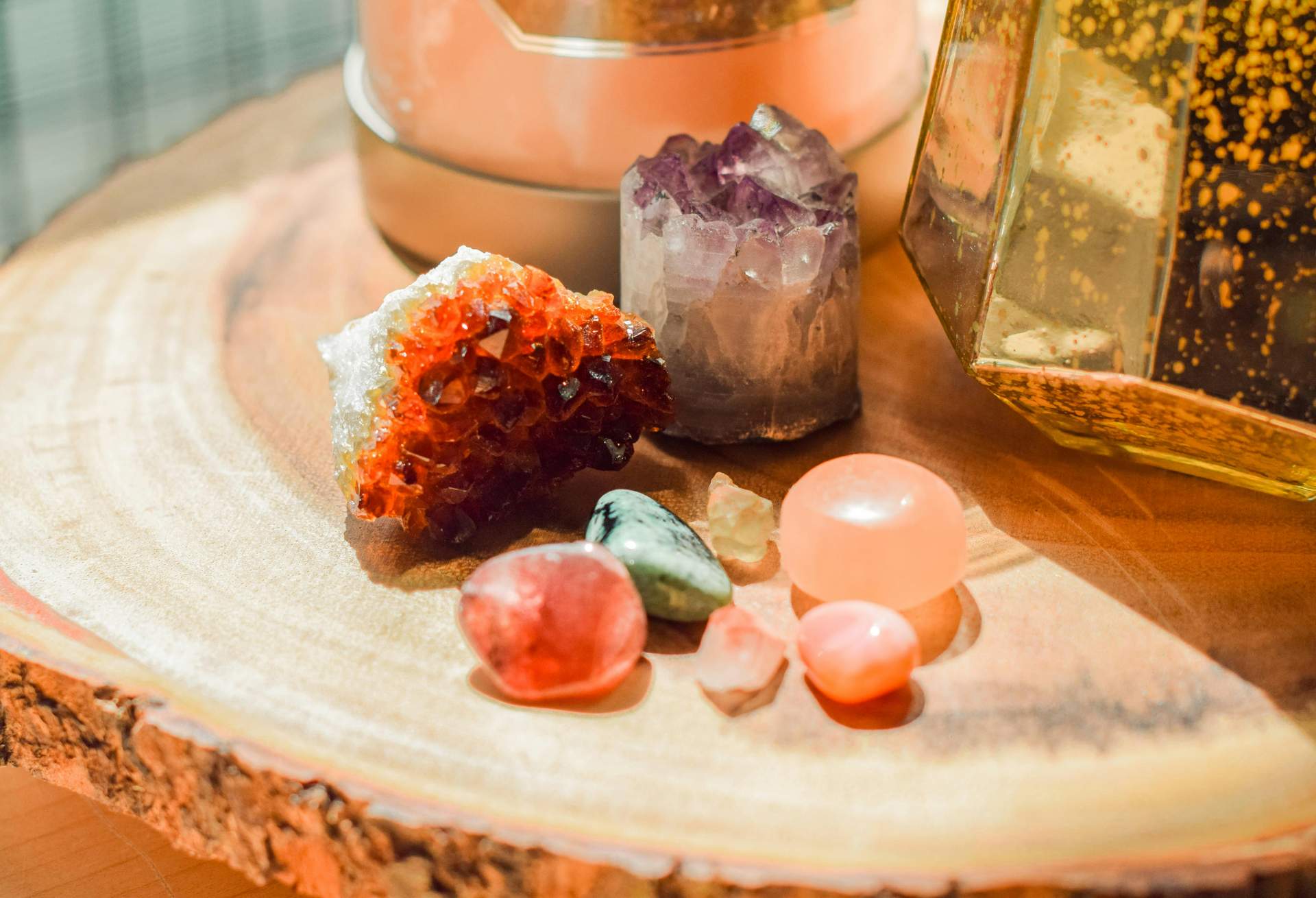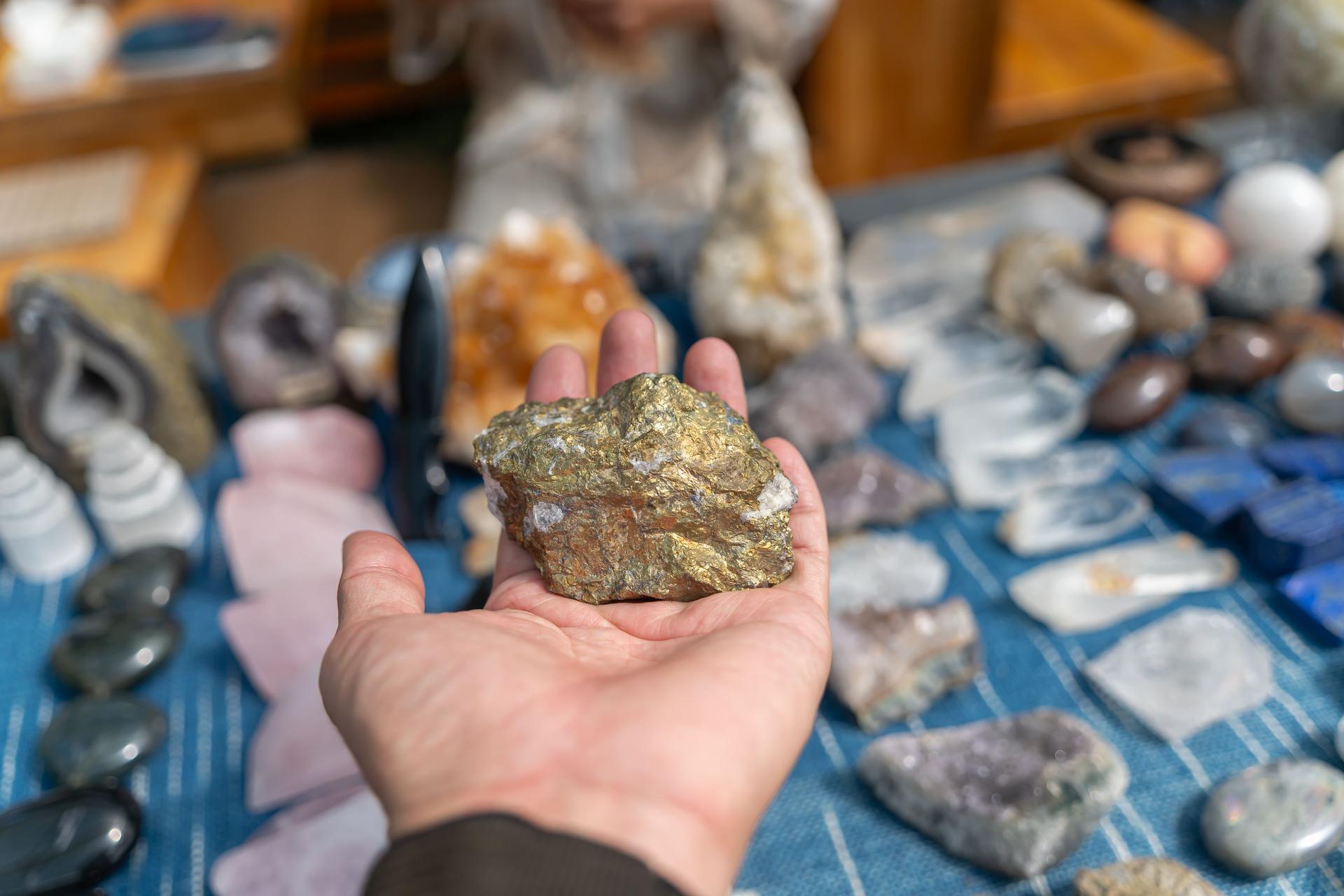
That amethyst you fell in love with at the market might not be a stone at all. Counterfeit crystals are showing up everywhere — in shops, on market stalls, and all over online stores — often with prices too good to be true and colors that look almost suspiciously perfect.
The makers of these fakes are getting better and better. Glossy surfaces, vivid colors, tidy shapes — all designed to sell fast to unsuspecting buyers. The good news? A few simple tests you can do at home will reveal in minutes what's really sitting on your shelf.
1. The temperature test: a real stone stays cold
One of the most reliable and easiest methods is simply to hold the crystal and notice how long it stays cool in your palm. Real stones — whether quartz, amethyst, or jasper — are excellent at conducting heat, so they warm up slowly and stay pleasantly cold for a while, even after minutes in your hand.
Plastic, on the other hand, absorbs your body heat almost instantly and turns lukewarm in seconds. If a so-called crystal feels warm after just a few moments, that's a near-certain sign it isn't natural. Try the test in a cooler room, where the difference becomes even more obvious.
2. The bubble check: tell-tale air pockets inside
The second method takes a little patience and a magnifying glass — or even the close-up focus on your phone camera. Stones formed in nature can contain inclusions, cracks, or uneven coloring, but these are always irregular and unique.
Fakes cast from plastic or glass, by contrast, often contain tiny round gas bubbles created during the molding process.
Hold the stone up to a strong light and scan the surface carefully with a magnifier or your camera's macro mode. The perfectly round shape of those bubbles will jump out immediately. That kind of regularity almost never occurs in nature, so if you spot it, you're very likely holding an imitation.
If all this has you curious about which stones genuinely resonate with you, you might enjoy our personality quiz on which crystal suits you best.
3. The scratch test: how well does the surface hold up?
The third method zeroes in on one of the defining traits of stone: hardness. Most real crystals, like quartz or agate, are hard enough to resist the point of a sharp metal object — the tip of a knife or a fine needle — without leaving a mark.
Plastic imitations, however, are much softer. Gently drag the metal across an inconspicuous spot and a scratch or dent appears easily on the surface. Always do this test on the bottom of the stone or somewhere hidden, because if it turns out to be genuine, you don't want to ruin its look. The appearance and depth of the scratch alone can tell you a lot about whether the material is real.
4. The weight test: plastic feels strangely light
The last test — and perhaps the quickest — is checking the weight. Thanks to their crystalline structure and mineral makeup, natural stones are relatively dense and heavy for their size. If you pick up a larger piece and it feels almost weightless, that alone should raise a red flag.
If you can, compare two pieces of similar size — that's when the difference really stands out. Plastic or resin-based imitations are typically far lighter than genuine stones, because their density simply isn't the same as a real mineral's. Whenever a shop lets you, pick the item up and feel its weight before buying. That one simple movement can reveal a surprising amount.
Each of these methods helps on its own, but run a few of them in a row and the picture almost always becomes clear. A genuine crystal stays cold in your palm, hides no perfectly round bubbles, resists scratching, and feels surprisingly heavy for its size.
Can you tell a fake crystal apart just by looking at it?
Not always — modern fakes are made to look convincing, with glossy surfaces and vivid colors. That's exactly why simple hands-on tests like temperature and weight are so useful.
What is the fastest test to spot a fake crystal?
Checking the weight is the quickest. Natural stones are dense and heavy for their size, so if a larger piece feels almost weightless, it's likely plastic or resin.
Will the scratch test damage a real crystal?
If you test on the bottom or a hidden spot, no — a genuine stone is hard enough to resist a metal point without a mark. Only softer imitations will scratch or dent.
Why do fake crystals contain round bubbles?
Those perfectly round gas bubbles form during the casting process used for plastic or glass fakes. Natural stones may have inclusions, but they're always irregular, never perfectly spherical.