Wash the plates again
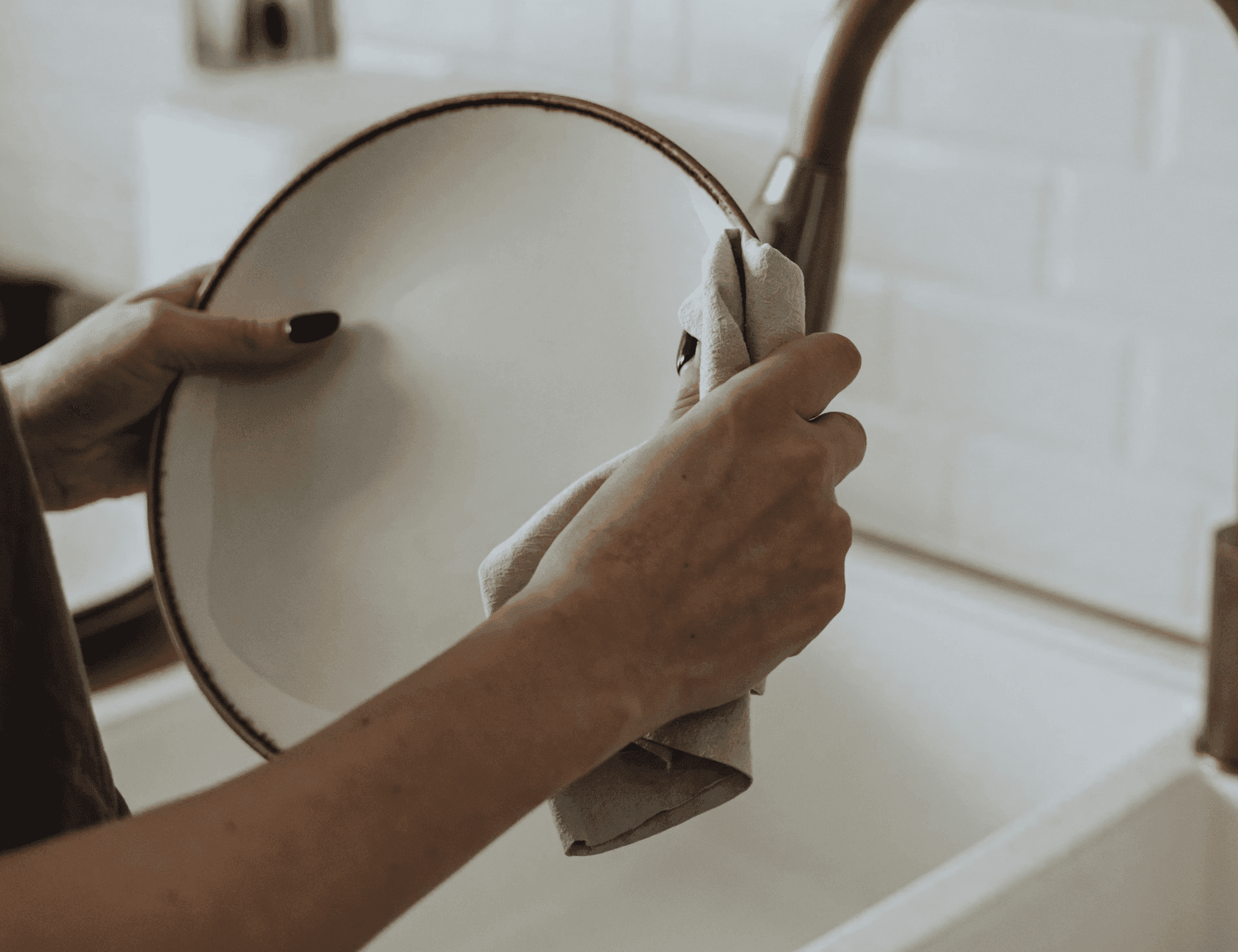
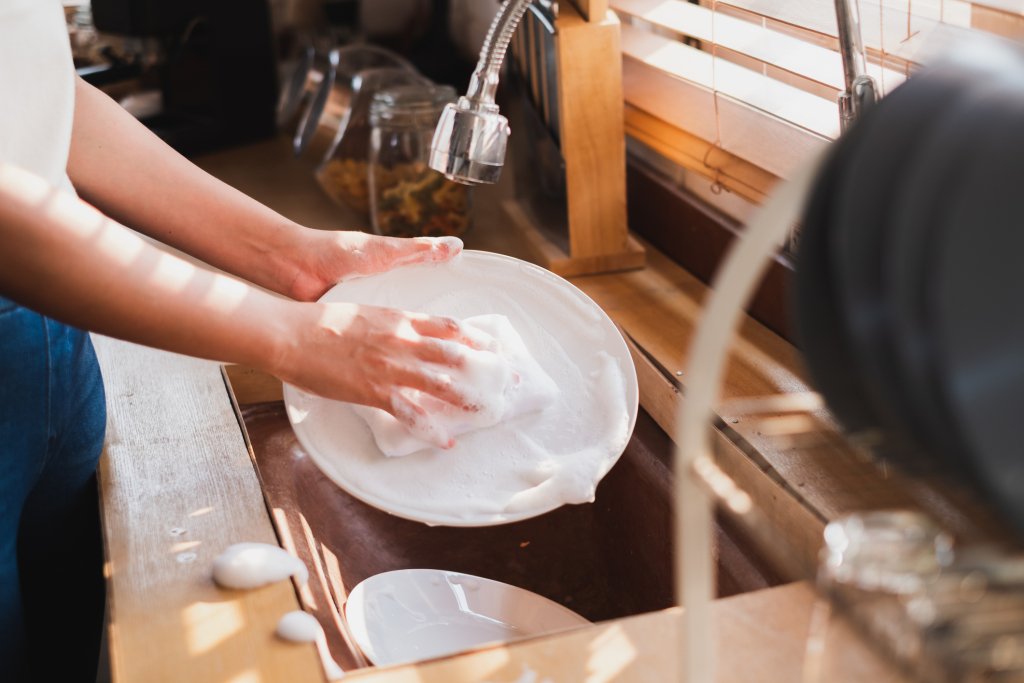
Hot water and a good grease-cutting dish soap work wonders. They dissolve the odor-causing film layer and burnt food residues. Fill the sink or a plastic tub with hot water, add dish soap, and scrub the dishes thoroughly with a clean sponge or soft brush. Then rinse with hot water and let them dry on the drying rack. Only put them away in the cupboard when they are completely dry!
Vinegar soaking
Vinegar effectively fights persistent odors. Mix vinegar and lukewarm water in equal parts in a plastic container, then soak the plates in it for at least an hour. Afterward, pour out the soaking solution and rinse with hot water. Dry them on the drying rack, free of odors and stains!
Baking soda scrubbing
Baking soda is also a great deodorizer. Make a paste by mixing half a cup of baking soda with 2 tablespoons of water. Dip the bristles of a soft brush into it and scrub all surfaces. Let it sit for up to an hour, then rinse thoroughly with hot water and let dry.
Tip: Both vinegar and baking soda remove stubborn stains, such as tomato sauce. If you’re dealing with extra tough stains, soak the dishes in concentrated vinegar overnight or leave the baking soda paste on the stained areas; by the next day everything will be clean and odor-free!
How to prevent stubborn odors from reappearing?
1. Clean the dishwasher and sink regularly!
The inside of the dishwasher needs a thorough cleaning at least once every four months. Empty it and clean the filter, check that the drain hose is not clogged. The sink must not remain dirty either. Clean and run the garbage disposal, and rinse the drain to prevent bacteria from multiplying.
2. Load and unload the dishwasher properly!
If you overcrowd it, some parts will miss cleaning. Pay attention to proper loading and remove the clean dishes as soon as the cycle ends. If the clean dishes remain inside closed for a long time, mold and unpleasant musty odors may appear.
3. Always use hot water!
Whether washing by hand or using a machine cycle, hot water keeps fats and stuck food residues away. Check the water heater settings to ensure hot water reaches both the dishwasher and the faucet!
4. Filter the water if it’s hard!
The bacteria and mineral levels in water can reduce the effectiveness of detergents and machines. If you live in a hard water area, it’s worth installing a water softener system and you can say goodbye to limescale buildup too!
5. Choose good quality dish soap!
Look for products containing grease-cutting surfactants like Sodium Lauryl Sulfate (SLS). These help fats and oils wash away easily with hot water.
6. Store plates dry!
Regularly wipe kitchen cabinets and shelves so that the grease layer from cooking doesn’t trap odors. Never put away plates that are still wet, as mold and mustiness are guaranteed.
7. Throw away cracked plates!
Bacteria can nest in cracks of plastic or ceramic plates and cause unpleasant odors. Get rid of worn, cracked, or damaged pieces and enjoy a perfectly fresh kitchen!