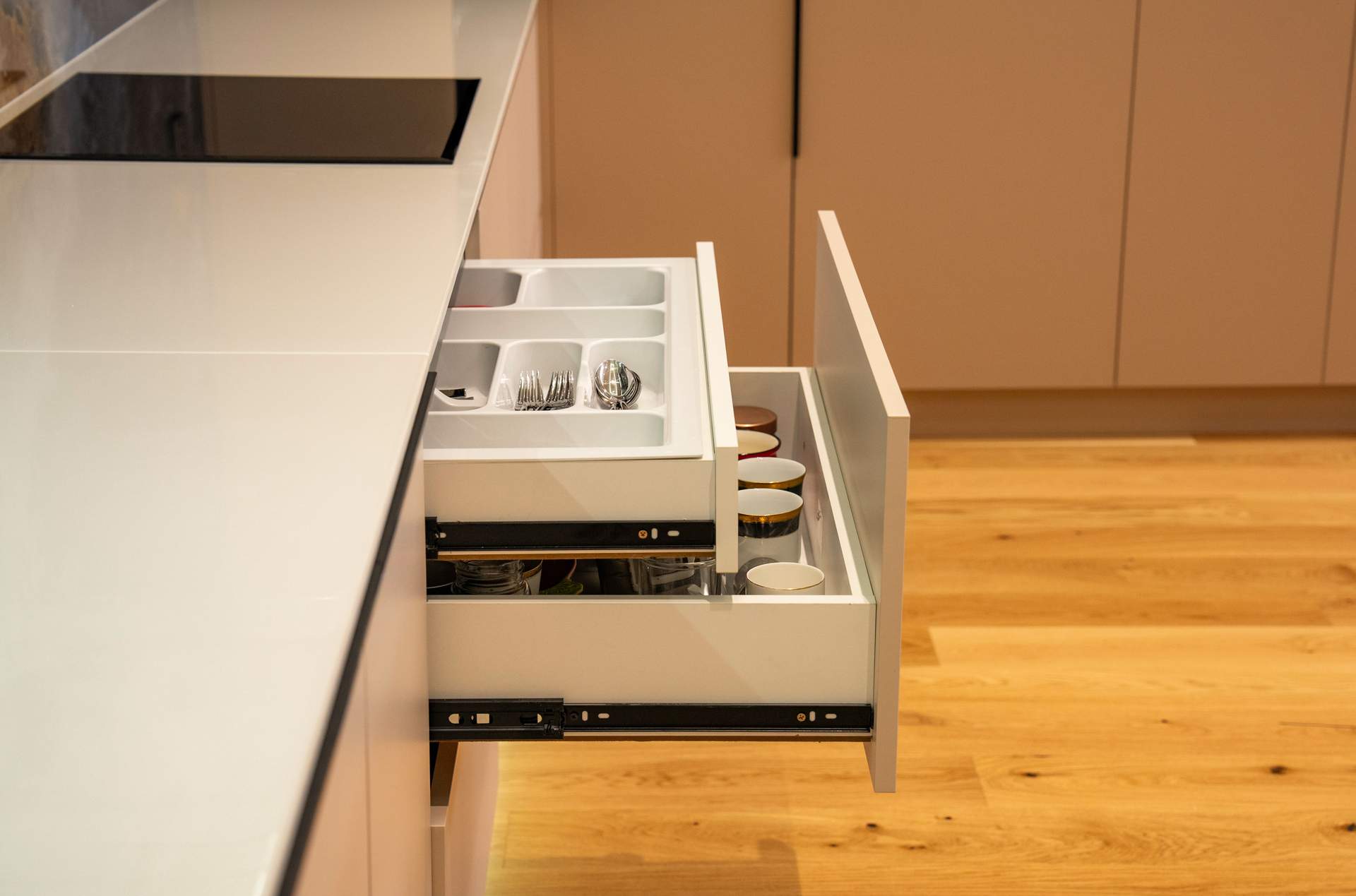
There is a particular drawer in most homes: the one with the christening spoon, the sugar tongs nobody uses, a bracelet gone the colour of a storm cloud. Silver has a way of being loved and then forgotten, because cleaning it feels like a project. It isn't. Ten quiet minutes at the kitchen sink, with warm water and a soft cloth, will do more than any dramatic intervention — and it will do it without taking a layer of the metal with it.
Why silver goes dark in the first place
Tarnish is not dirt. It is a chemical film that forms when silver meets sulphur compounds in the air, which is why pieces stored in a sealed box stay bright for years while the tray on the sideboard turns yellow, then brown, then near-black. Certain foods speed it up dramatically — eggs, mustard, onions, salt — and so do rubber bands, wool felt and some newspaper inks. If you have ever wrapped cutlery in an elastic band and found a black stripe underneath a month later, that is the culprit, not neglect.
This matters because it changes the approach. You are not scrubbing something off the surface the way you would grease from a pan; you are lifting a very thin layer, and every time you do it aggressively you lose a little metal. Gentle and frequent beats fierce and rare, every single time.
The everyday method: warm water, mild soap, immediate drying
Start with the least dramatic option, because it fixes more than people expect. Line the sink with a tea towel to protect both the silver and the basin, run warm — not boiling — water, and add a small squeeze of a mild washing-up liquid without lemon or bleach additives. Wash each piece by hand with your fingers or a soft cloth, rinse in clean warm water, and then dry immediately and completely with a soft, lint-free cloth. Air-drying leaves water spots, and water spots on silver are stubborn.
For light tarnish, a proper silver polishing cloth is the next step. Work in straight lines along the length of the piece rather than in circles: circular buffing leaves swirl marks that catch the light. Use the impregnated side to lift the tarnish and the plain side to buff. Whatever you have read, skip toothpaste. It is an abrasive designed for enamel, and on soft silver it leaves a fine haze of scratches you only notice a year later, when the piece has lost its depth.
The foil and bicarbonate bath — and when not to use it
The trick that circulates endlessly online does work: line a heatproof bowl with aluminium foil, shiny side up, add hot water, a spoonful of bicarbonate of soda and a pinch of salt, and lay the silver so it touches the foil. The tarnish transfers to the aluminium, sometimes in seconds, and it feels like magic because you are not rubbing at all.
Use it selectively. It strips tarnish indiscriminately, which means it also removes the darkened patina sitting in the engraved lines of antique pieces — the shadow that makes a pattern readable. On a Victorian tray, that can flatten the design permanently. Keep it away from anything silver-plated and worn, anything with glued components, hollow handles, or set stones, and never put pearls, opals, turquoise or amber anywhere near it. If a piece has real value, sentimental or financial, ask a jeweller before you dip it.
Storing it so you clean it less often
Half of silver care is simply keeping air away from it. Anti-tarnish strips in a drawer or box work well, as do soft flannel rolls and pouches made for the purpose. A stick of ordinary blackboard chalk tucked into a cutlery canteen absorbs a surprising amount of moisture. Avoid cling film, rubber bands, and cardboard boxes that aren't acid-free. And use the things: cutlery that gets washed and dried after every family lunch almost never tarnishes badly, which is a good argument for the good spoons appearing on a Tuesday.
Does the baking soda and foil trick actually work on everything?
It works on solid silver with ordinary sulphur tarnish, and it works fast. It is the wrong choice for heavily engraved antiques where the dark lines are part of the design, for plated items whose surface layer is already thin, and for anything with soft or porous stones, glue or a hollow handle — the hot water can loosen fillings and cements. When in doubt, wash by hand and use a polishing cloth instead.
How often should I polish silver I use every day?
As rarely as you can get away with. Wash and dry it properly after each use and you may only need a polishing cloth two or three times a year, usually before you host. Pieces that live on display in an open room will need attention more often, but a light pass with a cloth every couple of months is far kinder than an annual deep polish that removes months of build-up in one go.