A small bathroom doesn't have to feel like a closet. With the right tile choices, color palette, and layered lighting, even a compact 85-square-foot bathroom can feel open, airy, and surprisingly generous — without touching a single wall.
Why your bathroom feels smaller than it actually is
In most apartments, the bathroom is the smallest room in the home — often windowless or with only a tiny ventilation slot. But the real culprit behind that cramped feeling usually isn't the floor plan. It's the surfaces. Small tiles, dark grout lines, and sharp contrasts between the floor and walls all create visual boundaries that trick your brain into perceiving the space as even smaller than it is.
The good news? Every one of those visual cues can be reversed.
Large-format tiles and minimal grout lines
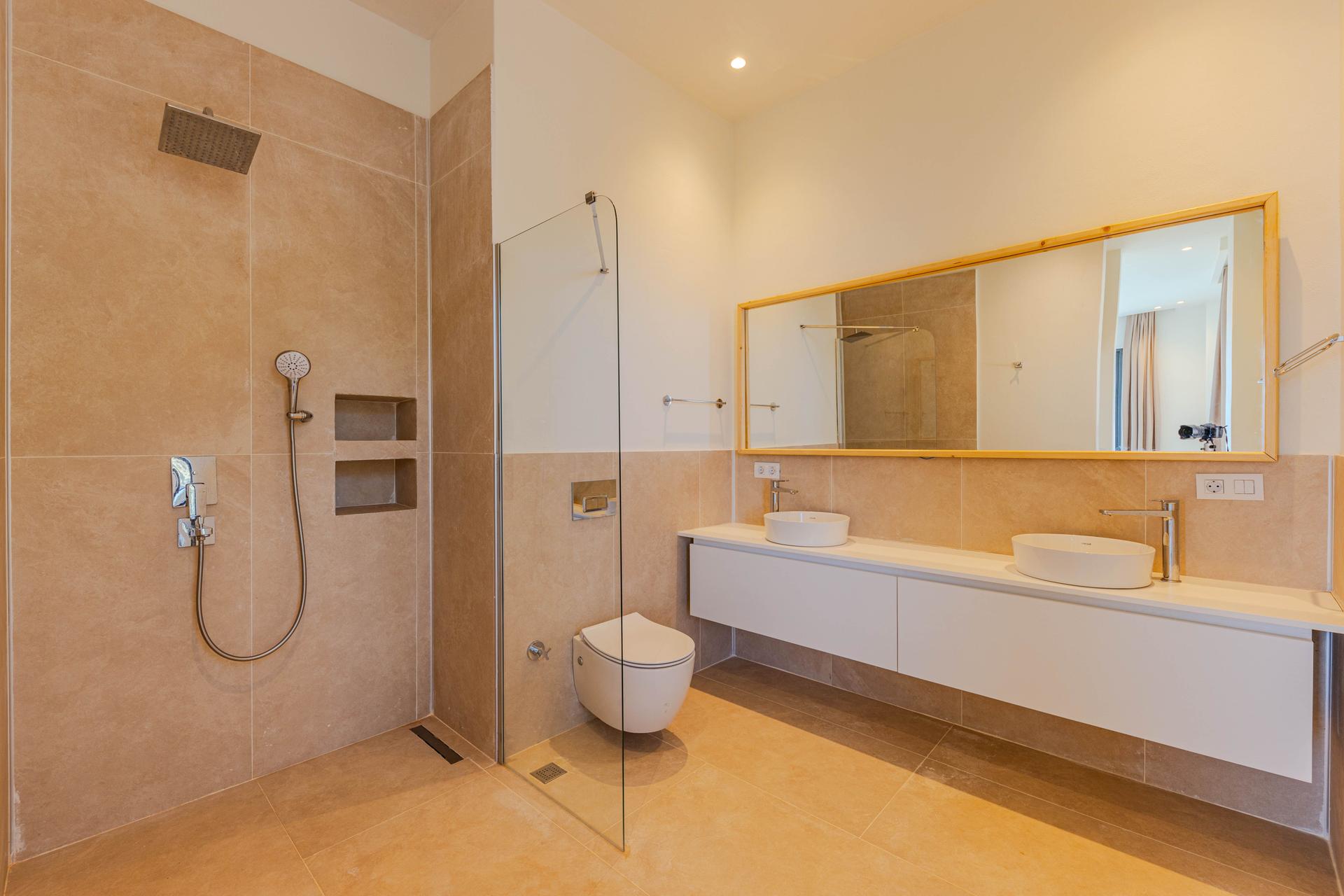
The single most powerful visual trick is using large-format tiles. The bigger each tile, the fewer grout lines interrupt the surface — and the more continuous and expansive the walls and floor appear to the eye. Formats like 24"×24" or even 24"×48" (60×60 or 60×120 cm) are now perfectly standard in small bathrooms. Italian manufacturers such as Marazzi and Fap Ceramiche both offer collections designed specifically for compact spaces, featuring large, light-toned tiles that maximize the sense of depth.
Keep grout joints as narrow as possible — around ⅛ inch (2–3 mm) — and choose a grout color that closely matches the tile. When the pattern nearly disappears, the wall reads as one seamless surface.
The laying direction that visually stretches a room
How tiles are laid matters just as much as which tiles you choose. Laying floor tiles at a 45-degree diagonal makes the room feel wider, because the eye follows the pattern toward the corners rather than measuring the actual wall distance. On walls, vertical tile formats or vertically oriented grout lines draw the eye upward and make ceilings feel higher.
If you take the tiles all the way up to the ceiling — with no border, no paint break, no transition — the visual line that normally "caps" the room disappears entirely. The wall and ceiling merge, and the whole space feels lighter and taller.
An uninterrupted surface is what truly makes a bathroom feel bigger. Where the eye finds no stopping point, the space feels boundless.
Match the floor and walls for a seamless effect
When the floor and walls come from the same tile family — whether in an identical color or just harmonizing tones — the boundaries of the room blur. This technique works especially well in shower-only bathrooms, where a transition between the shower zone and the rest of the floor would otherwise create a visual break. With a continuous surface, the eye can't quite tell where the floor ends and the wall begins, and the perceived depth of the space increases noticeably.
A color palette that doesn't close in on you
Deep, saturated colors absorb light and visually pull walls closer together. In a bathroom where spaciousness is the goal, off-white, soft gray, warm beige, and sand tones do the heavy lifting — they bounce light around the room instead of swallowing it.
That doesn't mean you have to ban every accent color. A band of darker, matte tiles or a contrasting grout line can be placed strategically — on the back wall of the shower, for example — to create an intentional sense of depth without making the whole room feel smaller.
Layered lighting: natural and artificial working together
Lighting matters just as much as tile. Start by maximizing natural light: if there's a window, keep it completely unobstructed. For privacy, opt for frosted glass or a privacy film instead of curtains that block the light entirely.
For artificial lighting, layered light is the goal. A central ceiling fixture alone tends to create harsh shadows in the corners. Instead, combine it with hidden LED strip lighting behind the mirror or in a cove where the ceiling meets the walls. This indirect light is soft and shadow-free — it doesn't emphasize the edges of the room, it dissolves them.
The mirror as a light-multiplying tool
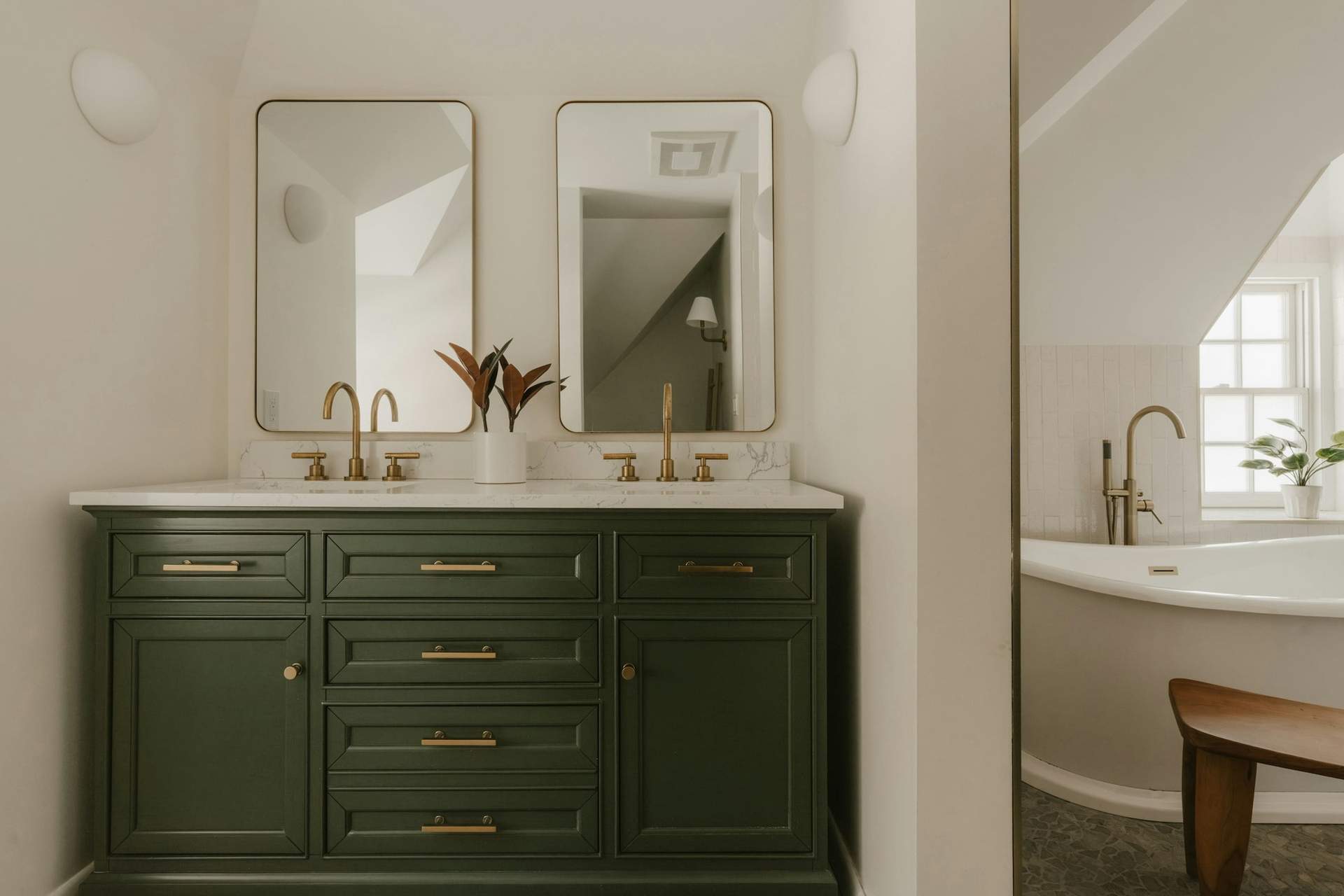
A large, frameless mirror is one of the cheapest and most effective ways to make a bathroom feel bigger. Position it opposite a window or beside a light source and it will double the incoming light and add a convincing sense of depth to the space.
For maximum impact, hang the mirror nearly wall-to-wall above the vanity and add an LED edge light or backlit frame. This not only expands the room visually — it also provides the most flattering, even light for everyday use.
No demolition, no construction dust, no structural changes. Just smarter choices about tile size, laying direction, color, and light — and a bathroom that finally feels the size it deserves to be.
What size tiles are best for a small bathroom?
Large-format tiles — 24"×24" or 24"×48" (60×60 or 60×120 cm) — work best because they have fewer grout lines, making surfaces appear continuous and the room feel larger.
Does tile color really affect how big a bathroom looks?
Yes. Light tones like off-white, soft gray, and warm beige reflect light and make walls feel farther away. Dark, saturated colors absorb light and visually close in the space.
Is it worth tiling all the way to the ceiling?
Absolutely. Taking tiles to the ceiling eliminates the visual break between wall and ceiling, making the room feel taller and more open without any structural changes.
How should I position a mirror to make a bathroom feel bigger?
Place a large, frameless mirror opposite a window or next to a light source. Hung wall-to-wall above the vanity, it doubles the light and creates a convincing illusion of extra depth.
What's the best lighting setup for a small bathroom?
Layered lighting works best: combine a central ceiling fixture with hidden LED strips behind the mirror or in a ceiling cove. The indirect, shadow-free light blurs the room's edges rather than emphasizing them.