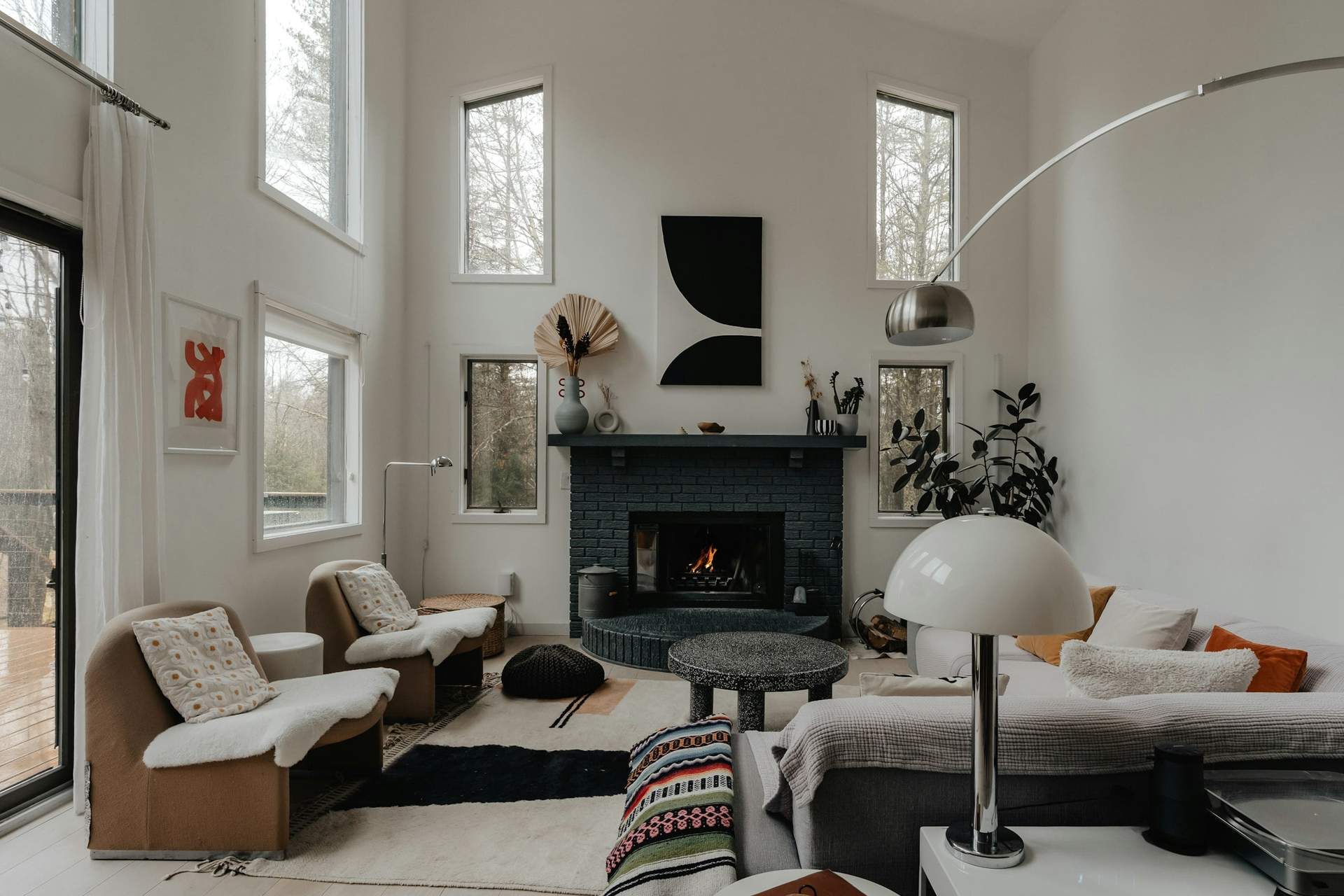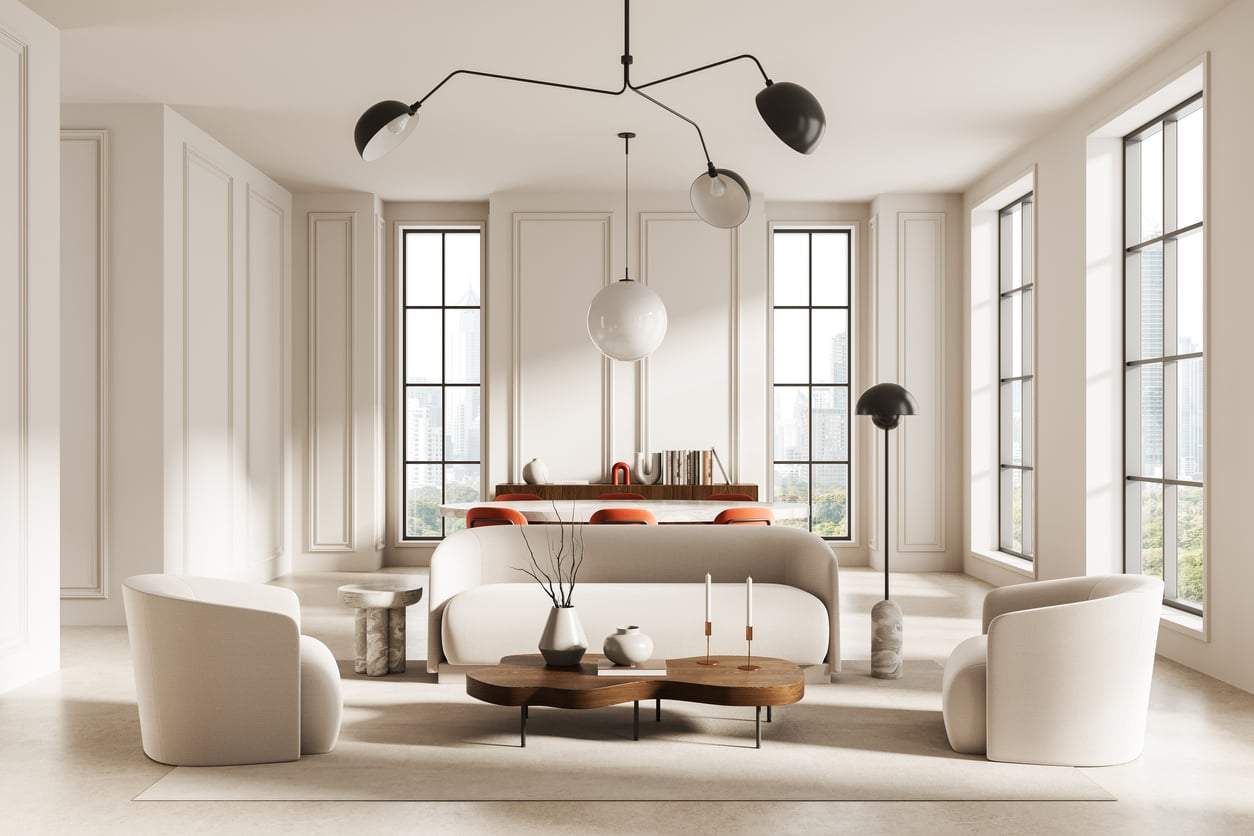
The instinct when a room is small or dark is to paint everything the palest thing on the chart and hope light does the rest. It rarely works. Pale walls with white woodwork put a hard outline around every door frame, skirting board and window reveal, and outlines are what tell your eye where the walls stop. Colour drenching — taking one shade across walls, woodwork, ceiling, even the radiator — removes those outlines. The corners blur, the edges soften, and a boxy hallway or a north-facing back bedroom stops announcing its dimensions. Autumn is the right moment to try it, because you'll be living in artificial light for months and a drenched room comes alive under lamps.
Choosing a shade you can live with in February
Deep colours are less risky than they look, but they are unforgiving of the wrong undertone. Warm hues — chocolate brown, terracotta, mushroom, olive, deep ochre — read as cosy in low light and are kind to skin tones, which matters if the room has a mirror in it. Cool deep shades like ink blue, forest and charcoal look sharp and architectural but can feel cold in a room that gets no direct sun.
Test properly. Paint two large sheets of paper, not the wall itself, and move them around the room over three or four days: by the window in the morning, on the darkest wall at dusk, under your actual bulbs at night. Colours shift dramatically between a bright Saturday and a wet Tuesday evening. If a shade only looks good at one time of day, it isn't the one.
Getting the finish right
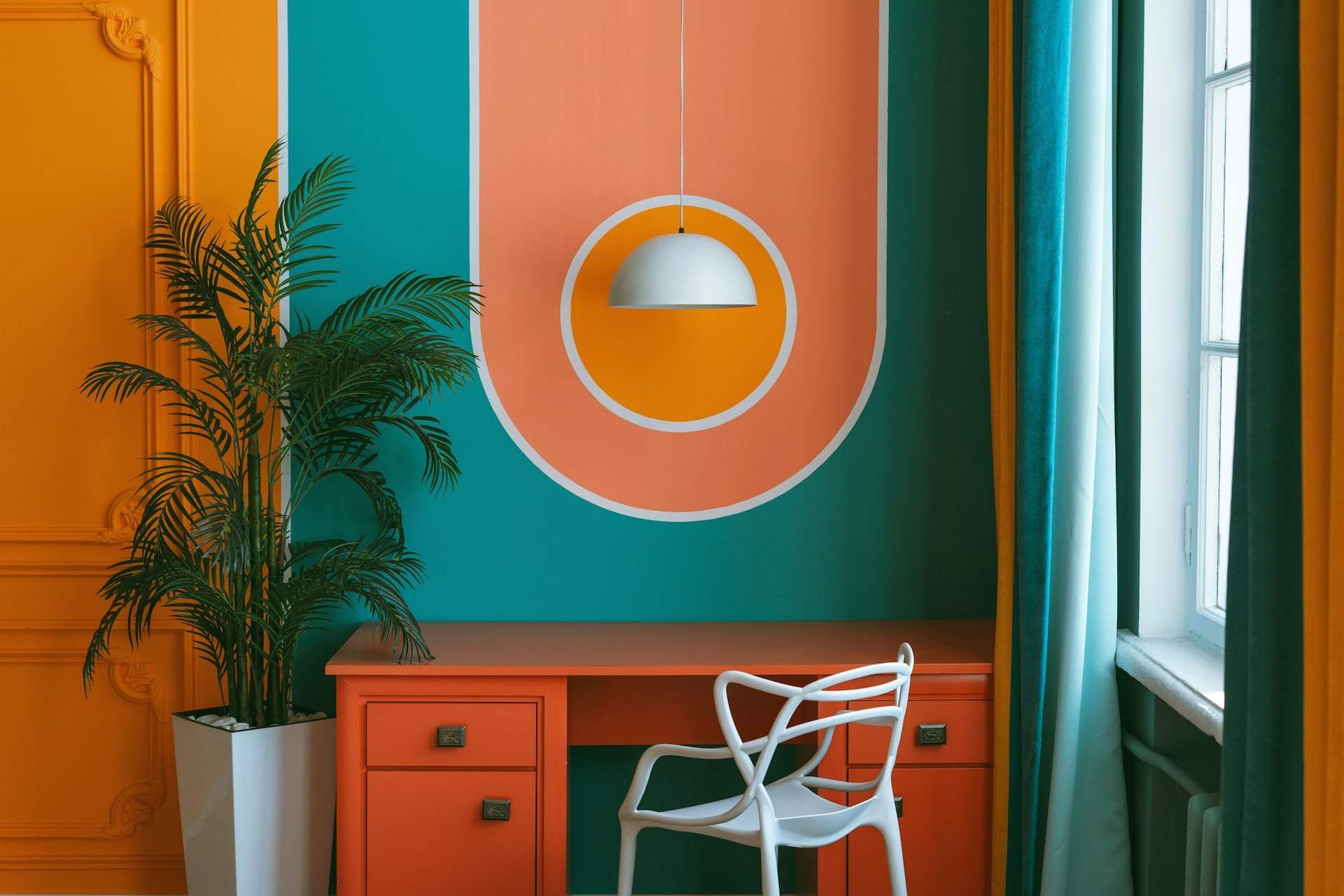
Drenching works best when the colour is identical but the sheens differ slightly. A flat or matt emulsion on walls and ceiling absorbs light and dissolves the corners; the same colour in eggshell or satinwood on doors, skirtings and window frames gives just enough contrast to keep the joinery legible. Ask for the wall shade to be matched in a wood-and-metal paint rather than picking a "close enough" colour — near-misses are more visible in a drenched room than in a conventional one.
Ceilings are the step people skip and then regret. A white ceiling above deep walls acts like a lid and pulls your eye straight up to the height of the room. Carrying the colour over the top, or using the same shade knocked back a shade or two, makes the room feel taller rather than lower. Radiators painted to match simply disappear.
What to keep light — and how to light it
A drenched room needs relief somewhere, and the best places are the floor, the textiles and the metals. Keep floorboards, rugs or carpet lighter than the walls so the room has a floor rather than a void. Then add contrast in linens, a pale lampshade lining, a cream throw, unlacquered brass or warm timber. One or two genuinely light objects give the eye somewhere to rest.
Lighting matters more here than in any pale room. Ditch the single overhead bulb and build light at three heights: a table lamp, a floor lamp and something low or wall-mounted. Warm bulbs, dimmable where possible. Deep colours reward pools of light and punish flat overhead glare, which flattens the pigment and shows every roller mark.
Does a dark colour make a small room look smaller?
Not usually — what makes a small room look smaller is contrast, because your eye reads every boundary line as a limit. When walls, woodwork and ceiling share one shade, those boundaries stop registering and the room's edges become vague, which reads as more space rather than less. The exception is a room drenched in a cool, chalky dark shade with harsh overhead lighting; that will feel like a box, so warm the colour or warm the light.
Which rooms are best for colour drenching if I'm nervous?
Start somewhere you pass through rather than sit in all day: a hallway, a downstairs cloakroom, a small landing or the back of an alcove. These spaces are usually windowless or awkward anyway, they take little paint, and a bold result feels like a moment of drama rather than a commitment. If you love it after a month of autumn evenings, move on to a bedroom or a snug — and if you don't, one small space is a very cheap lesson.