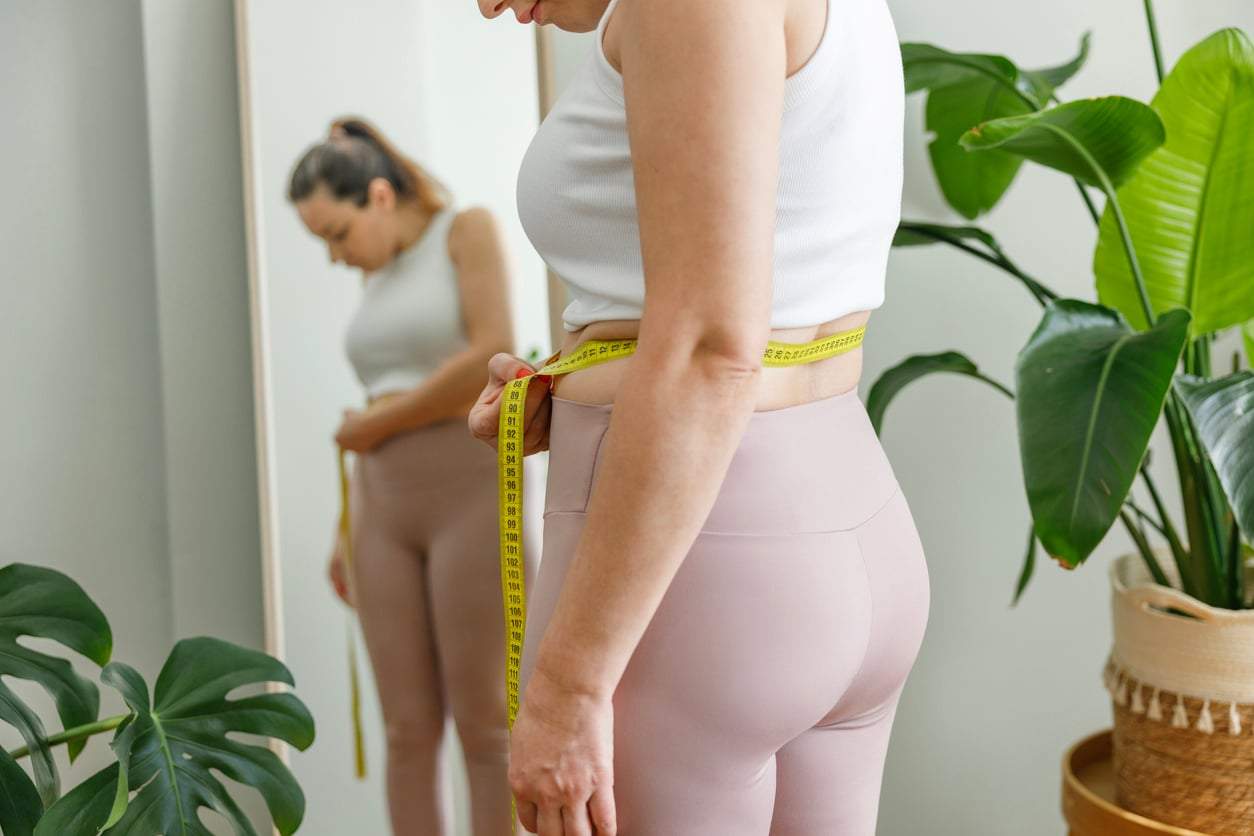
There is a sentence doing the rounds this week, borrowed from a musician who posed for a lingerie campaign on her own terms and said, in effect, that her body finally belongs to her. You can find the campaign itself unremarkable and still be stopped mid-scroll by that phrase. Because if a body has to be reclaimed, someone else was holding it. And most women I know have spent decades in exactly that arrangement without ever signing anything.
Who has been holding the camera?
Almost nobody arrives at their own reflection alone. There is a mother who sucked in her stomach in front of the hall mirror. A school changing room. A boyfriend who made one remark in 1998 that you can still quote verbatim. A magazine spread, a group chat, a fitting room with terrible lighting, and now an algorithm that has worked out precisely which insecurity keeps you watching. The point of noticing this is not to build a case against anyone. It is simply to establish that the harsh voice in your head has an accent, and the accent is not yours.
That matters because we tend to treat that commentary as objective. It arrives sounding like fact — a neutral report on the state of your upper arms — when it is actually a very old recording, made by people who were also frightened about their own bodies. Once you hear it as a recording, you can turn the volume down. You cannot argue a fact into silence, but you can decline a stranger's opinion.
The mirror audit
Try this for a week, without changing anything else. Every time you pass a mirror or a shop window, write down the exact sentence that appears in your head. Not a summary — the words. By Friday you will probably have three sentences repeating on a loop, and you will be able to guess who first said each one.
Then ask two questions of each sentence: would I say this to a friend in a fitting room, and what is it trying to protect me from? Usually the answer is judgement — the criticism is pre-emptive, an attempt to say it first so nobody else can. Replacing it with an affirmation rarely works; the body knows when it is being flattered. What does work is description with function in it: these are the legs that carried the shopping up three flights. This is the back that has held two children and one house move. Neutral, true, and impossible to argue with.
Small acts of repossession
Ownership is built out of unglamorous decisions. Wear clothes that fit the body you have on a Tuesday, not the one you are negotiating with — and if the number on the label stings, cut the label out. Move for sensation rather than subtraction: swim because water feels good, dance while the pasta boils, walk without measuring the walk. Get in the photograph. You are not preserving yourself for a slimmer year; you are the person your family will want to see in twenty years' time.
Add touch that has no goal. Moisturising your ankles slowly, a proper haircut, a massage if it is within reach — anything that treats your body as a place you live rather than a project with deadlines. And decide, deliberately, who gets an opinion. A relative who comments on your weight at every family lunch can be met with one calm, reusable line: I am not discussing my body, but tell me about your garden. Repeat it until it becomes furniture.
What about the days when none of it works?
Some days you will look in the mirror and feel nothing but resistance, and that is not a failure of practice. Hormones shift, illness arrives, medication changes shape, ageing does what it does. The aim is not cheerfulness — it is neutrality, which is far more sustainable. Neutral days are the ones where you simply get dressed and go, and the mirror does not get a vote. If, though, thoughts about food, exercise or your reflection are eating whole days, that is worth taking to a doctor or a therapist rather than carrying alone.
How do I stop flinching when I see photos of myself?
Counter-intuitively, by having more photographs rather than fewer. The flinch usually comes from rarity — you have an outdated mental image of yourself and every picture is a collision. Let the first flinch happen, then look again for what the photograph actually remembers: the light, the person laughing beside you, the day. Delete less, print occasionally, and the flinch loses its grip.
Is it shallow to care this much about how I look?
No, and pretending otherwise mostly makes women feel ashamed of a normal human sensitivity, since appearance is one of the ways we are read socially, at work and in public. What costs you something is caring silently and unconsciously, so that a bad mirror morning quietly reorganises your whole day. Caring on purpose, with your own voice in charge, is a different thing entirely.