If you've ever blow-dried or straightened your hair and forgotten to spritz it first, you already know the difference. On one side: shiny, smooth, silky strands. On the other: dry, straw-like lengths with split, brittle ends.
That one small step is often what separates healthy-looking hair from heat-damaged hair — and most people skip it without a second thought.
Why you should never skip heat protectant
Blow-dryers, flat irons and curling wands all reach temperatures high enough to permanently damage the outer layer of the hair, known as the cuticle. Once that layer lifts and gets damaged, hair loses moisture, turns dull and brittle, and the ends eventually start to split.
Heat protectant products create a thin silicone- or polymer-based film on the strand that softens the impact of the heat and reduces moisture loss while you style.
And this step isn't only for people who flat-iron every day. Even if you reach for the dryer or curling iron just once or twice a week, heat protectant still matters — because the damage builds up over time, just more slowly.
Which type of heat protectant suits your hair
On the shelves you'll find heat protectants as sprays, creams, serums and oils — and the one you choose really does make a difference.
- Fine, fragile hair: lightweight spray formulas are your best bet, because they won't weigh hair down or leave it looking greasy.
- Thick, dense hair: reach for a cream or serum texture, which penetrates the hair mass better and offers longer-lasting protection.
- Dry, split ends: oil-based heat protectants are a smart choice, since they nourish and protect at the same time.
- Colored or bleached hair: look for a product that pairs heat protection with a UV filter or color-protecting ingredient, so your shade stays vibrant for longer.
Check the packaging to see up to what temperature the brand guarantees protection. Most flat irons and curling wands run between 300 and 450°F (150–230°C), so choose a product that covers at least that range.
If you want to make the most of your styling routine, it's also worth understanding the most common mistakes people make while blow-drying — because even the best products can't fix bad technique.
How to use it the right way
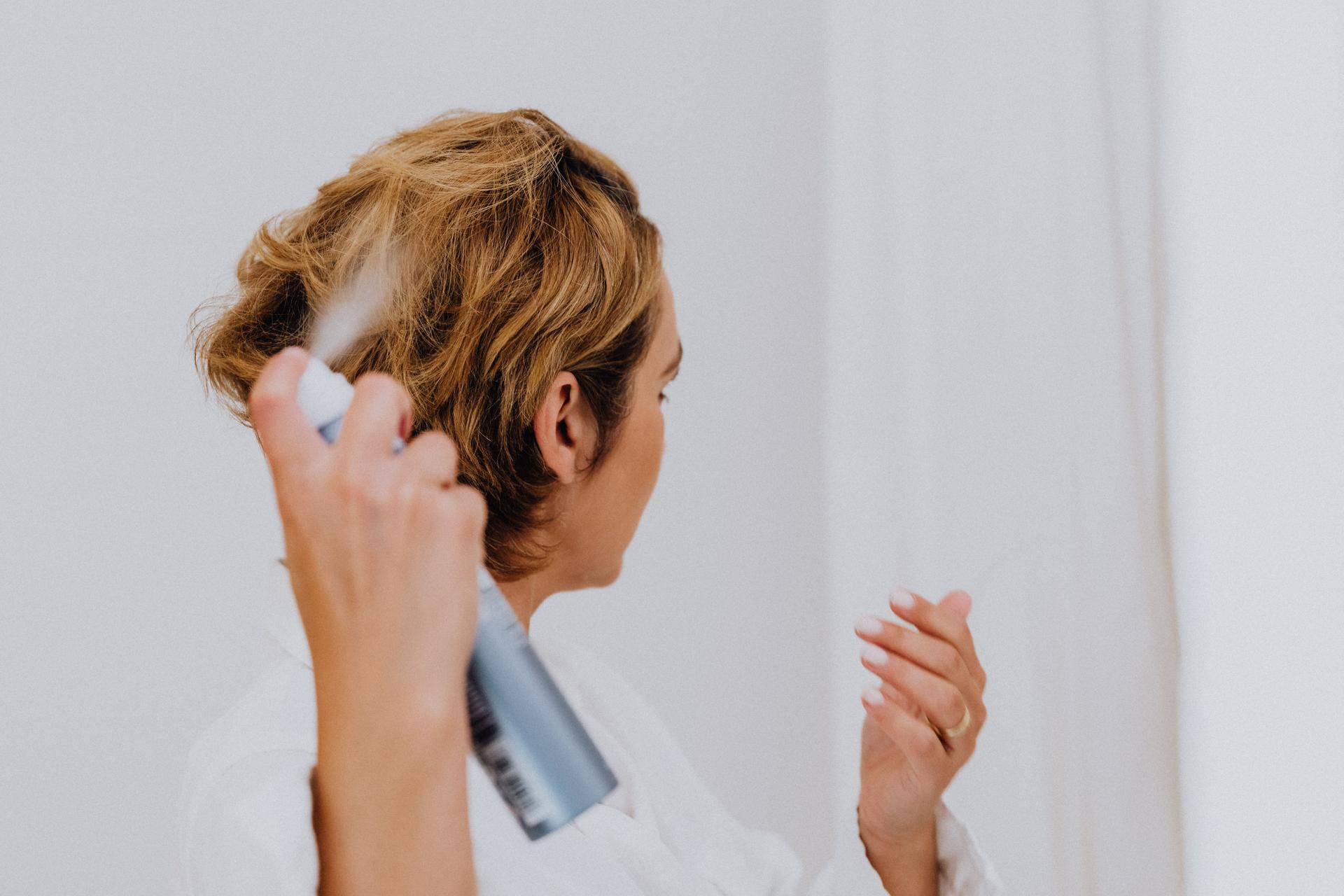
Heat protectant spray only really works if you don't just mist it on — you need to distribute it evenly through your hair.
- Blot excess water with a towel so your hair isn't dripping, but is still damp.
- Comb through your hair to remove any tangles before you apply anything.
- Spray from mid-lengths to ends, paying a little extra attention to the ends — they're the oldest and most vulnerable part of your hair.
- Use your fingers or a wide-tooth comb to spread it evenly, so no sections are left untreated.
- Only then should you start drying or styling.
If you're styling dry hair — for example, touching up an already-finished look with a flat iron — it's still worth using a light heat protectant made for dry hair right before you begin.
Common mistakes worth avoiding
The most common mistake is using too little product, because we're afraid it will make our hair look flat. With heat protectant spray, generous, even coverage matters far more than saving product. Another frequent error is spraying it onto wet hair right before styling, then immediately cranking the iron up to its highest setting before the product has even had a chance to dry.
Give it a few minutes so the heat protectant can absorb into the strand before you apply heat.
A lot of people also forget that heat protectant needs to be reapplied every single time. One spritz in the morning isn't enough if you reach for your styling tools again later in the day.
How much a good heat protectant is worth
You don't need to hunt for the most expensive products to get effective protection. Drugstore brands also offer reliable heat protectants — what matters is that the packaging lists a temperature rating and, ideally, some kind of nourishing ingredient too, such as panthenol or keratin.
If you regularly use high-heat tools, it's worth investing in a better-quality, professional-brand heat protectant. In the long run, it's cheaper than repairing damaged hair.
Do I really need heat protectant if I only style my hair once a week?
Yes. Heat damage builds up over time, so even occasional styling benefits from protection — it just accumulates more slowly than with daily use.
Can I use heat protectant on dry hair?
Yes. When styling already-dry hair, such as touching up a finished look with a flat iron, use a lightweight heat protectant made specifically for dry hair right before you start.
How much heat protectant should I apply?
More than you might think. Generous, even coverage matters far more than trying to save product, and using too little is one of the most common mistakes.
Do I need to reapply it during the day?
Yes. Heat protectant should be reapplied every time you use heat. A single application in the morning won't protect your hair if you style it again later.
Is an expensive heat protectant always better?
Not necessarily. Reliable drugstore options exist — look for a temperature rating and a nourishing ingredient like panthenol or keratin. Frequent high-heat users may benefit from investing in a professional-quality product.