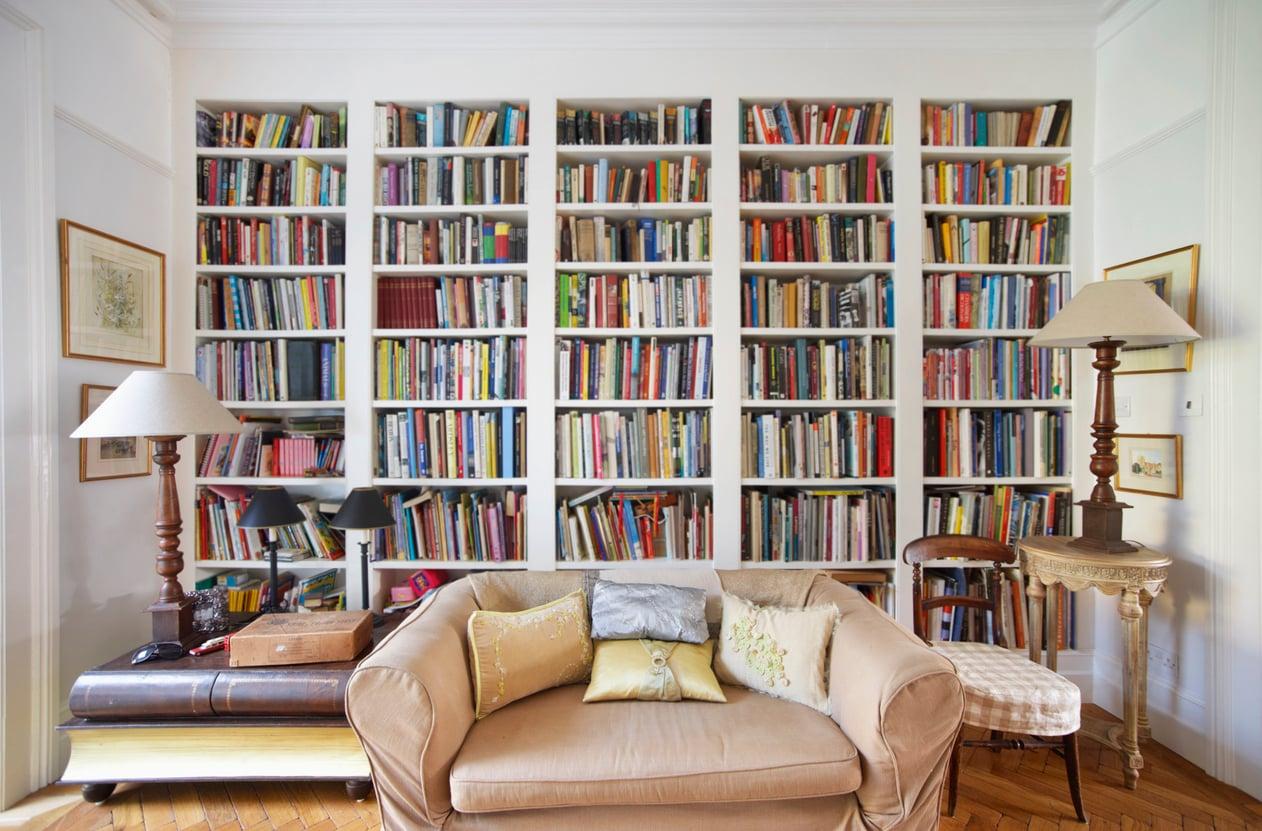
I'm passionate about books. It's been my favorite hobby since I was a kid. Living with my parents, it was never a problem — the house was big enough to swallow whatever I piled up.
The trouble started when I moved out on my own, and slowly my own books almost ate me alive. My little city-center flat was becoming impossible to navigate because of them. I couldn't bring myself to part with the old ones, and I kept needing the new ones.
Eventually my partner told me we had to figure something out. He was right. It wasn't easy to admit, but he was right.
The mindset shift
The first and most important turning point came when I stopped treating my book collection as one untouchable whole that had to be preserved forever. I started seeing it as a living thing — something that can change and evolve.
Some books I'll read again. Some I'll pass on to a friend. And some have already done their job. Those don't need to stand on the shelf for eternity.
That doesn't mean you should throw everything out. But not every book is equal, and not all of them deserve to be kept in the same way.
Learning to let go
Letting go doesn't have to mean the trash bin — and realizing that helped enormously. Most secondhand bookstores buy books, giving you either cash or store credit toward new ones. That last option is a slightly funny solution for a book hoarder, but at least what leaves comes back into circulation.
Book-swap groups — easy to find on Facebook and in local communities alike — are another great way to make sure a book doesn't end up in the bin, but in the hands of someone who actually needs it right now. That feeling helped me most of all: I'm not losing it, I'm passing it on.
The library, an option I underestimated
For a long time I didn't take this seriously, because I felt that if I liked a book, it had to be mine. Then I realized I read most books once. Just once. After that they sit there, and they make me feel good, but I never actually touch them again.
Borrowing from the library isn't giving up your love of books. It's a level-headed decision about which titles truly earn their spot on the shelf. If I read one and know I'll come back to it, I buy it. If I probably won't, the library solves it perfectly.
Making the most of your space
Once you've decided which books stay, the physical question kicks in: where do they go? In a small flat, your walls are your best friend — especially the surfaces you usually leave bare.
Shelves mounted above doorways hold a surprising amount, and almost no one thinks of them first. Flat, slide-under-the-bed storage is excellent for shorter, smaller-format books. If you have an internal staircase, the steps can easily double as shelving. And those corners that usually go to waste? Corner shelves put them to work.
How you stack the books matters too. The classic spine-out arrangement takes up a lot of visual space. Plenty of people switch to laying books flat and piling them up — which fits more volumes in the same footprint and creates a calmer, cleaner look.
The e-book question
I know this one is divisive. For many book lovers, an e-book isn't a real book, and I understand that feeling — the touch of paper, the turning of pages, the smell, it's all part of the experience.
But there's a compromise that works for me. The favorites I plan to reread, the gifts, the emotionally important volumes — those stay in print. The lighter, one-time reads, the thriller I'll finish and probably never open again, arrive as e-books.
It's not abandoning a principle. It's making sure the space on the shelf goes to the books that truly deserve it.
Where I am now
My partner was right, and today I say that gladly. I didn't have to give up my books — I had to give up the belief that every single one had to stay by my side forever. My flat is still full of them. There's just room to breathe between them now.
What's the easiest way to start decluttering a book collection?
Begin with a mindset shift: stop treating your collection as one untouchable whole. Sort books into those you'll reread, those you can pass on, and those that have already done their job.
What should I do with books I no longer want?
Instead of throwing them away, sell them to a secondhand bookstore for cash or store credit, or offer them in a book-swap group so they reach someone who needs them.
Does using the library mean giving up on owning books?
Not at all. It's simply a practical way to decide which titles truly earn a spot on your shelf. If you know you'll return to a book, buy it; if not, borrowing it works perfectly.
How can I store more books in a small flat?
Use overlooked spaces like shelves above doorways, under-bed storage, staircase steps and corner shelves. Laying books flat instead of spine-out also fits more volumes in the same space.
Are e-books a good compromise for book lovers?
They can be. Keeping your emotionally important favorites in print while choosing e-books for lighter, one-time reads frees up shelf space for the books that matter most.