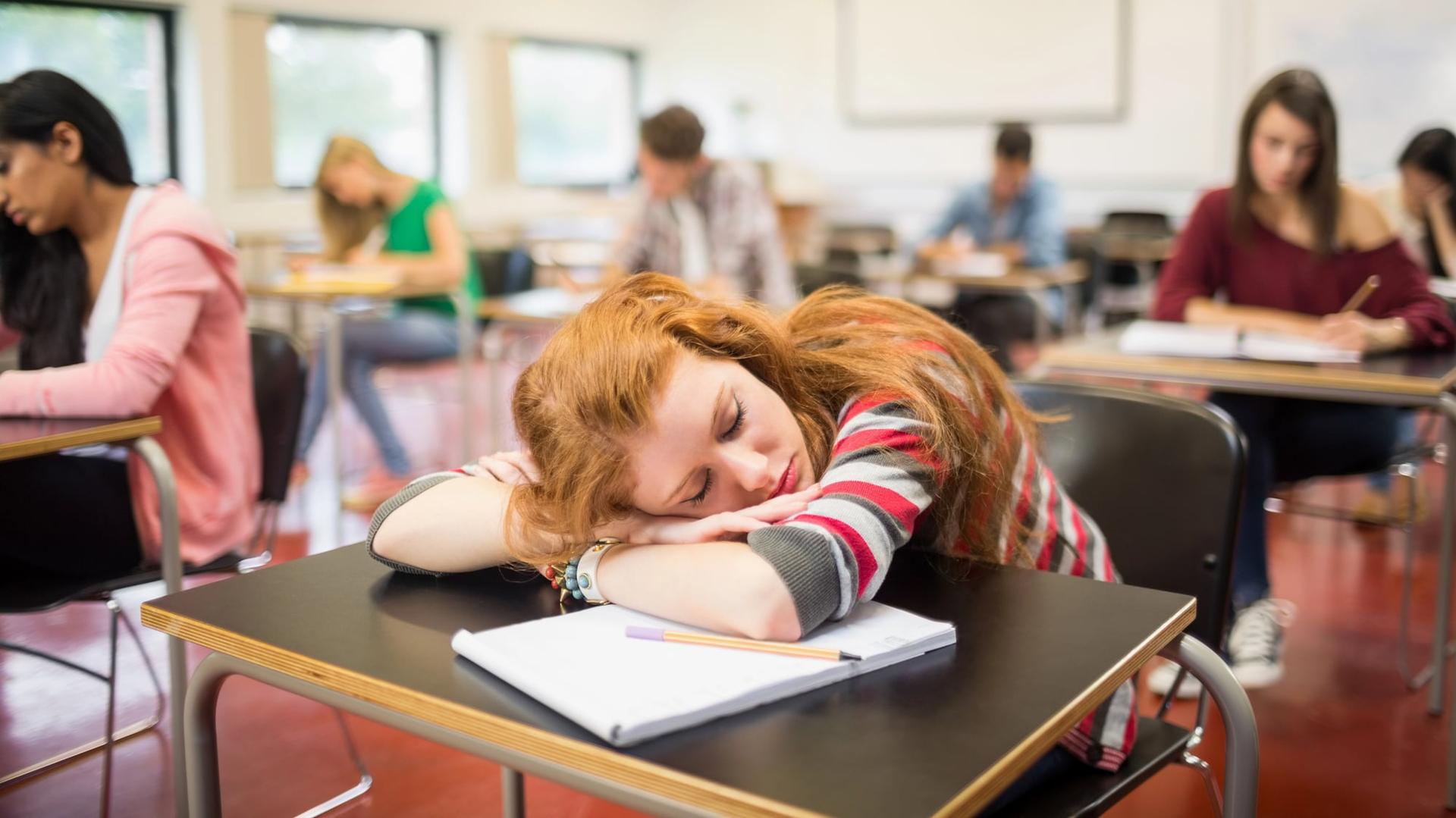
We've been quick to blame smartphones, but the truth is far more complicated. A major new study shows that teenage sleep deprivation has reached record levels — and the causes run much deeper than screen time alone. School pressure, packed schedules, biological shifts, and social expectations are all playing a role. And the consequences go well beyond feeling tired in the morning.
The research, published in the Journal of the American Medical Association and carried out by experts from the University of Wisconsin, Columbia University, and the University of Connecticut, paints a troubling picture of how today's teens are sleeping — or rather, how they aren't.
The numbers behind the teen sleep crisis
The study analyzed data from nearly 121,000 high school students surveyed through the U.S. Youth Risk Behavior Survey. The findings are stark.
- In 2023, 75% of teens were sleeping fewer than 8 hours per night — roughly 8 percentage points higher than in 2007.
- The share of teens sleeping fewer than 5 hours a night hit the highest level ever recorded in the survey's history.
For context, health experts recommend that adolescents get between 8 and 10 hours of sleep per night. The gap between what teens need and what they're actually getting has never been wider.
What chronic sleep loss actually does to teenagers
This isn't just about feeling groggy in class. Chronic sleep deprivation in adolescence is linked to a range of serious health outcomes:
- increased risk of anxiety, depression, and mood disorders
- lower academic performance and concentration
- higher risk of obesity and type 2 diabetes
- difficulty managing emotions and stress
Perhaps most concerning: the sleep habits formed during the teenage years can shape health outcomes well into adulthood. This isn't a phase — it's a foundation.
Screens are part of it, but not the whole story
It's tempting to point the finger at social media and smartphones. But the study's findings complicate that narrative in a significant way.
- Sleep deprivation increased across all groups, regardless of how much screen time teens reported.
- Even teens who used digital devices very little showed worsening sleep patterns.
- Heavy screen users didn't necessarily sleep worse than light users — suggesting the issue is more about when screens are used, not just how much.
This doesn't mean screens are harmless. Blue light exposure does disrupt the body's circadian rhythm. But screens alone don't explain why an entire generation is losing sleep.
What's really driving the problem
According to the researchers, the root causes are more social than technological. Four key factors stand out:
- Early school start times — Teenagers' biological clocks naturally shift later during puberty, yet many schools still start before 8 a.m., forcing teens to wake up when their bodies aren't ready.
- Overloaded schedules — Between homework, extracurriculars, and sports, many teens don't wind down until late at night.
- Constant performance pressure — Academic and social expectations create a persistent low-level stress that makes it harder to fall asleep and stay asleep.
- Lack of consistent sleep routines at home — The study found that parental habits and household structure play a significant role in whether teens get enough rest.
Not all teens are equally affected
The study also highlighted troubling inequalities. Black students showed a sharper rise in sleep deprivation than other groups — though the problem spans every ethnicity, gender, and age group studied. No demographic was immune.
What parents can actually do
Systemic change — like later school start times — would make the biggest difference. But while we wait for that, families can take meaningful steps at home.
- Build movement into the day — Regular physical activity helps teens fall asleep faster and sleep more deeply.
- Cut off caffeine in the afternoon — Energy drinks and coffee consumed after 2 or 3 p.m. can significantly delay sleep onset.
- Create a screen-free wind-down period — At least an hour before bed, put the phones and tablets away. The timing matters more than the total daily screen count.
- Stick to a consistent sleep schedule — The body learns when to sleep when bedtime is predictable, even on weekends.
- Keep evenings lighter — Homework and activities that push past 10 p.m. regularly are a warning sign worth addressing.
It was never just about the phones
The message from this research is clear: teen sleep deprivation is a complex, systemic problem — not a simple parenting failure or a screen addiction issue. The role of digital devices is real, but it's one piece of a much larger puzzle.
The goal isn't just to get teenagers to bed earlier. It's to build the conditions — at home, at school, and in society — where a healthier, more rested generation can actually thrive.