You pull a freshly washed towel out of the machine, lift it to your face expecting that clean, cottony scent — and instead you get something musty, faintly sour, almost damp. It's frustrating, and in summer it happens in nearly every home.
Most people assume the fix is simple: wash more often, or switch to a stronger detergent. The truth is a little more nuanced. The problem usually isn't how often you wash — it's a handful of small, easily avoidable mistakes.
Damp cotton is a paradise for bacteria
Towels are made from looped cotton, which traps a lot of air. That's exactly what makes them soft and absorbent — but in warm, humid conditions, that same structure becomes the perfect breeding ground for bacteria and mould.
In summer, high temperatures and moist air speed up how quickly these microorganisms multiply. So if a towel spends even a few hours damp in a closed bathroom, the process is already starting deep in the fibres. That's the smell you notice later — and it's not really "dirt," it's biology.
Why washing alone doesn't fix it
Most washing machines run short cycles at low temperatures to save energy. Great for your bills, but often not hot enough to bother the bacteria living inside your towels.
Detergent lifts away visible grime, but it doesn't necessarily break down the microorganisms buried in the fibres — or the biofilm they leave behind. Add to that the habit of leaving a damp towel folded on an unventilated bathroom shelf, and the smell is guaranteed to come back, sometimes after just a couple of uses.
Your washing machine might be the real culprit
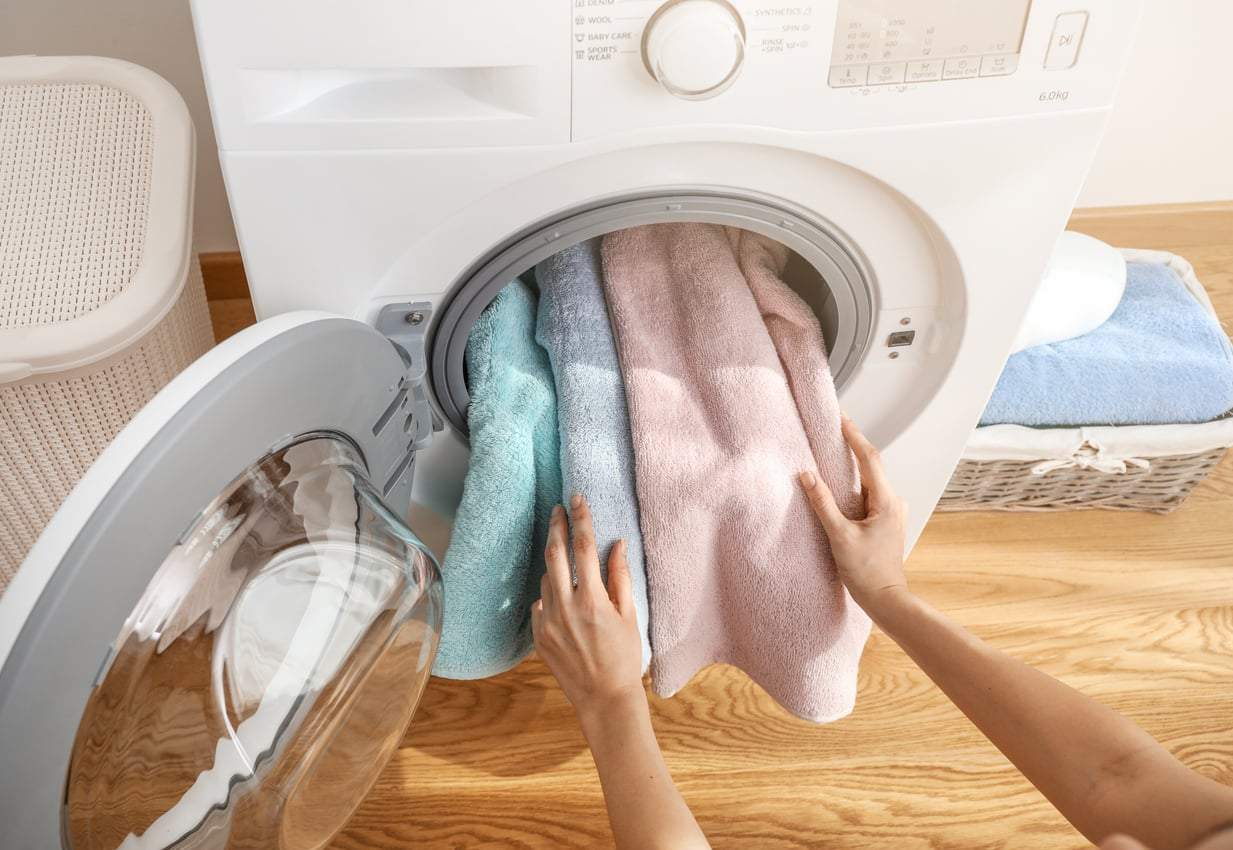
Here's a surprising twist: often it isn't the towel at all — it's the machine itself. The rubber door seal, the detergent drawer and the drain hoses all harbour bacteria that thrive in summer just like damp fabric does. And every cycle transfers a little of that back onto your "clean" laundry.
If your machine hasn't had a hot, empty maintenance wash in weeks, there's a good chance your towel isn't the one that smells — the machine is adding its own musty note.
What to do differently
- Hang towels to dry immediately after washing — ideally outside in the sun, or at least in a well-ventilated room. Don't leave them folded or sitting in the drum once the cycle ends. (You can find more summer laundry mistakes worth avoiding here.)
- Once a month, run an empty hot cycle at 60–90°C (140–195°F) with vinegar or a dedicated machine cleaner. This strips away the buildup in the drum and seal.
- Don't overload the machine with towels. Cram it too full and there's less room for water and detergent to circulate, so the cleaning power never reaches deep into the fibres.
- Every so often, add a little baking soda or vinegar to the rinse compartment alongside your detergent. Both help neutralise the acidic byproducts that cause odours.
- If a towel is already badly musty, don't just wash it — soak it first in hot water with a splash of white vinegar. This helps break down the deep-set smell before it even reaches the machine.
Drying is the step that matters most
You can use the best detergent and the fanciest cycle in the world, but if your towel sits damp for hours in a closed cupboard or folded in a laundry basket, fresh scent doesn't stand a chance.
Summer heat, oddly enough, works against you here. Warm, humid air keeps feeding the bacteria until the fabric dries completely. So a bathroom with an open window or a breezy balcony is worth far more than the most expensive fabric softener on the shelf.
Why do my towels smell even after washing them?
Because low-temperature cycles and detergent don't always kill the bacteria living deep in the cotton fibres. If the towel then stays damp in a closed space, those microorganisms keep multiplying and the musty smell returns.
Does summer really make it worse?
Yes. High temperatures and humid air speed up how fast bacteria and mould grow, so a towel left damp for even a few hours starts developing odour faster than it would in cooler weather.
How often should I clean the washing machine itself?
About once a month, run an empty hot cycle at 60–90°C (140–195°F) with vinegar or a machine cleaner. This removes buildup in the drum, seal and drawer that can transfer smells onto clean laundry.
What's the single most important thing I can change?
Drying. Hang towels immediately after washing in the sun or a well-ventilated space, rather than leaving them folded or damp — this does more to prevent odour than any detergent or softener.