Where should everyday plates and glasses live?
As close as possible to the dishwasher or draining rack, not to the table. Unloading happens far more often than laying the table, and the chore you want to make frictionless is always the boring one. If your plates currently live across the room from where they get cleaned, moving them is probably the single highest-value change in the whole kitchen — and if several people in the house unload, keep everyday crockery at a height the shortest of them can reach without a stool.
What do I do with cabinets that are too deep?
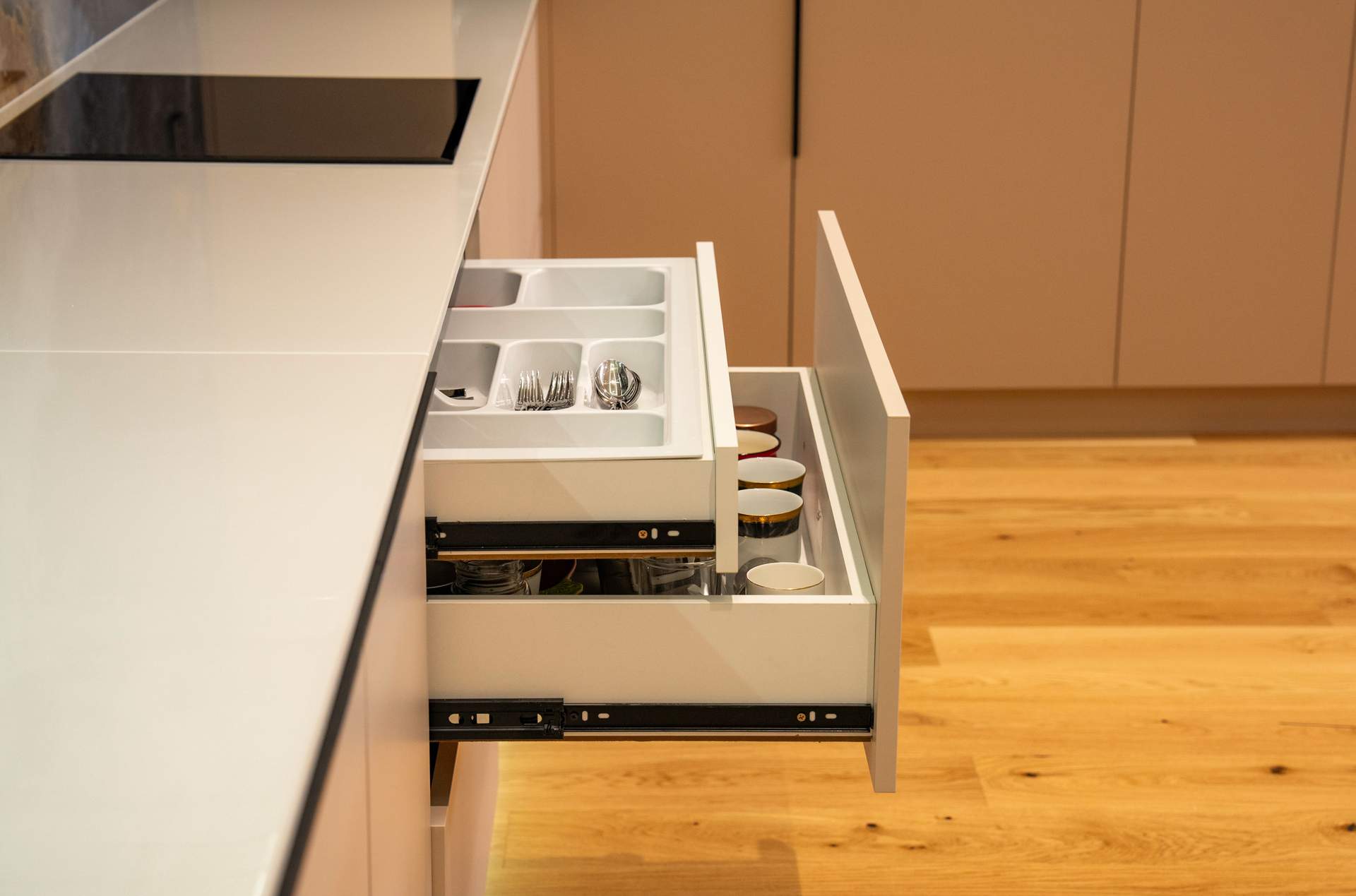
Treat a deep cabinet as two separate shelves front and back, and never let the back become a graveyard. Put daily items in front and deliberately assign the back row a single defined job — spare jars, bulk packets, the slow cooker — so it is not a vague dumping ground. Shallow pull-out baskets or plain lidless boxes with a handle turn the back half into something you can slide forward in one movement, which is the only way that space ever gets used.
Keep it alive with a five-minute reset
No kitchen stays perfect, and it does not need to. What it needs is a short, repeatable reset: once a week, while the kettle boils, open the two cupboards you use most and put back the three things that have migrated. That's it. Three objects, thirty seconds. The reason cabinets spiral is that we wait until the mess is big enough to justify an afternoon, and by then it has moved from annoyance to project.
Done this way, the cupboards stop being something you organise and start being something you simply use — which was always the point.