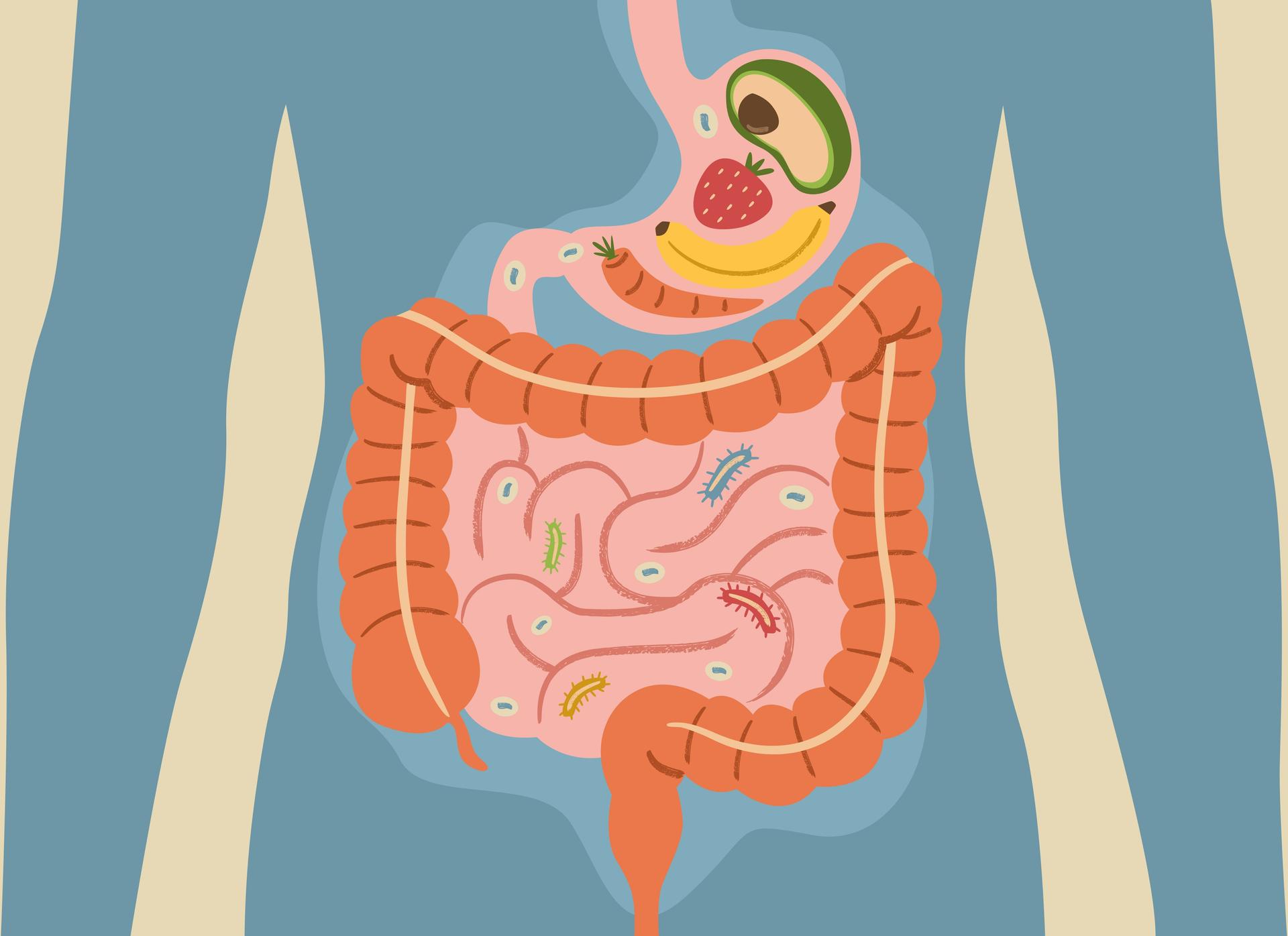
You blame the tiredness on a bad night. The bloating on that heavy dinner. The mood swings on a stressful week. But what if your body has been trying to tell you something else entirely?
Doctors and nutrition specialists point to a quieter culprit that rarely gets taken seriously: low-grade, ongoing inflammation in the gut. It can simmer for years without a single dramatic symptom, because the body doesn't always send its warning signs to the stomach.
None of the seven signs below is a diagnosis on its own, and any one of them can have a completely different cause. But when they show up together and stick around, they're worth paying attention to — and worth talking through with a doctor or dietitian.
1. Bloating that has nothing to do with what you eat
Occasional bloating after a rich meal is completely normal. What's suspicious is a belly that feels tight, hard and almost box-like nearly every day — no matter what's on your plate — and that noticeably aches by evening.
Chronic bloating often points to an irritated gut lining that struggles to process even the simplest foods. If this sounds familiar, it's worth exploring the hidden reasons behind persistent bloating before writing it off as "just something you ate."
2. Digestion that keeps changing its mind
The problem usually isn't constipation or diarrhea on their own. It's when the two keep swapping places with no clear pattern — your gut behaving one way during the week and completely differently on weekends, with no predictable rhythm.
This kind of unstable digestion is a classic sign that the gut wall is constantly wrestling with something irritating.
3. Skin problems that no cream can fix
Dermatologists have long known that the gut and the skin are deeply connected. Persistent breakouts, eczema patches or rosacea-like redness sometimes aren't cosmetic at all — they're rooted in internal inflammation.
You can layer on every serum and cream you like, but the skin often only truly calms down once the gut settles too.
The skin is often just the mirror in which the state of your gut is reflected.
4. Constant, unexplained fatigue
When the gut lining is chronically inflamed, the body diverts energy away from normal daily functioning to keep the immune system running. That's one reason so many people sleep plenty and still feel a heavy, lead-in-the-limbs exhaustion.
This kind of tiredness doesn't lift with rest. It only eases when the underlying inflammation quiets down.
5. Joint and muscle pain that's hard to explain
Silent gut inflammation doesn't stay in the belly — it often spreads to the muscles and joints. Morning stiffness, or a wandering muscle ache that no workout or injury can explain, can be a sign of the body's system-wide inflammatory response, with the gut as one of the starting points.
6. The hidden trigger behind mood swings and anxiety
The microbiome living in your gut is in direct contact with your brain — a link researchers have studied for years under the name of the gut-brain axis. When the gut is inflamed, it can throw off the balance of neurotransmitters.
The result can be unexplained anxiety, irritability or low mood — feelings many people assume are purely psychological, when the roots may run through the digestive system.
7. Food sensitivities that appear out of nowhere
If foods you once tolerated easily — cream, glutenous pastries, a glass of wine — suddenly leave you uncomfortable, it may signal that the permeability of your gut wall has changed.
In a state of so-called increased intestinal permeability, the body becomes more sensitive to substances that never used to cause any trouble at all.
When it's worth taking seriously
No single symptom is decisive, and each can easily come from something else entirely — a stressful weekend, a lingering virus, or simply one bad night's sleep.
What's worth noticing is when these signs keep returning for months with no clear explanation. That's exactly the moment to ask for a medical or dietitian's opinion, before you start experimenting with anything on your own.
Is silent gut inflammation the same as a stomach ache?
Not necessarily. Silent, low-grade inflammation can run for years without obvious stomach pain, often sending its signals elsewhere in the body instead — like your skin, energy levels or mood.
Can one of these symptoms alone confirm gut inflammation?
No. Any single sign can have a completely different cause. It's the combination of several symptoms, lasting over time with no clear explanation, that's worth paying attention to.
Why would gut problems affect my skin or mood?
The gut is closely connected to both the skin and the brain. Internal inflammation can show up as persistent skin issues, and through the gut-brain axis it may influence neurotransmitter balance, affecting anxiety and mood.
What should I do if these signs keep coming back?
If the symptoms return for months without a clear cause, it's worth consulting a doctor or dietitian before trying to fix things yourself.