You know the moment. You're in the middle of dinner or a good conversation, and suddenly it hits: a hiccup. A tiny, involuntary glitch in the body's machinery that sometimes vanishes in seconds and sometimes stubbornly refuses to quit.
But why does our body pull these strange little stunts in the first place? And what does a hiccup have in common with the goosebumps that ripple across your arm from a cold breeze — or a deeply moving moment?
The answer is older than you'd expect. Both are echoes of who we used to be.
Goosebumps: a leftover from an ancient survival trick
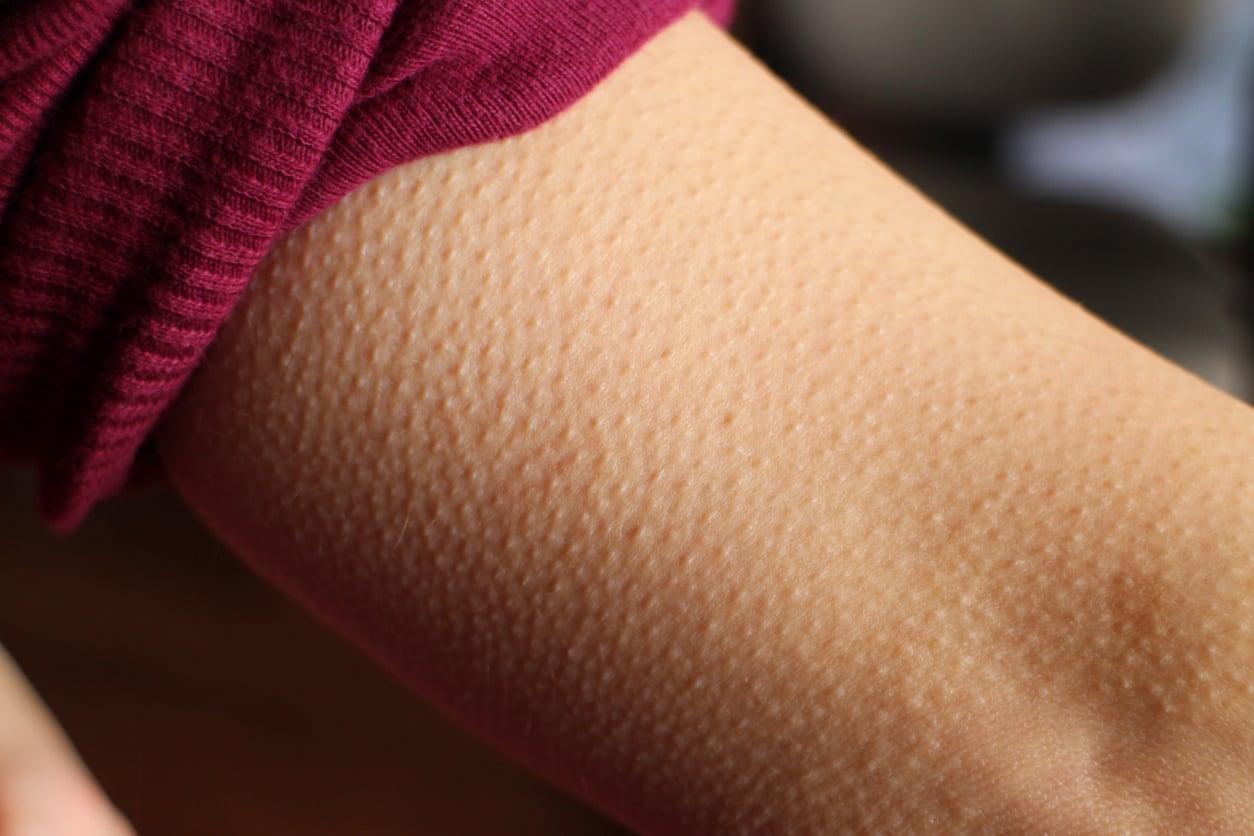
Goosebumps — known scientifically as piloerection — are actually a piece of evolutionary heritage millions of years old. When we're cold or hit by a strong emotion, tiny muscles at the base of each hair contract, and the hairs stand on end.
For our ancestors, this had serious survival value. A dense coat of fur, with its hairs standing upright, trapped more air and created an insulating layer around the skin. And in a dangerous encounter — say, facing a predator — that raised, bristling fur made the animal look bigger and more threatening.
Modern humans no longer have thick body hair, yet the reflex still fires. That's exactly why we get goosebumps not only in the cold, but also in emotionally intense moments: a breathtaking piece of music, a touching scene in a film, or a particularly powerful memory can all trigger it. In those cases, it isn't the temperature at work — it's the emotional response of the autonomic nervous system.
Hiccups: an ancient reflex that never quite left us
Hiccups are an even bigger mystery. Their medical name is singultus, and they happen when the diaphragm — the key muscle behind breathing — suddenly and involuntarily contracts. Right after, the vocal cords snap shut, producing that unmistakable "hic" sound.
Even today, researchers can't say with full certainty why this reflex exists at all.
One intriguing theory suggests hiccups may be a remnant of a very ancient nervous-system function — one that may have played a role even in amphibians and early vertebrates. Another idea links them to fetal development: babies hiccup frequently in the womb, which may have helped their breathing muscles develop and practice.
In adulthood, though, hiccups mostly serve no useful purpose. They can be triggered by eating too fast, drinking carbonated beverages, a sudden change in temperature, or even a strong emotional jolt.
Tiny souvenirs from our body's past
Goosebumps and hiccups are perfect reminders that the human body isn't a cleanly redesigned machine — it's the product of millions of years of evolution. We carry all sorts of reflexes that were once vital and now show up mostly as odd little curiosities in everyday life.
These small quirks remind us that the story of our past is still written into the modern human body. An unexpected hiccup or a fleeting wave of goosebumps isn't just an annoying blip — it's a brief glimpse into the long evolutionary journey that made us who we are today.
Why do we get goosebumps when we're not cold?
Because the same reflex that responds to cold also responds to strong emotion. Music, a moving scene, or a powerful memory can activate the autonomic nervous system, causing the tiny muscles at the base of your hairs to contract.
What actually happens in the body during a hiccup?
The diaphragm, the main muscle used for breathing, contracts suddenly and involuntarily. Immediately afterward, the vocal cords snap shut, which creates the familiar "hic" sound.
Do hiccups serve any real purpose in adults?
Not really. In adults, hiccups mostly serve no useful function and are often triggered by eating too fast, carbonated drinks, sudden temperature changes, or strong emotions.
Why do babies hiccup in the womb?
One theory is that frequent hiccupping before birth may help the breathing muscles develop and practice, which is why hiccups are often linked to fetal development.