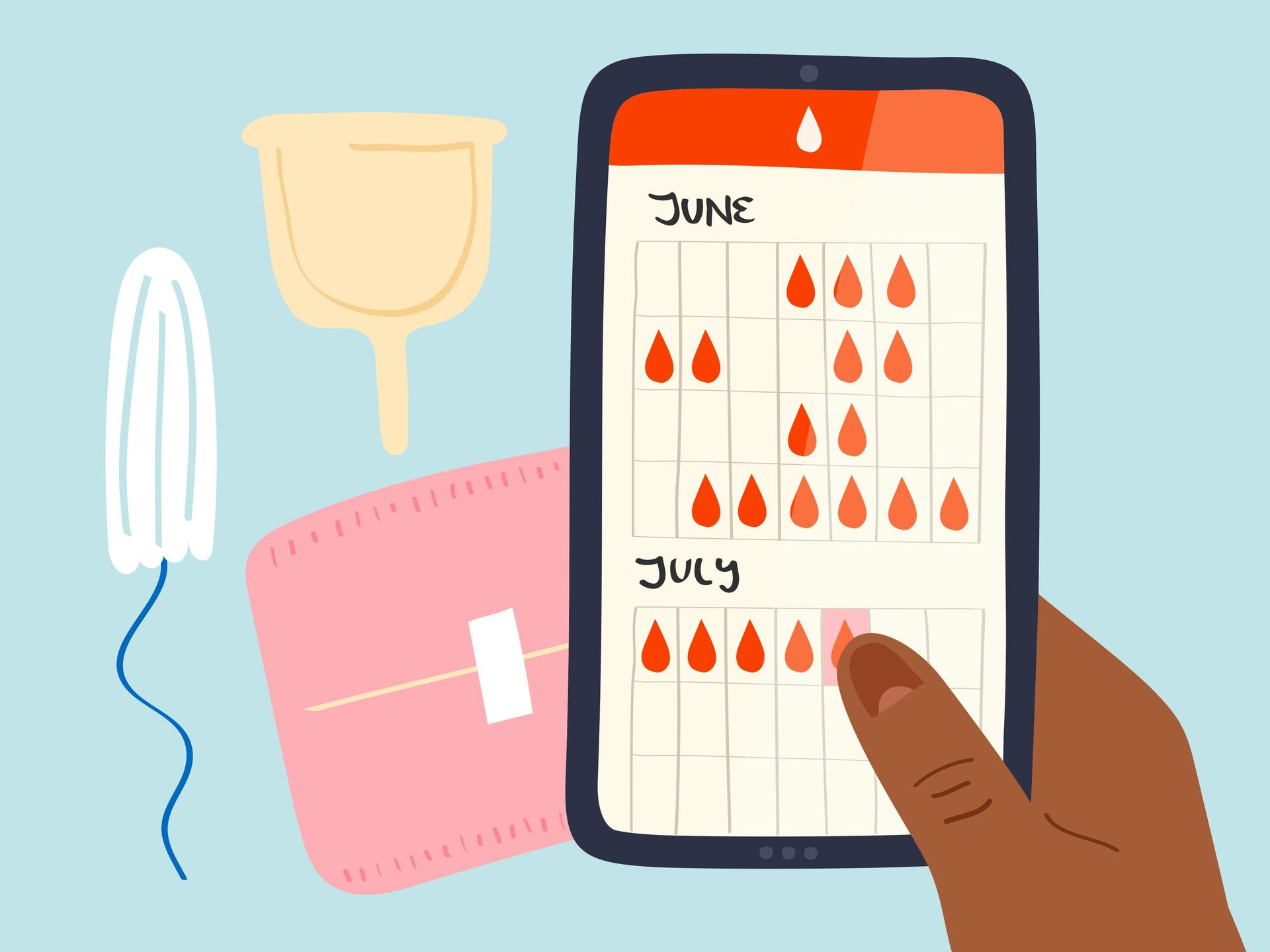
You know exactly what day of your cycle you're on, because your phone reminds you every single morning. And yet there's this nagging feeling that behind all the colorful graphs and percentage-based predictions, something essential is slipping through the cracks — namely, how you actually feel when your body is clearly working to a different rhythm than the calendar in your app.
Cycle awareness has become something of a trend in recent years, and that's genuinely good news. It's taught a lot of us to stop treating our own bodies like a mystery. But tracking can easily stay on the surface: we log the numbers without ever really understanding what's behind them. This is where Eastern medicine comes in — a tradition that has looked at the monthly cycle for centuries in a completely different way than the Western, measurement-driven approach.
The app just counts — your body tells a story
Cycle-tracking apps are excellent at one thing: remembering when your period started, how long it lasted, and when the next one is due. That's useful information, but it's static. It records a data point, not a process. Eastern medicine — and especially the perspective of traditional Chinese medicine — sees the cycle not as an isolated event but as a constantly shifting energetic state, one in which your body, your mood, and your energy levels look different from week to week.
In this view, the question isn't "which day am I on?" but rather "what state is my body in right now?" Are you more tired than yesterday? Is it harder to fall asleep? Are you craving solitude, or suddenly hungry for company? These aren't questions a typical app asks — yet they can bring you far closer to understanding your body than a perfectly filled-in calendar ever will.
The four seasons of your cycle
Eastern thought often compares the phases of the cycle to the seasons, and this metaphor turns out to be surprisingly helpful. It gives us permission to accept a simple truth: not every day has to be equally fertile, energetic, or outgoing.
- The menstrual phase is like winter — a time for pulling inward, resting, and slowing down, when the body turns its resources inward rather than out.
- The phase right after your period feels like spring — many people notice renewed energy, a fresh appetite for starting over and making plans.
- The days around ovulation are your summer — this can be the peak of openness, confidence, and sociability for many women.
- The final stretch of the cycle brings autumn — attention turns back inward, and the body slowly prepares for its next rest.
The body doesn't travel in a straight line through the month — it moves in a circle, and every phase has its own natural purpose.
This perspective isn't telling you to do the same thing on a given day every month. It's inviting you to pay attention: what is my body asking for right now, and how well am I actually listening?
What to notice beyond the numbers
If all you've been logging so far is when the bleeding started and stopped, try observing a few more simple things day to day. You're not building a spreadsheet — you're just gently tuning in to your body.
- How is your energy in the morning versus the evening — and does a pattern emerge across the different phases of your cycle?
- Does your need for sleep shift? Do you fall asleep more easily on some days and struggle on others?
- How does your body respond to movement? Are there times when a harder workout feels great, and others when gentler forms of exercise suit you better?
- What's your appetite like? Do you crave warmer, nourishing meals on certain days, and lighter, fresher food at other times?
Over time, these observations paint a far more nuanced picture than a simple date calendar. Slowly, your own personal rhythm starts to take shape — one that won't necessarily match what a generic cycle tracker predicts.
When your body and your app disagree
Sometimes the app says today should be a high-energy day, and yet you feel drained and irritable — or the exact opposite. That's not a glitch. It's a reminder that the body doesn't run on an algorithm. And this is precisely where the Eastern approach helps: it doesn't ask you to force yourself into an expected pattern, but to notice what your body is signaling in this moment.
If you regularly experience symptoms that are disruptive or unusually intense, it's worth talking to a professional — a gynecologist, or a therapist trained in traditional Chinese medicine. Self-observation is a wonderful complementary tool, but it's not a substitute for expert advice.
A different kind of relationship with your body
Cycle awareness beyond the app doesn't mean deleting the calendar from your phone. It's much more about letting attention, bodily sensations, and emotional ebbs and flows back in alongside the numbers — the things a single data point can never fully capture. The old wisdom of Eastern medicine and modern tracking, used together, may give a more accurate and more human picture of how we actually work, month after month.
Do I have to stop using my cycle-tracking app?
Not at all. The idea isn't to delete the calendar from your phone, but to add your own observations — energy, mood, sleep, cravings — alongside the numbers it records.
Why compare the menstrual cycle to the four seasons?
Eastern medicine sees the cycle as a circle, not a straight line. Comparing its phases to winter, spring, summer, and autumn helps you accept that your energy and mood naturally shift, and that not every day has to feel the same.
What should I track besides the dates of my period?
Try noticing your morning and evening energy, how easily you fall asleep, how your body responds to movement, and how your appetite changes. These patterns reveal a more personal rhythm than dates alone.
Can self-observation replace seeing a doctor?
No. It's a helpful complementary tool, but if you regularly have symptoms that are disruptive or unusually strong, consult a gynecologist or a therapist trained in traditional Chinese medicine.