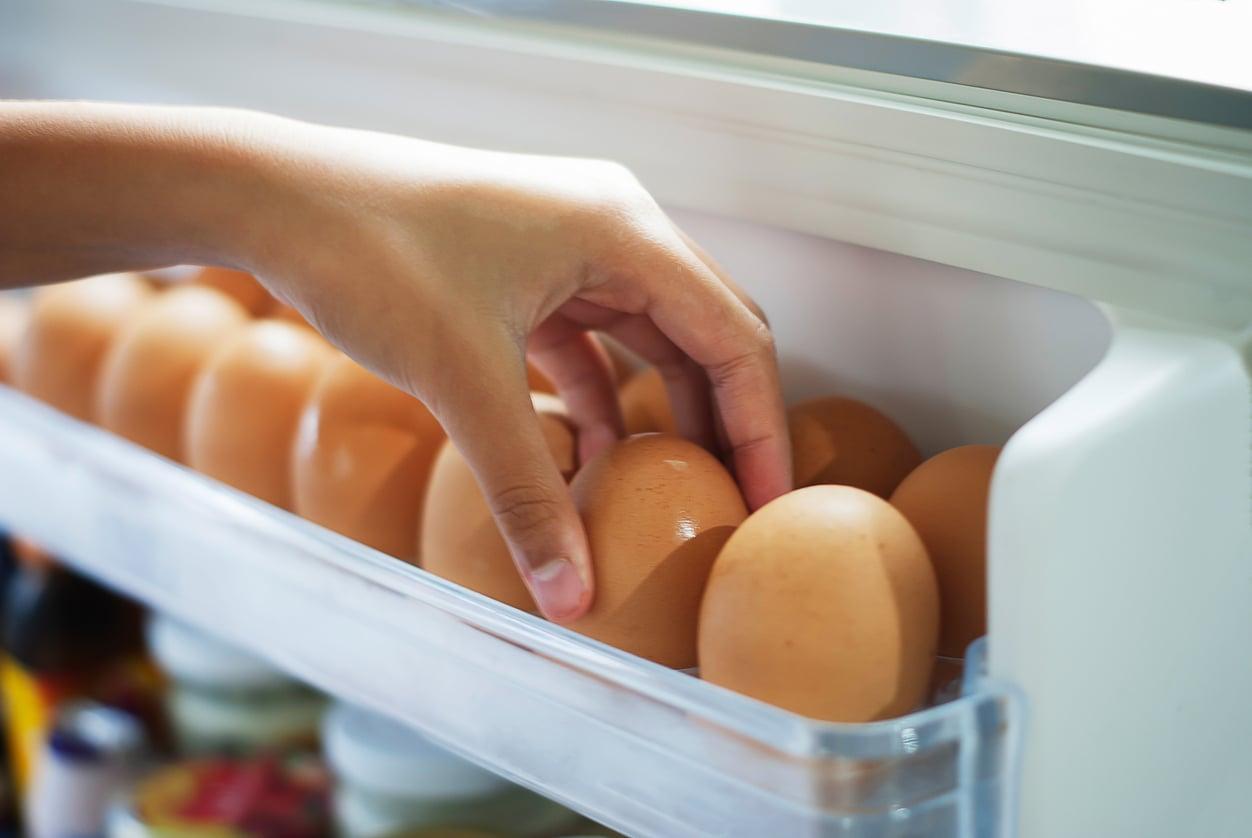
It's one of the most common habits in almost every kitchen: eggs lined up neatly in the fridge door rack, milk standing right beside them. Convenient? Absolutely. But it turns out this everyday habit could be shortening the life of both foods — and increasing the risk of spoilage faster than you'd expect.
Why the fridge door is the worst place for eggs and milk
The door is the warmest, most temperature-unstable zone in your entire fridge. Every time you open it, a rush of warm air hits whatever is stored there. For most foods, that's not a big deal. But for eggs and milk, those repeated temperature swings can quietly accelerate spoilage in ways you won't notice until it's too late.
What happens to eggs when the temperature fluctuates
Eggshells are porous — they're designed to let air and moisture pass through. That's great for a developing chick, but not so great for a carton sitting in a fluctuating environment. Every temperature change increases the risk of bacteria, including salmonella, finding their way inside and multiplying.
Eggs need a stable, consistently cool temperature to stay fresh longer. The middle or lower shelves of your fridge — away from the door — are a far safer home for them.
Moving your eggs to a fixed interior shelf is one of the simplest food safety swaps you can make today.
Why milk turns faster than it should
Milk is one of the most temperature-sensitive foods you can buy. When it's stored in the door and exposed to repeated warm-air exposure, the acidification process kicks in much sooner — meaning your milk can go off days before its use-by date.
The best place for milk is at the back of a middle or lower shelf, where the temperature stays coldest and most consistent. That's where bacterial growth slows down the most, and where your milk will actually last as long as it's supposed to.
How to rethink your fridge layout
A well-organized fridge isn't just about tidiness — it's about keeping food genuinely safe and fresh for longer. The ideal internal fridge temperature sits between 0°C and 4°C (32–39°F), and where you place things inside makes a real difference.
- Bottom and back shelves: the coldest zones — best for meat, fish, dairy, and eggs
- Middle shelves: good for leftovers, cooked foods, and drinks
- Top shelf: ideal for foods that don't need intense cold, like condiments or hard cheeses
- Crisper drawers: designed for fruit and vegetables, with the right humidity to keep them fresh
- Door shelves: best for items that are naturally more stable — butter, condiments, juices with preservatives
A small change with a big impact
Rethinking where you store your eggs and milk takes about thirty seconds. But the payoff is real: food that stays fresher longer, less waste, and a lower risk of foodborne illness for everyone in your household.
The fridge door is tempting because it's right there, easy to grab from. But convenience isn't always the same as smart. Give your eggs and milk a better home — your future self (and your wallet) will thank you.