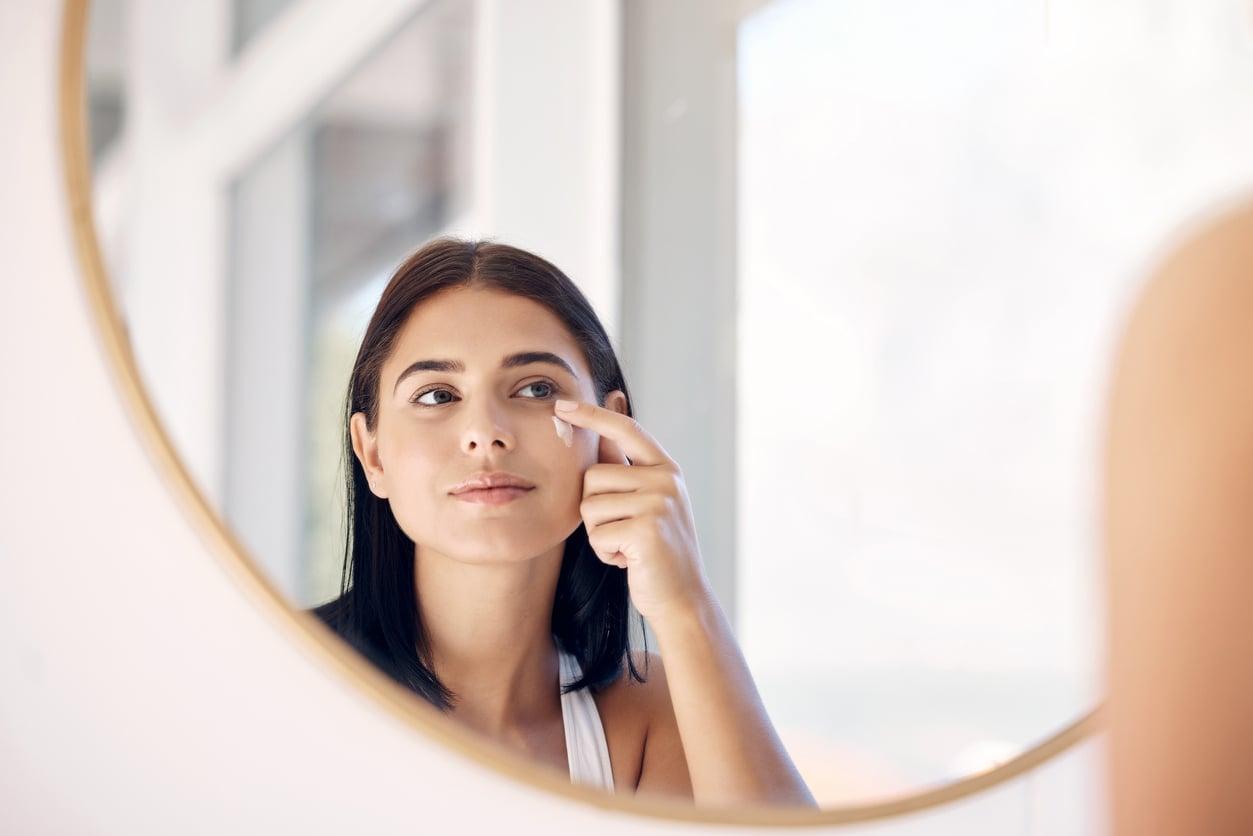
If you have an expensive sunscreen sitting in your bathroom cabinet but only dab a pea-sized amount onto your face each morning, you're getting roughly half the protection the label promises. This isn't a scare tactic — it's something dermatological research keeps confirming: most people use far too little sunscreen. And after 40, the cost of that habit can show up as exactly the kind of stubborn, brownish spots we most want to avoid.
Why this suddenly matters more after 40
The UV exposure your skin has collected over the decades doesn't disappear — it simply lies dormant. Pigment cells start reacting to sunlight in more unpredictable ways, and hormonal shifts can amplify the whole process.
That's how someone who barely dealt with dark spots in their twenties can suddenly notice, in their forties, small, uneven brownish patches appearing on the face — especially across the forehead, the cheekbones, and above the upper lip.
The two-finger rule worth memorizing
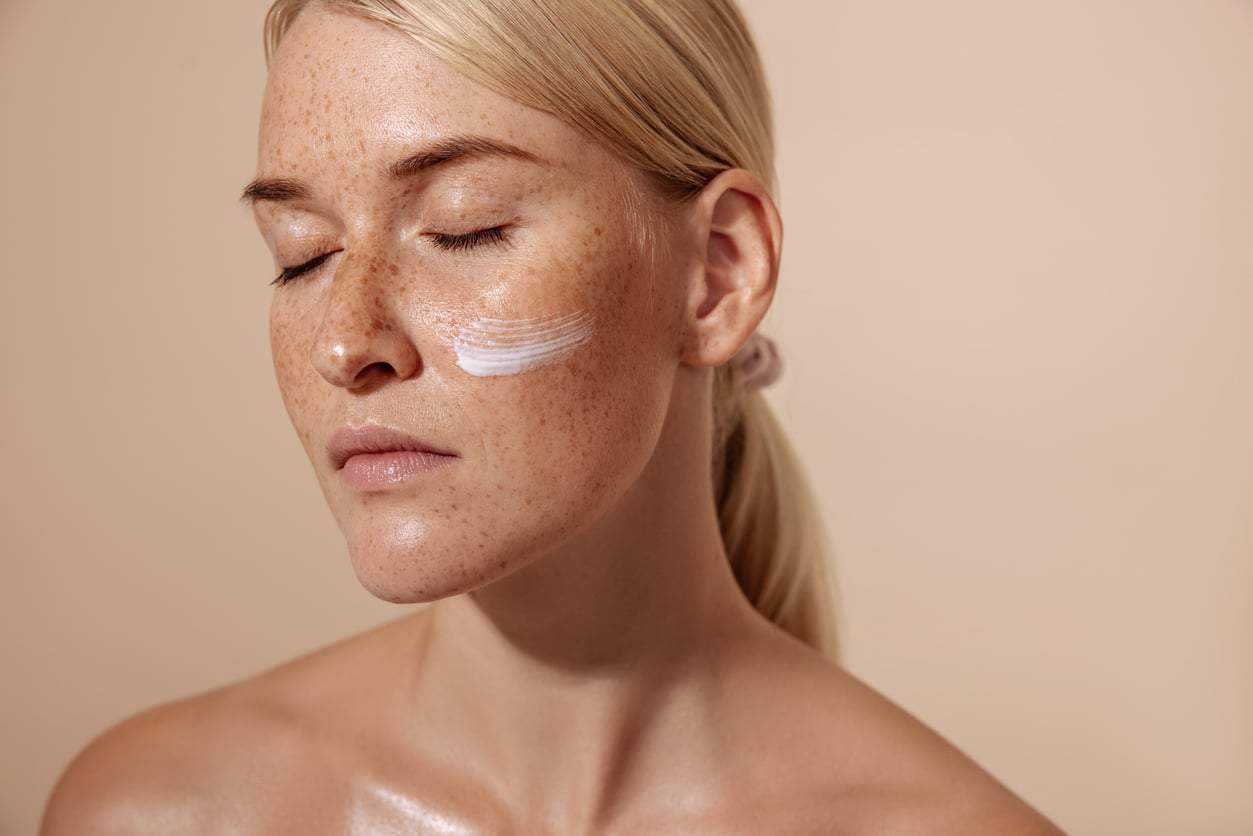
The idea is simple, and once you try it, you won't go back to that pea-sized dab. A strip of sunscreen squeezed along the full length of your index and middle fingers — about 1.25 milliliters (roughly a quarter teaspoon) — is the amount you need for your face and neck for the SPF on the label to actually deliver.
At first glance that might look like a lot, especially if you've been getting by on a single drop in your palm. But add it up: your face, neck, and ears are all exposed to UV, and the ears are the spot almost everyone forgets.
How to apply it so it doesn't feel sticky
- Spread the amount across several points: forehead, nose, both cheeks, neck, and behind the ears — then blend outward, instead of working the whole lot from one spot.
- If the texture feels heavy in that quantity, switch to a lighter gel or fluid formula — don't cut the amount.
- After a serum or primer, give it a few minutes to sink in before layering your sunscreen on top, so it doesn't slide around on the skin.
- Midday, if you're outside a lot, even a thinner reapplication makes a real difference — you don't have to repeat the full two-finger dose.
Dark spots don't only form at the beach
Plenty of people assume sunscreen only matters in summer, by the sea. But UVA rays reach your skin on cloudy days and straight through windows.
If you regularly sit in the car or work next to a window, that adds to your lifetime UV load just as much as a long summer walk does.
What to do if the spots have already appeared
Treating existing pigment spots really calls for a dermatologist or skincare professional, since there are many types and not all respond to the same solution. What you can do on your own is rebuild your daily sunscreen routine around the two-finger rule — that way you at least keep things from getting worse while you deal with the discoloration you already have.
There's something oddly reassuring about it: such a tiny change — a little more cream every morning — can make this much difference two decades from now. You just have to get to the point where you reach for two fingers' worth, not a pea-sized dab.
How much sunscreen should I really put on my face?
A strip along the full length of your index and middle fingers — about 1.25 milliliters (roughly a quarter teaspoon) — is what your face and neck need for the labeled SPF to work as promised.
Why do dark spots suddenly appear after 40?
The UV exposure built up over the years lies dormant, and after 40 pigment cells react more unpredictably to sunlight while hormonal changes can amplify the effect. That's why brownish patches can show up on the forehead, cheekbones, and upper lip.
Do I need sunscreen even when I'm indoors or it's cloudy?
Yes. UVA rays reach your skin on cloudy days and right through windows, so sitting in the car or working by a window adds to your lifetime UV load.
What if the two-finger amount feels too heavy?
Don't reduce the quantity — switch to a lighter gel or fluid formula instead, and spread it across several points on the face before blending outward.