There was a period when I genuinely believed that if I just got rid of enough things, the house would stay calm on its own. I pared down, I bought matching containers, I labelled the labels. And then three people continued to live here, as people do, and by Wednesday evening there were shoes in the hallway, a half-built Lego thing on the dining table and a cardigan over the back of a chair. The failure wasn't the system. The failure was the target.
Tidy-ish is a better target. It means the house works, you can find things, and nothing is quietly rotting — and it also means there is visible evidence that someone lives here and had a day.
Minimalism has a maintenance cost nobody prices in
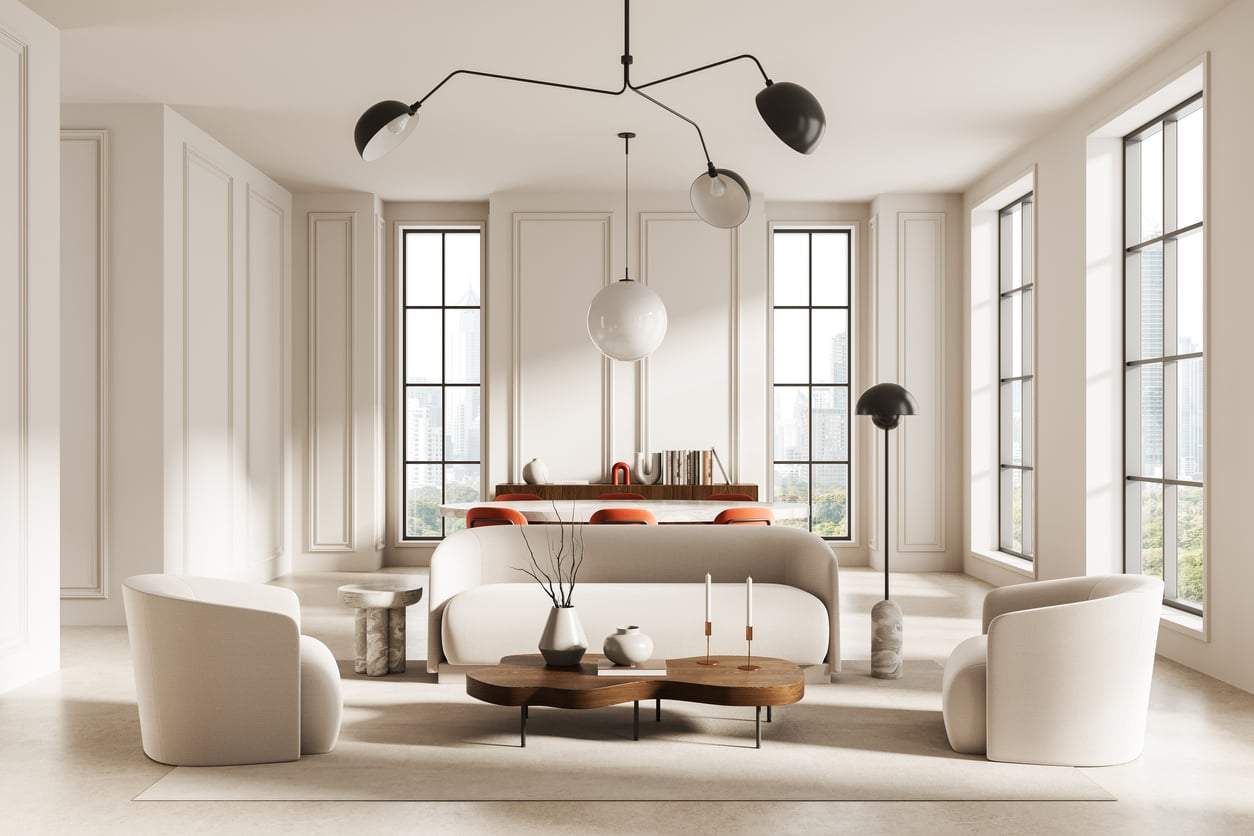
An empty surface looks effortless in a photograph, but an empty surface in a functioning home requires constant active defence. Every object that comes through the door — post, sports kit, a jar someone brought you — has to be processed immediately or the look collapses. That's not calm. That's a shift pattern.
There's a second cost too, and I notice it most in other people's houses. A room stripped of anything personal is a room that doesn't quite invite you to put your mug down. The homes I want to stay in tend to have books stacked badly, a plant that's outgrown its spot, something half-finished on a side table. The warmth comes from the evidence of life, not the absence of it.
Decide which surfaces you actually defend
You cannot hold an entire house to the same standard, and trying is why most systems break by October. Pick two or three surfaces that genuinely change how the place feels and defend only those. In my house it's the kitchen worktop by the hob, the dining table, and the floor of the main room. Everything else is allowed to be reasonable rather than perfect.
The test is simple: stand in the doorway of a room and look at it as a stranger would. You'll find your eye lands on one or two spots first. That's what needs defending. The bookshelf nobody looks at closely can stay slightly chaotic without costing you anything.
Ten minutes, twice a day, beats a Saturday
The tidy-ish house runs on resets rather than overhauls. One before dinner and one before bed, each capped at ten minutes, carrying things back to roughly where they belong. Not organising. Not sorting. Just returning. A timer helps more than you'd think, because it stops you from opening a drawer and disappearing into it for forty minutes.
What makes resets possible is reducing the number of steps between an object and its home. If putting the scarves away involves opening a wardrobe, lifting a lid and unstacking two boxes, the scarves will live on the chair. Open baskets, hooks instead of hangers for daily coats, a shallow tray by the door for keys and the things that come out of pockets — ugly solutions that get used beat beautiful ones that don't.
Let some of the mess be function
Some of what reads as clutter is actually the house doing its job. The tools on the kitchen counter are there because you cook with them daily. The pile of library books is a pile because someone is reading. The craft box lives out because putting it away means it never gets opened. Before you tidy something away permanently, ask whether hiding it will quietly end the activity — because very often it does, especially with children and especially with hobbies you're trying to restart.
What I do clear ruthlessly is the dead weight: the thing that's been waiting six months to be mended, the carrier bag of items destined for someone who hasn't collected them, the cables that belong to nothing. Those don't represent life. They represent decisions you haven't made.
How do I keep a tidy-ish house when nobody else helps?
Start by making the shared standards visible and absurdly small — one agreed rule, like shoes go in the basket, rather than a sweeping request to help more. People comply far better with a specific, physical task than with an expectation they have to interpret. And separate the two problems honestly: the practical one is about systems and steps, but the resentment underneath is a relationship conversation, and it goes better when you have it at a calm moment rather than in the middle of the hallway at seven o'clock.
Isn't tidy-ish just an excuse for mess?
There's a real difference, and it's about whether the house still functions. Tidy-ish means you can cook on the worktop, sit on the sofa, find your keys and open the windows — things are visible but nothing is blocked, spoiled or lost. If you're buying duplicates because you can't find the original, or avoiding rooms, that's past tidy-ish, and a slower sort-out of one small zone at a time is worth the weekend.