Your iron was working perfectly — until it wasn't. Suddenly it's dragging across fabric, leaving behind brown or dark streaks that weren't there before. Before you assume the iron is broken, take a closer look at the soleplate. In most cases, the real culprit is built-up residue from fabric fibers, starch, fabric softener, or limescale — all of which can transfer onto your clothes during ironing. Here's how to sort it out cleanly and safely.
Why does an iron stick and leave marks on clothes?
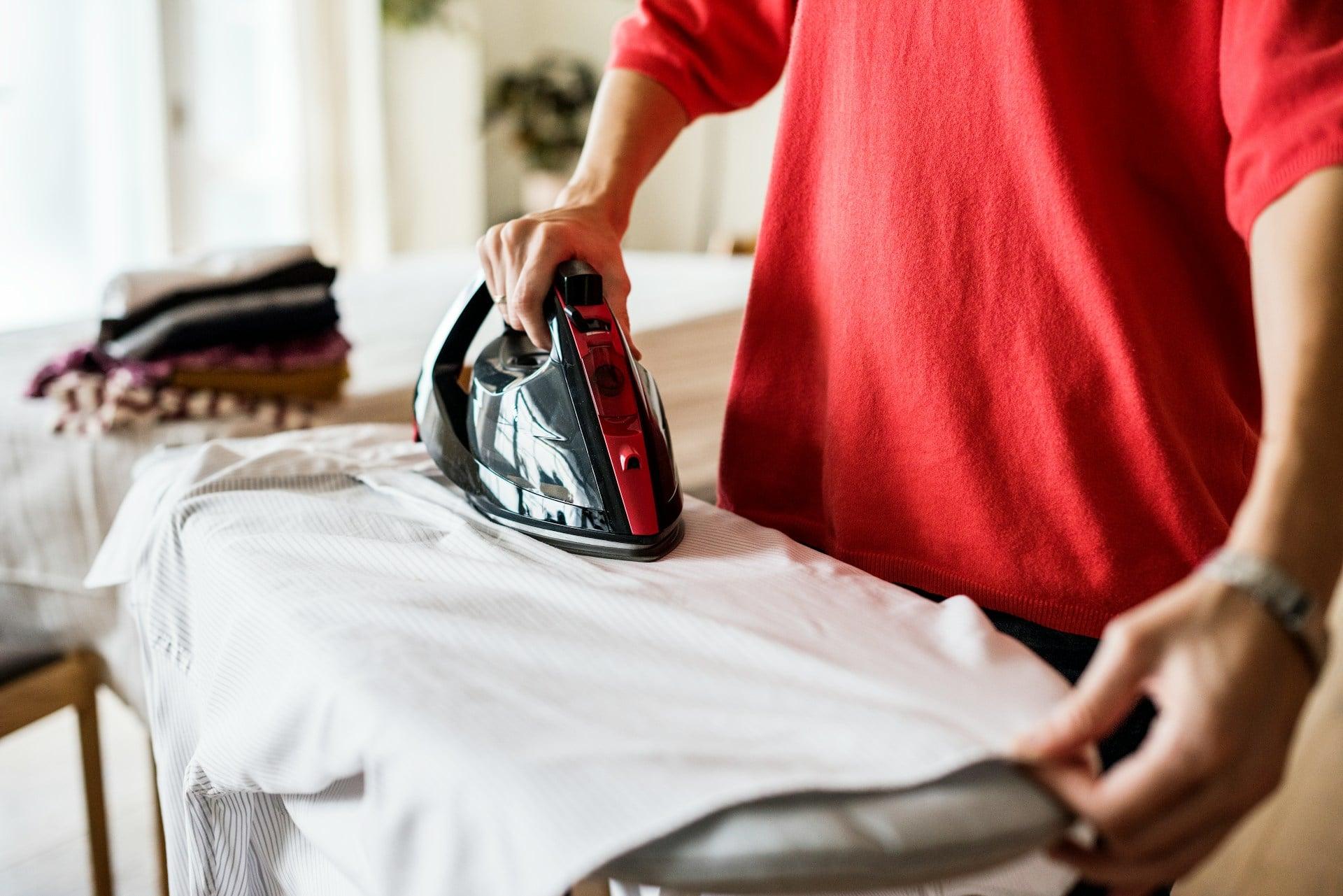
Over time, a steam iron's soleplate collects a surprising amount of buildup. Fabric fibers, starch residue, fabric softener, and detergent traces all accumulate with regular use. Under heat, these deposits melt and stick to the soleplate — then transfer directly onto the next garment you iron.
This is especially frustrating with white and light-colored clothes, where even the faintest brownish or grayish streak is immediately visible.
Limescale is a separate but equally common problem. In steam irons, mineral buildup can clog the steam vents, causing whitish, grayish, or brownish particles to be expelled along with the steam. If these particles land on your clothes, they leave stains that are easy to mistake for scorching.
Stop ironing immediately — here's why
The moment you notice the iron is smearing your clothes, stop ironing. Every additional pass spreads the contamination further across the fabric. Set the iron aside and clean the soleplate before continuing.
If the stain on the garment is still fresh, don't try to iron over it on high heat. Heat can permanently set the stain deeper into the fibers. Let the fabric cool down first, then treat the stain based on what caused it.
How to clean a steam iron's soleplate properly
Always check your iron's instruction manual first — different soleplate coatings (ceramic, stainless steel, non-stick) require different care. That said, here's a safe general approach:
- Turn off the iron, unplug it, and let it cool until it is just warm — not hot.
- Wipe the soleplate with a soft, damp microfiber cloth to remove any loose residue.
- If sticky buildup remains, use a dedicated iron soleplate cleaner, following the product instructions carefully.
- Clean around the steam vents gently, but never use anything sharp or abrasive — you could scratch or damage the coating.
- If your iron has a self-clean or descaling function, run it according to the manufacturer's instructions.
- After cleaning, test the iron on an old piece of light-colored cotton fabric before using it on anything delicate or white.
What to do about the brown mark left on your clothes
Don't scrub at the stain aggressively — that can push the residue deeper into the fabric weave. Instead, check the garment's care label first, then choose a stain remover suited to that specific fabric type.
For white or colorfast cotton, an oxygen-based stain remover is usually a good starting point. Always follow both the stain remover's instructions and the garment's care label. Only re-iron the item once the stain has fully disappeared — and make sure the soleplate is clean before you do.
Skip the DIY hacks — they can make things worse
A quick search will turn up dozens of home remedies: salt, baking soda, vinegar, toothpaste. But these aren't safe for every iron. Coated soleplates scratch easily, and vinegar in particular is not recommended for the internal water systems of many steam irons. The best cleaning method isn't the one with the longest list of household tricks — it's the one that follows your specific iron's manufacturer guidelines.
If brown particles are still coming out of the steam vents even after cleaning, if the iron drips constantly, or if it keeps marking your clothes, it's time for a more thorough descaling. If the problem persists after that, have it checked by a repair technician.
How do I know if the stain on my clothes is from the iron or from something else?
Iron-related stains typically appear as streaks or patches along the direction of ironing, often brownish or grayish. They are usually caused by soleplate residue or limescale particles expelled through the steam vents.
Can I use vinegar to clean my steam iron?
Vinegar is sometimes suggested as a DIY cleaner, but it is not recommended for many steam irons — especially in the water tank or internal system. Always check your iron's manual before using any household solution on it.
How often should I clean my iron's soleplate?
There is no fixed rule, but cleaning the soleplate whenever you notice buildup, sticking, or discoloration is a good habit. Regular use of distilled water in the tank can help reduce limescale buildup over time.
Is it safe to iron clothes again right after cleaning the soleplate?
Yes, but always test the iron on an old or inconspicuous piece of light-colored cotton fabric first to make sure no residue remains before ironing delicate or light garments.