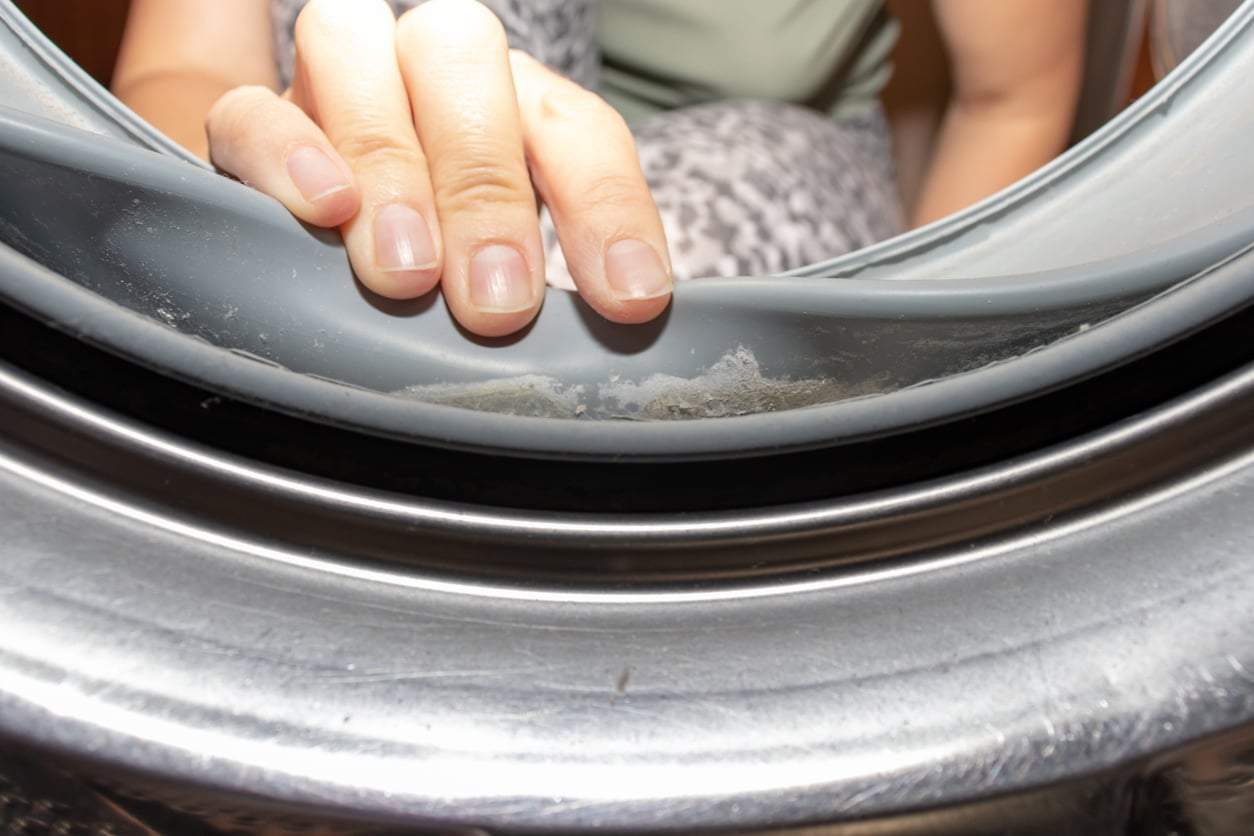
It starts small. A hoodie that smells faintly of pond after two days in a drawer. Towels that never quite dry sweet. Then you pull back the rubber seal on the door one Saturday and find a grey, slightly tacky film with a dark edge, and you understand that the machine you wash everything in has not itself been washed in roughly three years. This is one of the most common household problems going, and the good news is that it is caused by habits you can change in an afternoon.
Why it happens at all
Modern laundry habits are gentle: low temperatures, liquid detergent, a generous glug of fabric softener, and a door kept shut between washes. Lovely for clothes and bills, excellent for bacteria. Cool water does not dissolve detergent and softener fully, so a residue builds up in the drum, the pipes, the drawer and the folds of the door gasket. That residue, plus warmth and permanent damp, forms a biofilm — the slimy grey stuff — and biofilm is what smells.
Overloading makes it worse, because nothing rinses properly. So does using more detergent than the dose recommended, which almost everyone does. And in hard-water areas, limescale gives the whole mess a surface to cling to.
The full reset, in order
Work from the parts you can reach to the parts you cannot. Start with the door seal: pull back each fold with a cloth and hot soapy water, or a weak bleach solution if the mould is established, and work all the way round. Check the bottom of the fold for coins, hairgrips and grit, which hold water and tear the rubber over time. Dry it afterwards.
Next the detergent drawer. On most machines it pulls fully out with a catch in the middle compartment. Soak it in hot water, scrub the softener section with an old toothbrush — that is where the blue-grey sludge lives — and clean the cavity it slides into with a cloth wrapped round a thin brush. Dry and replace.
Then the filter, the step people skip. It is usually behind a small flap at the bottom front. Lay a towel down, put a shallow tray or roasting dish under it, open it slowly and let the water drain in stages before you fully unscrew the trap. Rinse out the lint, hair and buttons, check the rubber ring, and screw it back firmly. If the trap smells, that was probably your main culprit.
Finally, run an empty maintenance wash at the hottest setting — 60 degrees at minimum, 90 if your machine offers it. Use either a dose of soda crystals, a scoop of powder detergent, or a dedicated machine cleaner, straight into the drum. Heat is doing most of the work here; the additive just helps lift what the heat loosens. If a lot of residue comes away, run a second short rinse afterwards so none of it ends up on your next load.
Keeping it that way
Leave the door and the detergent drawer ajar between washes. This single habit prevents most of the smell, because the drum dries out instead of sitting damp and shut all week. Wipe the seal dry with the towel you were going to wash anyway.
Cut the fabric softener right back or stop using it; it is the stickiest thing you put in the machine, and it reduces the absorbency of towels in any case. Use the correct dose of detergent, not a confident splash. Run a hot wash — towels, bedding, tea towels — at least once a fortnight so the machine gets regular heat. Take washing out promptly rather than letting it sit damp overnight. And do not cram the drum: a hand's width of space at the top is roughly right.
How often should I clean my washing machine?
A maintenance wash once a month is a sensible rhythm for most households, with the door seal wiped weekly and the detergent drawer rinsed whenever you think of it. The filter deserves attention every few months, more often if you wash a lot of pet bedding or heavily linted items. If you already run frequent hot washes and leave the door open, you can stretch the empty cycle to every six weeks or so — the test is your nose, not the calendar.
Can I use vinegar in the washing machine?
White vinegar is a popular suggestion and it does cut through soap residue and light limescale, but it is worth a note of caution: acid in prolonged contact with rubber seals and hoses is not kind to them over the long run, and some manufacturers advise against it. If you want to use it, a modest amount in the drum on an occasional hot empty cycle is a reasonable compromise — not a cupful every week, and not left standing in the machine. For regular maintenance, soda crystals, a hot powder-detergent cycle or a purpose-made machine cleaner do the job without the question mark, and your manual will tell you what the maker actually recommends.